Family forgiveness

Happy World Day of Families!

There is nothing as emotionally vulnerable as talking about your family, whether the one you grew up in and how that was, or the one you’re having yourself, or not having. While we all know that people you call family doesn’t have to be the one you were born into, today’s blogpost is about reconciling with your birth parents. 

I was born in Sweden, by Swedish parents and grew for the most part up here together with my four-year younger brother. However, we moved and travelled a lot, so I never felt rooted and thus not safe. On my mother’s side was poverty and her Polish mother survived two workcamps during World War II. On my father’s side was nobility and my dad spent summer vacations in Italy every year. His mother came from Belgium but passed away before he turned 18. My mother worked as a language teacher in various forms and a little as a secretary. My father worked as an ethnographic author and art critic, and giving talks occasionally. They were both young when they had me, after meeting at the university where both studied.

My dad had just gotten a scholarship to study for his dissertation in Heidelberg, Germany, where we moved for about six months, when my mother suddenly began to get early contractions. After a tumultuous train-ride back to Sweden, she almost bled to death and was taken with an ambulance into the hospital where she had an emergency c-section and gave birth to my brother, two months premature. I was put on a train by her girlfriend to go and live with my grandparents, while my dad finished up in Germany. While I adored my grandfather’s second wife and always called her grandma, it’s one of my first memories and was very much a trauma. In fact, another time my dad left us travelling for several months again and I can recall trying to comfort my crying mother in her bedroom a late night. He was always on the go and I never felt prioritized. While we always had good food and wore nice clothes, we didn’t have color TV until I was 18 and none of my parents had a driver’s license and thus no car. It was seen as a bit odd, where we lived in a small town, down south of Sweden.

Not too surprisingly, my parents filed for divorce and battled whether they should or not, and for child alimony for altogether almost five years. They had loud arguments and I tried to keep myself busy with schoolwork, or after school activities such as taking drama and dance classes, when I wasn’t horseback riding and immersed into the riding club’s competitions and stable care.

I often didn’t sleep well, and I wasn’t always feeling well growing up. My parents sought psychiatric help but only to find out I was one of the healthiest kids they had ever encountered and simply showed symptoms of how their marriage was deteriorating. My brother used to stay with one of his classmates’ mother after school, so he was already taken care of. My mother went to England several summers in a row to be a teacher there for summer courses. One summer, my dad just wanted to write on another book and therefor sent me away to a foster family for six weeks. It was terrible and they just wanted me to be a perfect babysitter to their perfect newborn, in a perfect pedantic house where nothing was to be touched. I cried to get out of there and was eventually allowed to leave and go live at a kid’s type of emergency shelter.

However, when I turned 15 years old at the last year of Junior High, I was offered to go and live with my school counsellor for a couple of months at her dairy farm. She was an older woman, who had helped many kids and had her own large family. Here, I got to see a cow giving birth and a whole different type of family dynamics. I began to understand how dysfunctional mine had been and how affected I and my brother had become.

High School was easier and more fun. I went on my own language course trip but to France with a classmate for six weeks. I worked after school and during summers. And my mother started dating an American through the firm where she was working. We went to see him and his son in Hartford; Connecticut and I got my first taste of the Big Apple at a daytrip. A friend of his, also working for the same firm, offered me to come and live with them for a year as an exchange student upstate New York, which I also did! They, however, ended up in a divorce too and it turned out that my mother was more into him than her fiancé, so she remained in Sweden. Here, she unfortunately started dating married men and I began to understand how her boundaryless life, was in one way giving me lots of freedom, but in another way, forcing me to be the adult of the family, my entire life. And while she sought my validation all the time and not sure of how to deal with my maturing, my dad tried to give me a bad conscious for not wanting to spend time with him weekends, when I rather meet my friends or horseback ride. My mother wanted me to talk about my dad’s life and my dad about my mother’s. I didn’t want to deal with either.

Fast forward to 2004, when my mother’s cancer got worse, I understood how I had assumed a parental role in my family and in most of my relationships and decided to heal this and any generational traumas, and to break any destructive patterns. I began to look for my inner child and work with forgiveness.

Through several travels to Hawaii, which you can read about in my books, I learned to pray the Morrnah Simeona Ho’oponopono prayer. While many native Hawaiians think it’s controversial to let white people use it, I’m so glad I found it and learned it. The beginning part of it reads: Divine Father, Mother, Child as One. When I said this the first time, in my own apartment in Sweden 2008, I became very moved and understood at some plane how I carried these pieces within and now could mend them together. I wrote down examples of events and hurt in all my relationships and used this prayer. And little by little, my life changed and improved. I, changed and improved! Step by step, I felt myself reconnecting to my inner child and learning what had scared her away, now being able to embrace her and comfort her myself.

The Ho’oponopono prayer works, besides as a prayer, by finding within how you might have hurt someone else and provoked the same kind of feelings, you now are experiencing or someone is accusing you of. By taking responsibility for how you have made someone feel, you can ask for forgiveness at least within and in spirit, and therethrough let go. The forgiveness prayer also incorporates a tracing of ancestral lineages both backwards and forward in time, to make sure the hurt stops.

It reads:

DIVINE CREATOR, Father, Mother, Child as ONE:

If * I (insert your name), my family, relatives, and ancestors have offended you (insert the other’s name) in thoughts, words, deeds and actions from the beginning of our creation to the present, please forgive us.

Cleanse, purify, release, sever, and cut all the unwanted energies and vibrations we have created, accumulated and/or accepted from the beginning of our creation to the present.

Please transmute all the negative, unwanted energies to PURE LIGHT. WE ARE SET FREE! AND IT IS DONE!

Working with Ho’oponopono, visualization and breath, enable us to also heal the connection between our Higher self, Middle self and Lower self. All to become whole again with faith in God, who handles the rest.

Now: What and who can you forgive and ask for forgiveness?

To listen to this blogpost as a podcast, find The Source Podcast on Spotify, Apple or YouTube.

Namaste!

I began practicing yoga in the early 2000’s. I had worked at a local fitness club expanding into a whole health and wellness service, where I planned, wrote and edited their membership magazine. As part of my payment, I got to practice for free. I started with lifting weights and then moved on to something called Body Balance. It was soft motions, yet strengthening, and it became the precursor to later take classes in Poweryoga. Poweryoga is based on Ashtanga yoga, although not as physically challenging and for one hour. I practiced there for a couple of years and later for another teacher too. 

Yoga to me, became a way to align the motions with a type of breath, that enabled me to endure more. Often, we practiced with lower lights and lit candles to really be able to relax and turn inwardly. In Savasana, the last motion laying down in our practice, I began experiencing stillness. A pause between my thoughts as I paused my breath. And in this stillness, I felt I gained access to the spiritual realm. 

When I went to Hawaii in 2004 and 2005, I bought a mat there and practiced at sunset by the beach, or on my own, inside my little studio, when I wasn’t studying Organizational Change. 

Back in Sweden, I focused more on my dancing but have kept practicing yoga at home, once a week or so, ever since! That is practicing yoga for 25 years! Besides at the beach park in Hawaii, I’ve even practiced inside a prison cell directly on the floor, when I at another stint back in Hawaii, was later detained by ICE. And I’ve practiced in hostel rooms in Portugal. 

In 2008, I was approached online by a man from Kerala in India, who wanted to teach me to chant the Gayatri Mantra, I gladly accepted and soon found a melody I could use for it. It became a way of praying for six years. Then I realized, it wasn’t right for me to do, as I had decided to become a devout Christian. At the end of my practices, I had begun feeling threatened and nauseous, just like with the type of Qigong I used to do, so I stopped the Indian chanting and nowadays only do Hawaiian for Hula, and on occasion I chant a Buddhist kind.

Does practicing yoga really mean that we have to become spiritual and study with a guru? A part of me really felt weird about that, to call someone a Master or Guru as if to worship them. That is not what I’m about. I was given Deeksha and Shaktipat and was introduced to the Oneness University by people in Sweden, who were associated with them, but felt a lingering darkness with it. I have read some of the Vedic books, but I prefer to keep to the Bible. If I would mention any Yogi guru that I like, it would only be Krishnamurti. He was born in 1895 and died in 1986 after spreading his writings in California. And he has advised to not follow any discipline, teacher, authority or guru, even himself, but instead focusing on living righteously in meditation and in full presence, always open for dialogue.

To me, yoga became a tool to get to know my body better. Since we most of the time, were doing the same motions, or asanas, it became a way to notice whether it felt different or harder some days and easier others, and why that could be. With time, I felt like I had gotten access to a better control of my body from within, a more open and flexible body that allows my organs to function better, which in turn has made me a better dancer, a little more centered. And I had just improved and was able to begin standing on my wrists for the Peacock pose, or Mayurasana, when I was abruptly forced into a psychiatric ward for two years by a yoga teacher I’ve never talked to, or met, in Sweden, but reported for plagiarism, instead of investigating that. So much for humility! I think there is a great risk of cult like powerplays with yoga practitioners trying to compensate letting go of their egos, with a spiritually founded ego instead. All becoming a false narrative of being better than, as a person, when in fact it’s been a refusal to communicate and solve our indifferences. How immature and evil! Not very enlightened and yogic. Unfortunately, I gained lots of weight unexpectedly, together with some other physical health challenges, rewinding my abilities to almost like on a beginner’s level. The good news, I still practice yoga at home of course. 

I strive to only follow yoga teachers on social media who are from India. When I was in Germany 2018, I shared hostel room with a girl from India, who invited me to visit Rishikesh if I wanted to learn more yoga. And in Portugal in 2020, I met a couple of Indian guys and asked them about their yoga. They shared that it’s a type of morning gymnastics in schools nowadays and they can’t understand the Western hype at all. It solidifies the importance to uphold indigenous traditions with integrity, which is what Telluselle Living Center is all about. To strike a pose, but with a local, in a local style.

To listen to this blogpost as a podcast, find The Source Podcast on Spotify, Apple or YouTube.

Greet someone with Aloha!

Happy Lei Day! Today is May the 1st and the official first day of spring. The theme for this blogpost is Lei Day – the day when the art of making Hawaiian flower garlands, called Lei, is upheld. 

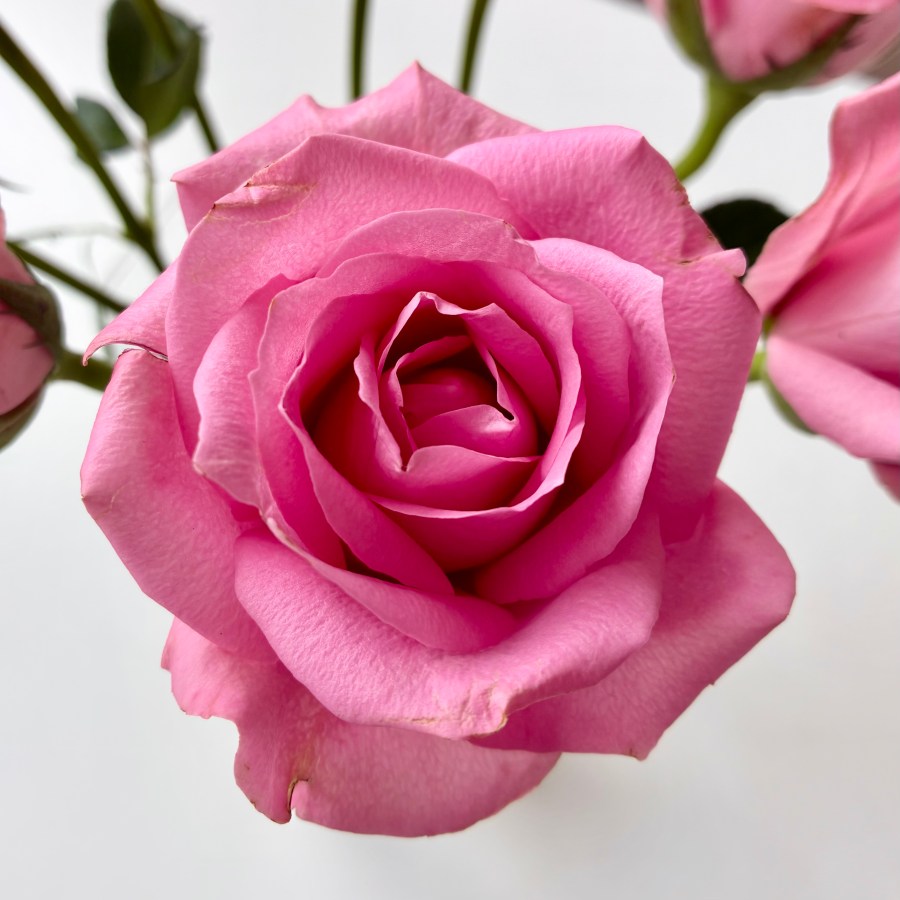
You know the invigorating feeling of scenting a nice flower like the rose? Imagine wearing a garland made of a hundred of them! In Hawaii, it’s tradition to make lei of various flowers, leaves, shells and nuts and give away to someone you love, especially for their birthday, wedding, anniversary or graduation day. Funny enough, here in Sweden where I am from, we hang bouquets of flowers around a graduating student’s neck too, a little of the same. 

When we give someone a lei, we give it with Aloha as a greeting and a wish for someone to have a good day and even life, as a blessing. Aloha is a word that can be translated into an acknowledgement that we all share the same breath, the same air, and therefor are united and interdependent, which should be respected and honored.

The lei in Hawaii, are made by hand through picking and cleansing a basket full of flowers or leaves that are taken apart into pieces. Then you use a long needle and plastic or sturdy thread, and pierce through the flower at the base and tie together. These lei are also used for dancing Hula and part of showing which island one is from or representing. Some flowers are endemic to a specific island, such as the Ohi’a Lehua tree with its bright red flowers, that only grows on Big Island and is the first thing to grow on lava. In Hawaiian mythology, picking these flowers are said to bring rain, which are considered the tears of the lovers ‘Ohi’a and Lehua, that the goddess Pele had transformed in one of her acts of rage and jealousy. The flower symbolic for the island of Oahu is the yellow Hibiscus. And all islands hold the Ti’leaf in high regard, used both for grass-skirts and as adornments along Maile flowers that often are worn open-ended in weddings, speeches and blessings symbolizing respect, friendship and love. To wear a lei open and not tied together is especially important for pregnant women, as it is said to be symbolic of the umbilical cord that is to remain open for the baby in the mother to be’s womb. 

A flower more common, is the Plumeria, that also grows on trees and comes in colorful variations, both in Hawaii, Thailand, Indonesia and India. It’s this flower, that I hope to resemble when I find someone who can help me saw, cut or carve out its shape in bamboo rods, to make a sustainable lei. I came up with this design idea as an alternative to the many fake lei made of plastic that are sold outside of Hawaii. While some can be made of fabric, I think little ones made of bamboo, can be worn both by men and women, are light weight and durable. 

The royal family and nobles sometimes wore leis made of feathers. They are rare and very expensive to make, but nonetheless an important tradition in Hawaii.

In songs, lei and flowers are often used to symbolize someone you love, together with a description of the place he or she is from or where they met. You can even think of each flower as a certain event in your relationship, to make it a lei of memories. Leis are made with love and given and received with love. This welcoming and blessing way is part of living Aloha, where loving-kindness and generosity of heart permeate the culture and the communities. It’s a way to relate to others and be helpful towards one another, remembering that on an island, one must! And, even planet Earth can be seen as one big island, which is part of my inspiration to build Telluselle Living Center and foster a more caring attitude in action elsewhere too. If Hawaii is paradise, why don’t we then aim to recreate it in more places, adapted to the local nature and language?

Something happens when you wear a lei. You feel more beautiful and the energy of the flowers or leaves combines itself with yours for a while. This is behind the making of flower essences and essential oils. 

To store fresh lei for up to a week, sprinkle some water and keep refrigerated in containers.

Then, go out today and smell a flower!

To listen to this blogpost as a podcast, find The Source Podcast on Spotify, Apple or Youtube. To learn more about Aloha, click here.

Dancing around the globe

Ever since I was a little girl, I’ve loved to dance in a tutu, so what better way than to celebrate this International Dance Day, by cherishing my inner child and the joy it feels from dancing!

It was when I hadn’t danced for almost ten years and stepped into the old dance studio, where I had used to go for practice, that I felt my first contact with my inner child. You know the way we can’t help but smile and feel giddy with expectation. That is the way I felt when I went to my first West African dance class in Sweden 2004.

When I some months later was allowed to enter a Hawaiian Halau and begin learning their way of dancing, it was with a hidden awe and longing to be doing this instead of just all the tedious intellectual work I had been focused on. As I began to learn the various steps and some hand motions, I realized how creative dance can be and how our bodies not only are our instrument, but also have a language of their own. And by that I don’t mean just our regular body language when we talk to someone, but how we to music can let our bodies lead an improvisation and not just move by a pre-set choreography. If we learn a style well enough, we can even embody this style to make new steps and motions with it, completely organically. All through the dynamics of the different sides and directions, the contractions and releases, that makes up dancing. Often inspired by nature.

There are two ways of using our emotions when we dance. One is to use what we’re feeling, or what our choreography aims to express, and charge our motions and scenic expression with that feeling. For example, to dance the Isadora Duncan dance choreography called The Furies about going into the underworld and exploring what’s hidden in the dark and even the inferno, it becomes natural to use a little bit of fury, of anger, put into our motions too as an energy.

The other way, is to experience the emotions coming because of dancing. The grounding and released feelings. Sensuality and power. Or peace and harmony. All as an effect of our practice. The first time I danced Isadora Duncan’s The Rose Petals in 2014, I felt something similar to what I had experienced when I first had watched Hawaiian Hula. A way of becoming moved, as if stirred by grace and recognition on a soul level. At least, that is how I understand it. And, when I lived in Portugal and took a couple of Isadora Duncan classes through zoom, I felt a cooing laughter bubbling forth, a sincere joy, when I skipped around in my hostel room, reconnected to my younger self in my 20’s and feeling free and abundant. It was during this trip in Portugal 2019 to 2020, that I felt and experienced my inner child as an even younger spirit by me, like a child version of myself that I could talk to and learn about what traumas and fears had driven her away. It was like a sweet sensation of love, of a little girl standing on top of my feet and wanting to dance with me. I embraced this in my heart and danced with it! And since then, she is with me when she feels safe and well.

We can’t always explain what elates us. The music is of course an important part of it. Even if I don’t know all the choreographies yet, each melody becomes interwoven with the motions, that it soon becomes like one. Like the music is calling forth the movement. It’s a wonderful experience!

Would you like to dance? What often comes in the way, is our own inhibitions and our self-consciousness about how we look and the limits of our bodies. We don’t want to make a fool of ourselves and might fear not knowing where our feet are going and how. But there’s a trick. When we let our motions begin in our hips instead, or even our solar plexus for Isadora Duncan, our steps and hand motions become a natural extension of what we feel the music is beckoning us to.

To begin practicing this, listen to a drumbeat or the beat of a bass, feel it in your pelvis and hips, and let yourself move to this beat. Then the added instruments and their melodies and harmonies, become the foundation for the rest of our body’s movement. You might just sway from side to side, try forward and backwards, loosening in your shoulders and then let your arms swing however you please. This is how you can find dance from within.

What is a bit of a challenge with West African dance, is their variety of rhythms. Sometimes, the count is on 6, instead of the regular 8, in different combinations, while Isadora Duncan often incorporates the waltz on 3 and Hawaiian Hula is by 4. Then find the rhythm in your feet and become one with it. This often requires us something even more fascinating, which is to let go of understanding and thinking about what to do at the same time, and just do instead. It’s when we relax and rock ourselves into the rhythm, our bodies can take over and go from there. Through the repetitions of movement, we soon can remember the steps and motions, even in our muscle memory. It’s a way of storing a habitual way of moving our bodies, for better or for worse, because the body can also store and remember any harm that was done to it. Our muscle memory enables us to connect certain motions with certain passages in the music. So, whether you want to take a dance class, go clubbing or just dance around in your living room, let yourself feel joy today!

To listen to this blogpost as a podcast, find The Source Podcast on Spotify, Apple and YouTube.
Find your peace with Qigong

Have you ever seen a group of people in a park, moving in slow motion with a flow like the breeze? Then you might have encountered Qigong practitioners.

Qigong comes from Tibet and China and is practiced on the same fundamentals as Chinese Medicine, where each motion corresponds to an organ and its meridians, together with a natural element and an emotion, that we seek to balance. Qigong can both be practiced to invigorate ourselves and to relax after we have released stress. It’s said that some practices were invented in the Shaolin Temple and therefor is the foundation of Martial Arts. After some practice, you learn to feel energy in your hands and can even direct energy or withdraw, if you’re very advanced. Some old practitioners have even used Qigong as part of surgery techniques in the Philippines. I have both received healing and given healing. It’s simply a matter of removing stagnant energy blocks and invite more energy to flow. Nowadays, there are tons of videos online that shows and teaches Qigong, but as always, the best way is of course in person with a renowned master. The master takes on adepts or students that he teaches. Eventually, they will continue the master’s teachings and achieve mastery themselves in initiated lineages. So, always ask who the teacher’s teacher has been!

I was first introduced to Medical Qigong in 1995 through a co-worker I had a brief relationship with. He noticed my stress and anxiety and took me first to get acupuncture. I received this weekly for a couple of months by a Chinese doctor, working together with Master Marcus Bongart in the south of Sweden. He has been taught his qigong in direct lineage with the Wu family. Soon, I was recommended to start practicing and learned the program called Six Secret Words. This is a series of motions that each target one of the organs and I soon learned it enough to be able to practice it at home too. I did this, as well as tried Luohan, regularly for 20 years! At the first instructed workshop however, my Kundalini began rising when Master Marcus stimulated my spine and I had a strong reaction, where I felt I needed to defend myself and suddenly felt like I was 12 years old again. This only lasted for half an hour or so, but it would take some weeks for me to gain trust enough to feel good about continuing. Luckily, I could talk about it with both my co-worker and my teacher, so I pushed through. But it wasn’t until I felt my inner child returning in Portugal 2019 that I understood what had transpired and was behind my reaction. 

I also learned how to meditate by doing the Microcosmic Orbit, that aims to move energy up the spine and down our front through breath and visualization. I had never meditated before and the first times, I could hardly sit still for more than 10 minutes, less focus on my breath as long. But with time, this became easier and I could increase my concentration, at least sometimes! I began adding affirmations to my gather of energy to become instead of a mantra, with focused breathing.

While Qigong is founded on Taoism and not directly opposed to Christianity, I began to feel awkward about it and stopped for a while. In 2015, however, I found Lee Holden Qigong online and decided to try his 7 minutesroutine. It provided me with immediate relief and with no strings attached in relationships, or anything feeling like power dominance, it became better for me to let go of the other series and try his programs instead. I have done this off and on since then, that is, for another ten years, making my practice experience now come to 30 years! I also practice 8 pieces of Silk Brocade since 2023, which feels wholesome and like a good resource.

Practicing Qigong to me, is like taking an internal shower, a mental and emotional reset with a physical clearing. 

Once when I lived in Honolulu in 2011, I prayed and directed energy, blessing and placing my hands on the kidneys of a young woman, scheduled for a transplant and was calling the ambulance. I continued until they came and surprisingly to all of us, she came back to the YWCA already the next day, with a placed shunt, and no need for a transplant any longer! Several months later, she was still healed.

If you’d like to watch me practice some Qigong, you can see that on Instagram. To learn from Lee Holden, find him on holdenqigong.com and his Master Mantak Chia at mantakchia.com

To listen to this blogpost as a podcast, find The Source Podcast on YouTube, Apple and Spotify.

Happy Earth Day!

How do we best care about the environment and what does that really mean?

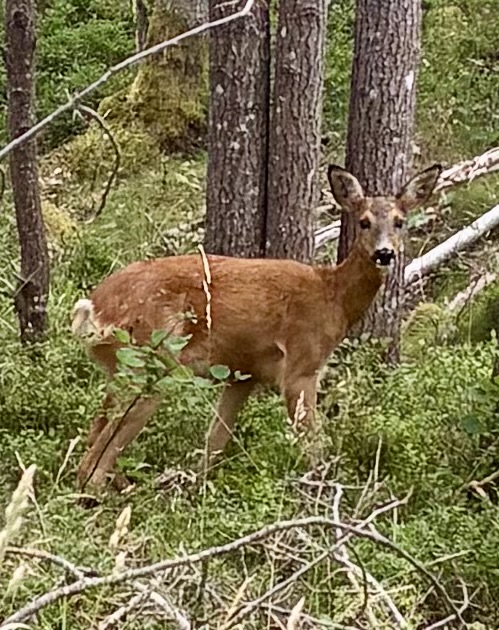
I’ve always enjoyed being outdoors in nature. In fact, both my grandparents on each side, had it as a ritual to go for almost daily walks in the forest or around where they lived. As a teenager, I used to horseback ride a lot, and we often went for rides in the forest on Sundays. It was on one of these rides, I met a deer in the wild for the first time. My horse pointed his ears with both trepidation and curiosity, at the animal standing on the path in front of us. Me safe on his back, while calming him down and learning all about his signals. Another time, when we were having a field day to go orienteering in high school, me and one of my classmates were walking the trail and talking, not quite sure if we were following the map and instructions properly, so we stopped and tried to figure it out. We stood in silence for a while. When we looked up, a wild moose came our way, screaming as loud as we were, before it ran back into the woods. We made it safely back to the others and had a fun story to share.

It’s therefore not that surprising that I kept my outdoor habit on Sundays also later in life, first with girlfriends catching up after the work week, and then by myself, just enjoying the fresh air and scenery, refilling my energy and connecting with nature and all its beauty and aliveness. I still do. 

This type of appreciation and connectedness is what makes up the foundation for growing in relationship with nature, while being both stewards and stewardesses, and part of the eco-system. To see all living things as relatives to us. This is why I changed my name to Telluselle – which means to be a child of earth – an earth woman – to make a brand. It’s a name that I now have had for almost exactly 20 years!

To be able to continue enjoying nature’s beauty, it’s important that we don’t litter or intrude in the animals’ natural habitats too much, as well as make eco-friendly choices, when it comes to anything we wear or use, eat or put on our bodies. I began using biological products for my face, hair and skin in 2005, after returning from my first longer stay in Hawai’i. I used to have some issues with little blisters on my face and was taught to never use anything topical that I wouldn’t be able to also eat. That’s a pretty good rule of thumb! Our skin absorbs what we put on it, which can affect us internally. When I was younger, I liked going to the tanning booth about once a week, to not look so pale, become a little warmer and to feel better about my looks. This might be why I later developed skin cancer though, unless it was even coming from having lived not too far away from a nuclear power plant, giving off radiation. 

To me, skin is like the the ground of Mother Earth, and like the bark of trees. When polluted rain becomes absorbed by plants and trees, they too become sick and full of toxins. Everything is connected and everything is interdependent. 

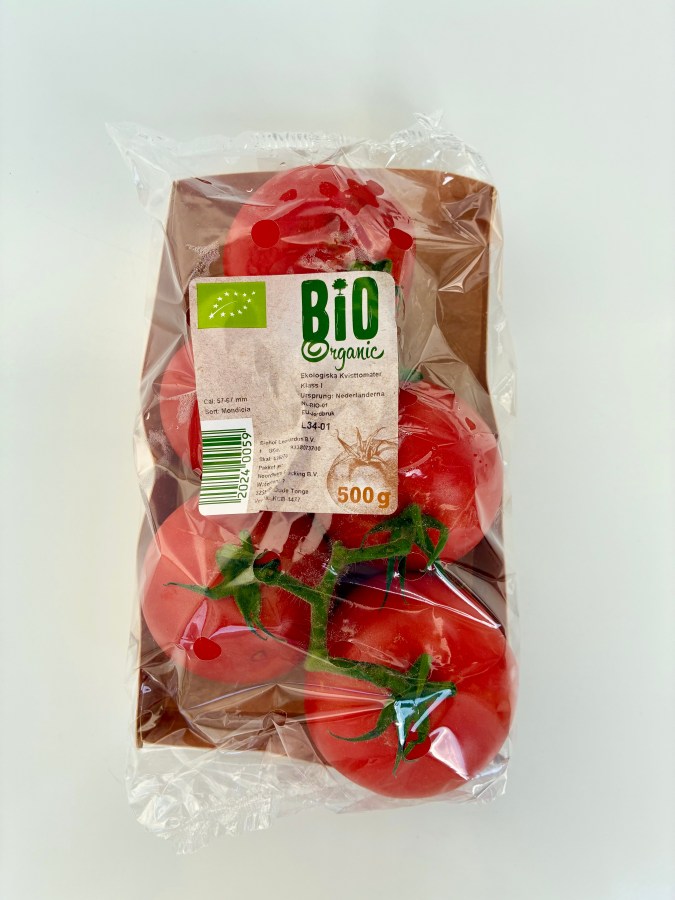
This is even more important when it comes to how we source our food of course. I try to eat organic as much as I can, besides choosing gluten free and lactose free alternatives due to my sensitive stomach. I became a part vegetarian in the mid 90’s after learning about how the meat industry works in Sweden, when I was working as a copywriter in advertising. We had several accounts on various firms, that sometimes repackaged old frozen meat, that after it became thawed just named differently. I was told to write a letter once from a CEO to Swedish farmers, to encourage them to use more antibiotics in the feed for pigs, to make sure we’d have enough ham for Christmas. And I was told that hamburgers are made of the rest inside cows’ heads after the brain has been taken out. And that is why Mad Cow’s disease spread! No wonder I became nauseous so often! I’ve never been against eating meat per say though, and had an interesting discussion once with a friend of mine, who like to hunt deer. It’s the large-scale industry that must change! My body began craving meat some more a couple of years ago, when I needed more iron, so nowadays I eat both clean chicken and fish. What do you eat? Can you make more organic choices? I believe that this is better for the health of nature, and thus better for our health too.

Many Native American Indians like to remind us of how we must think of our next generations, when it comes to how we treat Mother Earth. If we pollute the environment too much, we won’t be able to get our own food in the future, besides any further urban exploitations. The dilemma unfolds when we take transportation into account too. If we only can get organic alternatives through long-distance import, is that good for the environment, if it must be transported through heavy traffic? This is what sustainability is about. To think and act more long-term, both in terms of how we work with agriculture and how we handle our waste. Do you recycle? Reuse or repurpose? Is that something you can do more of? 

One of the good things about our current situation is that it also becomes a necessity to innovate and be more creative! Not too long ago, I discovered how one business is making a substitute for plastic by seaweed and another using orange peel to make a substitute for leather. Have you seen them? What do you think is needed to restore nature and keep it pristine, while still being able to live a comfortable life? What would you invent if you could?

To improve your connection with nature, go outside and use your senses. Feel it, scent it, watch it, listen to it and taste something. We’re part of nature and nature is part of us. A good enough reason to be more caring.

To listen to this blogpost as a podcast, find it on Apple, Spotify or YouTube, or click here:

Dancing by the sea

Since I tried dancing a little Isadora Duncan by the ocean, when I was in Portugal 2019-20, I decided to give it a try here in Sweden too. I live across the road from the forest and the big inflow of water from the East Sea here, called Mälaren, so it’s been very comforting to be able to both sunbathe and take a dip during summers, as well as see the seasons change up close. While it’s not nearly warm enough yet, to do that, I went down today to dance instead.

As with everything, the more we do something, the easier it gets. In this particular practice, getting used to move graciously on coarse sand, or grass, barefoot, has been a real challenge. But today I realised, how it’s also somewhat a matter of bypassing the sensations under our feet, very much like in a studio with wooden floors. When we’re focused and present on where we’re walking, the ground is perceived and sensed more. When we’re focusing on moving upwardly instead, it doesn’t become as difficult. Fascinating!

Have you as an adult ever practiced something outside, that you usually do inside? Give it a go!

What I did to start Telluselle Living Center in Sweden

This business idea originated as part of a Project Management course in spring 1999, when I was seeking a combination of wellness and coaching myself, as I wanted to transition from working as a copywriter to a career coach. I was very much identifying myself with my profession, wherefore this journey became deeper than expected. After showing my business plan to a man working in the wellness industry, I received a freelance assignment as a writer and editor to his membership magazine, and did so during my university studies in Work science.

In 2004, I took extra graduate classes in Conversation technique with a focus on coaching and mentoring sessions, that were developed after my exam paper didn’t make the cut, with a professor thinking that coaching as a profession was fluff, but I began working as a Job coach in my own company Balansfokus after getting some support by a student incubator organization. Then I was suddenly put in foreclosure at the same time my mother passed away and therefore took a break and went to Hawaii to heal. When I returned and tried to begin working again as a career and life coach in fall 2005, nobody was interested, and I didn’t get any job.

In 2008 after I had written my book about my healing in Swedish, entitled The Keys to Paradise, I developed my business plan and had a vision about making it look like a gazebo, but bigger. I ran my idea by some of my contacts in dancing, yoga and qigong south of Sweden, but nobody was interested. I then looked into building it in Stockholm instead and contacted some people here, while looking for a location, set on blending in and contributing to the emergence of eco-design and planning. After no interest here either, and losing my home in south of Sweden in fall 2009, I went back to Hawaii in 2010, to finish my Masters degree there and hope to start it up in San Francisco the following year or so.

In Honolulu 2010, I developed my business plan further after translating my book into English. I saw an opportunity to build it with ready-made bamboo structures that together with foundation, utilities and so forth would come together exactly how I had envisioned it. I shared my plan with various people, like my Hula-teacher, the university, and one of the founders of organization Kanu Hawaii, through which I found the architect. I also shared it with the people I met at the YWCA 2011 thinking of their coaching and how these things could be incorporated into Telluselle Living Center in a similar fashion. But then, I was deported.

Back in Sweden and having recuperated somewhat, I started to look into building it in Stockholm again in 2013-14. I went to see Co-ompanion, an incubator type consultancy for creating a cooperative, which was the form of shared ownership I thought could be a good idea. I shared it with the WestAfrican dance teachers and with the Isadora Duncan teachers here, but as so often in Sweden, nobody stepped up to the plate, not even for a meeting about it.

In 2015, on a vacation to Estoril, Portugal, I visited a spa where I got some much needed Hawaiian Lomilomi massage and began to see how I should position myself as something neither just a spa, nor just a dance studio but an actual wellness center offering several services and classes, with me as the coach for sacred circle groups and one-on-one sessions while being the manager. But then, I was heavily subjected to vicious libel and could neither get any PR for my books, nor for this business idea or move ahead with my plan to also make a lei out of bamboo. I couldn’t get any job either. I held some coaching for MeetUp-groups instead, and some introductory Hula-classes, but all came to a halt.

In 2018, a Swedish psychiatrist decided to declare me insane, partly because he though I wouldn’t consider isolating the house hosting this wellness center, which of course was something I already checked in Honolulu 2010 and he never asked about, just assumed. This made me flee Sweden, wherefore I first went to Germany in 2018-19 and then back to Portugal 2019-20, considering both places to live in, but realising it would take much effort and time to learn either language good enough, so that wasn’t really an option, unless I could work solemnly in English.

Fascinatingly, I came to live in a neighbourhood since 2023, close to an old house and tower, in an octagon shape! It was formerly owned by Fredrika Bremer – Sweden’s pioneer feminist and author making way for creating equality and more women authors, meeting in this house. It’s now a café and restaurant. The original house, including the octagon shaped tower, was built in 1867 and is called Lyran, after the instrument Lyre.

What happens next? I’ll let you know…

Celebrating Hawaiian Hula

Happy Merrie Monarch Festival! Imagine a dance coming from the heart and touching yours – that is the Hawaiian Hula. And right now, the yearly Merrie Monarch Festival is in full spring in Hilo, Hawaii, where the finest and best performers compete, but also meet and keep the culture alive.

I’ve loved dancing my entire life. As a little girl, I took ballet classes and wanted to become a ballerina. When our family moved, I had to change to taking classes in jazz dance instead and continued with this for many years. As an adult, I put it aside for a while, when I was focusing on my copywriting career, but realized later that something that used to bloom inside of me, had started to wither. And that nobody should tell me to stop dancing, whether out of jealousy or envy. When my mother became terminally ill in cancer a decade later, I felt pulled to begin dancing again, and took to West African dance, remembering how I used to play with a girl and her family, part Nigerian and part Swedish when I was a little girl. The drums created rhythms my heart began to synchronize with, and I could reclaim my passion. Dancing barefoot and closer to spirit as my mother passed away in 2004, I longed for something softer to comfort me, while wondering what a true woman really should be and look like. And then… An opportunity to study in Hawaii with Swedish student loan arose! 

The stunning sunsets were accompanied by a group of Hula dancers at the Waikiki beach, where I watched them in awe for many nights. I then realized, I could learn this too. 

All my life as a little girl, I’ve always wanted to wear beautiful dresses and here, women wear dresses all the time, and with beautiful flowers in their long hairs! I grew long hair and started to practice Hula at the grounds of University of Hawaii, where my then Kumu Hula (Hula teacher) were studying and teaching classes in the evenings. While it took some time to relax and be grounded, I saw my future turning bright again.

Hawaiian Hula is a set of dances in various styles, both modern and ancient, that describes the life in the islands. Back in the day, Hawaiian was only a spoken language, where the songs, chants and dances kept it alive as a way to tell the history of the islands, honoring their kings and queens, about their battles, about the places, about their relationships and about the legends and myths featuring gods and goddesses in Hawaiian folklore. For example, Pele is considered the goddess of volcanoes that Hawaiian Hula dancers chant and dance about and for. When the white missionaries came to the islands with James Cook, Hula became banned and looked upon as barbaric. It couldn’t be more far from the truth! It’s rather believed that to be a really good Hula dancer, we should be pure channels for the Divine spirit and practice Aloha, which is compassion towards ourselves and others, while caring for the land in relationship, making us into true stewards and stewardesses. Luckily, King Kalakaua reclaimed Hula as an allowed art form, and it became practiced openly again in the late 1800’s. 

In 1964, Hawaii sought to improve tourism and began a festival, that in 1971 became the Merrie Monarch Festival with a yearly competition and re-enactment of King Kalakaua’s coronation with a parade through Hilo town. He is considered the merrie monarch, besides the beautiful butterflies that also live here.

Nowadays, the Merrie Monarch Festival consists of three parts: Men and Women dancing separately in the Kahiko style – a style based on chanting and drums, and in the ‘Auana style – with choreographies danced to music played on ‘ukuleles and traditional ways of singing, both in Hawaiian and in English. And a day when chosen women dance solos in both styles, to compete for the Miss Aloha Hula title. 

Watching the Merrie Monarch Festival, shows us how various implements are used, like bamboo sticks (called Pu’ili), rattle gourds decorated with feathers (‘Uli’uli), stones (‘Ili’ili) and small drums (Ipu Heke or Punius). We get to see how leis and ti-leaf skirts are worn, and how dresses, shirts and skirts are matching the song and the island it comes from with their printed patterns and colors. Altogether performed with a strong sense of unity, dancing in groups as one. Each step and hand motion shows us the sentiment and the meaning of the song, together with the dancer’s facial expression. The goal is to make the motions both defined and subtle at the same time, tuning into the power of the place the song is about, where each motion also holds this energy. When Hula is performed well, it creates a connection between the audience, the music and the dancers, and with God.

To learn more about my own experience of living in Hawai’i and beginning to learn how to dance Hula, read my book The Call for Divine Mothering ~ applying the keys to paradise, available on Amazon and Kindle.

To watch the Merrie Monarch Festival, go to their website at merriemonarch.com

Create more flow with Feng Shui

Happy Feng Shui Awareness Day! Have you ever felt more at ease in certain places and homes than in others? This could be because of how the furniture and colors have been arranged according to Feng Shui.

Feng Shui is founded on Chinese Medicine and is a way to enable more positive flows of energy in various areas of our lives, whether to improve wealth, work, romantic relationships or our health. According to this belief system, each area corresponds to a specific color and natural element and can be found when we apply the Ba Gua or map with the directions of north, east, south and west on our property. It begins by looking at the auspiciousness of how our house is placed, such as if the entrance if facing water, which symbolizes more income coming in, while the back of the house should preferably face the mountains to provide a sense of safety. The same is applied when we choose where to sit in various meeting rooms, offices or in restaurants. Having our back against a wall where we clearly can see the door or entrance, makes us feel safer and is called a power position. This is also how we place the bed with room on each side and the headboard against a wall where we can both see out the window and see the door.

The adding of plants can enable better air quality as well as enliven our space and our areas of life where we place it. And putting little objects in pairs is inviting in good partnerships, especially romantic ones.

The Ba Gua map is held either with our back to our front entrance, or according to the north, east, south and west directions. There are two schools for that, which can both be applied. But here is a summary:

The center of the home is for health and considered the earth element, supported by the colors yellow and brown, with square shapes.

Relationships are also earth and supported by red, pink and white, with square shapes. To activate this area, place things in these colors and shapes in Southwest.

Family can be found in the East, goes best with the colors green and blue, harmonized by rectangular shapes and the wood element.

Children and Creativity belong to the element of metal and are centered in white and pastels, with round shapes in the West.

Travel and helpful people show better up in life with a focus on metal, with colors like silver, grays and whites, with round and oval shapes. The area of our home for better travel and helpful people can be found in the Northwest.

Career is considered belonging to the water element and is best enhanced by black and wavy shapes. This can be found in the North of our home or direction of the house.

Self-cultivation and knowledge become activated through a deep blue color and the element of earth with square shapes. This area is located in the Northeast.

Wealth and prosperity can be strengthened through the use of purple, and things related to the wood element with rectangular shapes. This can be found in the Southeast corner.

And finally, fame and reputation can use some fire and red or orange with triangle shapes. This can be found in the South. 

So, when we choose furniture, various fabrics for our curtains, mats and pillows, for our throws and objects we like to decorate our homes with, we can be more deliberate about what we buy and place where, to increase a better sense of flow of energy, based on their colors, shapes and material. White is considered metal, while brown and green is wood. Not surprisingly, water is blue and fire is red. Altogether this is one way of creating more harmony in accordance with nature, where we live and where we work.

Then we can add being more conscious about choosing eco-friendly alternatives, such as what wood. Birch that grows in abundance or bamboo, rather than rare kinds only found in rare places like Hawaiian Koa. We can choose fabrics made of organic cotton or silk, before mass-produced polyester, and not waste neither our own nor nature’s resources, by too much clutter with things we neither like, nor need. To begin your Feng Shui makeover, start by standing in your doorway and see what you are welcoming in. Then walk around the different areas and see where you place your things and which can be moved around, discarded and bought new. If you think about it, Feng Shui is simply a more sophisticated way of just being practical and stylish. How is your home designed and decorated? How would you like it to be?

To get help with decorating or even choosing your next home, contact a Feng Shui practitioner in your area.

To listen to this blogpost as a podcast, find The Source Podcast on Spotify, Apple and Youtube.

Resurrect a project

Happy Easter Sunday! This holy Easter Sunday, we use the theme of resurrection to revive a project or goal, and to instill hope for a better future, grateful for those who had to sacrifice something before, for us to live as well as we do here and now.

What is a resurrection? We know that Jesus died on the cross and rose on the third day, taking on our sins and became the son of God. It tells us that death isn’t always final, whether to live on spiritually or how we continue to make an impact after our passing on earth. In Jesus case, this means to walk in his footsteps by showing tolerance and compassion. Then we must ask ourselves: Which kind of legacy would you like to leave behind or to lead the next generation with? I think most people think of what they leave behind, after coming of age or seeing a loved one pass away. 

The collective evolution is the sum of all those who have lived before us and what they have created. Life is sustained by our developments that the next generation continue to use and develop more. Take a moment and acknowledge your gratitude for those who have invented something you use every day, like those who have built in electricity into our homes and offices, as well as manufactured phones and laptops that we nowadays almost take for granted to have. I’m so old that I remember using a typewriter first. My dad, who is an author, had first a regular mechanical and then an electric. I got my own first typewriter at the age of ten, when I published my first little paid letter to the editor for a youth page in a daily Swedish newspaper. First time I used a computer, was at a job where I digitalized an entire inventory for a car part firm in my early 20’s. While we might sit in front of our screens too much sometimes, it certainly isn’t something I would like to live without. Would you? Is there something else that is an invention you use daily or often, that you really appreciate? Who made it?

To resurrect something can also mean to reset something or to revive it, which is in line with reusing that is an important aspect of living sustainably. My example is, that I have just recently begun to redo an old exam paper for my Master’s degree in Worklife Science in Sweden. It’s one of those annoying things I’ve been carrying around as a totally un-necessary failure that could have been corrected already more than 20 years ago when I first wrote it, would I have just gotten clear direction about what it needed to improve. I never did then and had been working on it for almost six months, including travelling to do interviews with coaches in New York City, that then was a new profession in Sweden. Perhaps too new and therefore somewhat controversial and suspicious looked upon. The whole institution at my old university got cancelled and there was a lot of humdrums. My focus then, and now, is the dialogue and how this is used differently as a tool for various professions and how the Socratic dialogue is the one to strive for, to enable true personal learning and growth. Now, I’ve received feedback on my old thesis to know what to improve at another university, where I’ve registered and will be focusing on perfecting for the next couple of months. And… *drumroll*! This, I’ve just recently found out, also enables me to become more eligible for one of the categories to apply for a green card to live in the United States, which is something I’ve wanted for a long time! How is that for a goal becoming a reward! So, back to the drawing board, back to reading course literature and writing in an academic manner. I’ve also realized how much I have learned since then, which makes it both easier and more motivating to get my thesis done. Do you have any old projects, plans or ideas that you’d like to revive and resurrect? What is needed to make these happen? What can you restore and develop?

It is when we put in our effort sincerely and like what we’re doing, that we naturally increase our hope for a better tomorrow. We enable it ourselves when we blow more life into our creations and even more so, when we work in community. Together, we find a new purpose or renew an old. What do you need to learn to move forward with your plans and dreams? Who can you learn with? And how can this become your purpose?

And speaking of manifesting. I’ve been missing having a hair clip with a Plumeria flower on it for some time and last week, a cute set of various colors appeared in my local suburban grocery store in Sweden!

To listen to this blogpost as a podcast, find The Source Podcast on Spotify, Apple and Youtube.

Planting seeds

Happy Planting Day!  Living in Sweden, means to not only wait for the surface to thaw and become soft, but also the core of the ground 5 feet underneath, where it still can be frozen for a month more. This must be thawed too, for the seeds to be able to grow roots and to hold, if there’s a night or two more of frost. By this we can understand that for us to grow as people, our core must also soften and be open to change. Making superficial changes might not get to the issue, which often is based on our mindset. This is where lifecoaching and inner work comes in. Learning to understand your views on the world and how you’ve formed them, can help you on a deeper level to let go of what no longer serves you and to broaden your perspective.

When it comes to indoor plants, this is also a good time to repot those who have outgrown their pots or seem in need for a bigger space. All of them can at least benefit from a little extra soil on top. Also here there are sustainable alternatives, where you can choose organic soil, with no added chemicals to the mix. And a metaphor often used for pots, is how we live. We too can be seen as little plants living in pots, which we sometimes outgrow or need new energy from others to thrive in. In fact, looking at yourself like a plant can help you understand how to increase your self-care and tend to your needs regularly. How your plants are doing show how you are doing. Are they dry and bristle? Are you dehydrated?

When it comes to our creative projects, it’s therefor easy to use plants as a metaphor too. In fact, when I started my coaching firm Balansfokus in Sweden late 2001, I got help from a student incubator program at Malmö University, called the Greenhouse! 

The idea is the seed. The idea is everything. We can perfect our craft, polish our skills, use the best of resources, but if we don’t have a clear idea, a clear message, that we would like to improve the world with, it’s not really creativity. So, before planting a seed, define which need it will satisfy. What is a problem you’d like to shed some light on, a solution you’d like to see or something you simply like to share?

Then investigate the pot. This is where you’re going to work on this idea and where you’d like it to be shown or sold. The pot can be a studio, or at home on your computer, or in a co-working space with others to collaborate with.

The soil is what you infuse your idea with, such as your knowledge and skills, developed from education and training. What do you need to learn to develop this idea?

Next comes the watering. This can be compared to the hours of work we must invest into our project. How often and how much do you need? How will you sustain yourself meanwhile?

Add a little sunlight. Often some good advice and opinions of others can help you to see what you can improve. The right feedback will enable you to put in the extra effort and make your idea grow into blooming. Who can you ask to take a look?

And then when you think you’re done, it’s time to prune it. Do you really need everything you attached to it? Often, we’re afraid of letting things just be as they are, when in fact it’s rather the opposite. The better the idea, the less need of embellishments and additions. 

Hopefully, you can now get a harvest. After you’ve gone through all the details, such as edited your book, or removed any extras not congruent with your core idea, it’s ready to harvest! When you get paid, or followers, or an audience sees your project on stage, you have harvested recognition.

Whether art or an invention, it’s your true uniqueness that the world needs. Your touch on it, makes the difference.

To learn more about the creative process and get tips on how to get inspired, you can order A book about Creativity on Amazon and Kindle for only 8 dollars or check out the presentation on my YouTube channel for free! In this guidebook, I have compiled a couple of coaching questions to each chapter, so you can apply it directly. 

Everything in life is the result of creativity, including our relationships and our interactions with others, so: Which seeds are your planting this season?

If you’d like to listen to this blogpost as a podcast, you can find The Source Podcast on Spotify, Apple and YouTube.
Photo shows my homegrown avocado.

Balancing time

Happy Spring Equinox! This year, these posts are mainly dedicated for a common celebration of the date it publishes, or one we create, with themes for wellness, creativity and life coaching. And today, it’s spring equinox – a day when our daylight in the northern hemisphere have increased so much, that day and night are equally long – a day with perfect balance between light and dark. From here on, the daylight will continue to increase until the summer solstice, which is the longest day of the year with only a couple of hours of darkness. But right now, the earth is in perfect balance with the sun. How is your balance in life when it comes to your waking hours, and hours asleep for starters? 

There are two ways to look at these shifts. Either you want to live as close to nature as possible and therefor maybe rise earlier with the sun as the spring turns into summer and sleep more and longer in the winter. While this can feel more energetic and lifegiving, it can also create stress for our bodies. So, another way to look at these shifts of daylight, is to strive for balance all year around instead. I’ve had the blessing and the fortune to live both in Hawaii for three years and in Portugal for one year, where the hours of daylight are almost 12 hours consistent during the whole year, which made wonders both for my physical health and for my mood. Everything felt more stable. If this is true for you too, you might benefit from looking into how you can create this in your home, such as to get blinders in the summertime that makes your room darker, and to get a lamp that uses natural light to wake you up in the wintertime. What do you prefer?

The next step to create balance with our time, is to see where and how we spend it.

In life coaching, it’s important to build habits and structures that support life balance in our different areas. To better see what you might need more of, or less of, you can draw a circle and divide it into eight pieces like a pie. Each piece represents an area, where you can coach yourself with clarifying questions, or together with a life coach. Take out your planner, or journal, and look into how much time you spend on each piece. These eight common areas of our life are:

  1. Health – What are your physical needs of sleep and diet, like supplements?
  2. Home – How do you live and where? Are you taking care of it regularly?
  3. Work or study – What do you do for a living, or like to do?
  4. Socializing with friends – Who do you spend time with and when?
  5. Romantic relationship – What can you nurture here?
  6. Fun and recreation – What makes you feel relaxed and refreshed?
  7. Money – How are your spending habits?
  8. Personal growth – What can you learn more of? Are you practicing faith?

Then, rate each area for how much you have of it, and see how full your circle becomes and what is missing. How much time and energy are you spending on each area? Are you satisfied? What can you do to improve each area? And what can you do to balance these up with flexibility? Can you make a more defined schedule perhaps? Finding life balance is never a constant and might differ both depending on which phase of our life we are in, and what we currently need and focus on. The key, is to be awake and aware of how we feel so we can set appropriate boundaries that support each area to be seen, heard and integrated with equal importance in our lives. You can look at it daily, weekly, monthly and yearly. If you have spent a lot of time and energy on your job and worked overtime, it’s no wonder if you need to take some time off after your project is done. 

All these pieces aren’t only about time for our physical and emotional needs but can also support one another. When we refill our cups with rest and romance, it becomes easier to do a better job and manage our home and finances. Likewise, when we get time to focus on developing new skills and reflect on our lives, we get something to talk about with our friends, which enliven us and can make us feel more motivated and inspired. The point is, each area affects another. You can even draw an arrow around the circle to see how one can lead to the other, both for better and for worse! With too little sleep and no fun and recreation, you will ultimately do worse on the job and have more conflicts in your relationship. To tend to your life balance, is to take good care of yourself, so you can care about others and earth too.

To listen to this blogpost as a podcast, find The Source Podcast on YouTube, Apple or Spotify.

Clean your home to clean your life

Happy Spring-Cleaning Day! And St Patrick’s Day, if you celebrate that. Today we’re focusing on making room for spring through some thorough cleaning. Next week is the Spring Equinox, so why not gather your cleaning tools and make your home and your life ready?

There is something very sincere and revealing about the increased sunlight exposing everything in our homes now. Our dark corners, beckoning for our attention to be cleared out, alongside other things. Besides a regular dusting, vacuuming and mopping of your home, there are three areas that I like to include in my spring cleaning at least once a year. I defrost my refrigerator and freezer. I go through my closet. And I clean the windows. These things can be added with a perspective of Feng Shui to them, using their principles to improve our lives with it. 

I defrost my refrigerator and freezer. I take it all out and let all the ice thaw. This feels like a symbolic measure in harmony with how our winter now is thawing away (hopefully!). It makes it possible to make an inventory of what we have and what we would like to have. Maybe make a list joined to your usually grocery shopping, where you write down things you’d like to store in your freezer. Some extra ice-cream, bags of your favorite ready-made meals or even some of your own baked bread?

I go through my closet. I put away my winter jacket and boots and take out my coat for spring. I also like to clean and polish my shoes and make sure I clean all my winter cardigans. This too makes it a good time to go through what you have, what you’d like to keep and what you’d like to renew or add. As a lifecoach, I advocate becoming a personal leader for your life. This includes your wardrobe! To feel put together and prepared can make you feel more confident and ready to go out and socialize more, as well as to seek new job opportunities. No more shopping on a whim or having nothing to wear. Decide beforehand what you’d like to have, look for it online and order your preferred items directly or save the pages for later in an online folder. You might even want to make a Pinterest collection or a mood board with colors and fabrics you yearn for. Fashion is an excellent way to both be practical and creative at the same time. It can also inspire you to try doing new things, if you get the gear necessary and use them!

I clean the windows. Not only is it nice to get some new fresh air into my home after keeping them closed the whole winter season but for a couple of minutes once a week, I literally also wash away any marks of snow and rain which makes the sunlight flooding even greater and my view even prettier. Cleaning the windows can be done with a simple solution of regular dishwashing detergent by hand and warm water that you scrape off in big sweeping motions from corner to corner. You can also use some white vinegar to polish with and a cloth to dry off the windowsills. 

And not surprisingly, our windows not only show us the world outside, but can be seen as symbols for our outlook on life. If you live with a huge wall right outside your window, you might feel obstructed, while a view free of any intrusion and a beautiful horizon like I have from my balcony and my living room, makes my choices feel open and endless, while safe away from the eyes of others. I think this is especially important after having been detained under surveillance cameras during my immigration detention in the United States for almost a year, and of course the regular use of surveillance in society can sometimes make me feel watched in an unwanted way, besides having to deal with a stalker. Looking out the window every morning, makes me feel more present both with the weather and nature and her seasons. When I grew up, I learned an old ritual. Every time we move into a new place, we’re supposed to count the windows before going to sleep. Then it’s said that we’ll dream a true foreboding of what is coming. Whether you believe in that or not, is up to you, but having clean windows for sure make us feel accomplished and shows our home some extra care. 

Then what we place in our windows is said to be the eyes of our home. Do you have some nice potted plants and a set of curtains that frame them as cozy? In Hawaii, the culture teaches that we’re not supposed to have any green plants indoors, to not compete with the beauty outdoors. There, the seasons are different and almost non-existent, so it’s always green all year around. Here in Sweden however, it’s different. Here, having green plants indoors both makes the air fresher to breathe, and provides us with something alive during the dark winter months. We simply become less depressed and feel better with potted plants by the windows and a bouquet of fresh flowers now and then!

So, to conclude: What would you like to store at home? What would you like to wear this spring? How do you perceive the world and your place in it from the perspective of what you see from your windows? And what does this say about your outlook on life?

To listen to this blogpost as a podcast, find The Source Podcast on Apple, Spotify and YouTube.

Celebrating sisterhood

Happy International Women’s Day! Women have been treated lesser than men for centuries, even though we’re the gender capable of carrying a life in our wombs and giving birth. And even though, all men have needed their mother to love them. While I don’t mind that men take the fight for security instead of me, that we should be treated as equally worthy, shouldn’t even have to be an issue nowadays! But, instead of going on and on about how awful it has been and how much women have had to sacrifice in their pursuit of a career, in addition to keeping up their womanhood and beauty, I’m going to focus on the importance of sisterhood. After all, if we can’t show one another support and compassion, how could we ever teach men to?

Sisterhood to me, is to have in mind that the women around us, especially those we might be in a conflict with or don’t know so well, have too been discriminated against and treated poorly just like ourselves, or even worse. There is something sacred about recognizing our inherent worth as women together, without the competition, envy and gossip. It can feel so much more offensive, when a woman goes against another woman. A man might not know better or understand better or simply even be a lost cause (although I don’t really want to believe that), or just insecure about how to deal with his and our sexual desire. But that a fellow woman can’t respect another’s right to get her needs met, and be treated with dignity and respect, can only be because of two reasons. Either, she is more oppressed than you are, more institutionalized in the manner of taking on men’s bad ways of treating women and internalizing these ways into her own, becoming taught to, without awareness and discernment. Or, she is being evil. 

It’s so sad and annoying when women keep comparing themselves to others’ looks. I used to be a very skinny woman. My entire life, I’ve had to struggle to gain weight and could eat whatever I wanted and when, without ever, any of it showing. Meanwhile, many of my friends, and a fellow dancer in my early 20’s especially, would go through my cupboard and fridge in the kitchen to check what I was eating, while she struggled with bulimia thinking she could gain fellowship in gulping down package after package of ice-cream before forcing it up again. I would never. Outwardly, she was beautiful as a doll, with curly long hair and the perfect shape of her breasts and waist. She danced with both a charisma and a groove of her own added to the choreographies that she learned in a heartbeat. She always smiled and was friendly. Yet, she told me how much she hated herself and wanted to learn my secret… We watched the movie Thelma and Louise together, smiling towards one another when she drove me home afterwards. While I wish nothing but the best for her, our friendship ended, because in a way I was also envious of her, even though I knew it was partly a fake persona. I too wanted to be able to dance as well as she did, and not to mention to look like her. But was it then friendship, if we both were just envious of each other?

Fast forward some years, and I found myself in a much better position with girlfriends from various circles, rather than just hanging in one. This way, I had some from my teenage years, some friends from my time in advertising, and some from my university education later on. While there were certainly an element of competition among us sometimes, both in regard to men and to jobs, at least we were more colleagues than foes. I began to enjoy spending time more with those complimenting me with their knowledge and personalities, rather than just being with women who are more like me. I think we need both.

But, it wasn’t until I was living in Hawai’i, I really experienced sisterhood. Being detained for almost a year in a federal detention center among mostly regular Americans, that is, regular Hawaiians, in Honolulu, gave me respite and the position to both be helped and help others on their healing and personal growth journeys. By sharing our vulnerabilities in how we got to this place and why, we could develop a sincere compassion and respect. That doesn’t mean that we always agreed, or that there weren’t conflicts and fights, but no wonder in such closed quarters. We all were able to ask one another for forgiveness and to move on, as our masks peeled away. There is nothing stronger than when a woman stands up for another woman, against men. Here through, our bonds can solidify.

Perhaps, this is why I can’t stand the superficialities of Sweden any longer, where popularity and fame seem to drive everyone to be fearful of the ones who have more, rather than developing their own confidence and heart. Nobody daring to get to know someone for real. Then they miss out on the very core of the matter: The deeper the secrets we share, the deeper we can love. So, share!

Luckily, these dramas were also something Isadora Duncan understood and lived through, so now I can instead dance them. And we can of course look to find a woman that can be a good role model instead. When I grew up, I found that my step grandmother Hanna, was how I’d like to be. That is why I named myself Hannah, after her, who couldn’t conceive. My grandmother, who was my grandfather’s second wife, could turn any dish into a gourmet meal, saw and knit clothes that lasted for generations and made the best of raspberry jam! She also really cared for my grandfather, cared about me, and cared to look her best for us. What are some women qualities that you’d like to develop or already feel that you have and can be proud of? Who has been a female role model for you? Who is a woman you can honor?

What is endangered in your life?

Happy World Wildlife Day!  We’ve just entered March and that means we’re slowly putting winter behind us, get more daylight in the northern hemisphere and entered the season of spring, and the natural element of wood, according to Chinese Medicine. Hopefully, this means that we’ll be able to see new sprouts, fresh vegetation and little flowers, bestowing us with their beauty. The birds will be singing a little louder and more, and we might get another storm, with lots of wind, necessary to blow away the winter. Luckily, I live across the street from a protected area of forest in Stockholm, Sweden, where I get to experience this firsthand, as well as encounter wild animals on a regular basis. I’ve seen beautiful butterflies swirling during summer, heard the woodpecker peck on trees, seen wild bunnies eat grass, squirrels collecting seeds, and on occasion even met various deer. Which are the animals, trees and flowers you see, where you live, throughout the year?

I’ve always been inclined to feel fascinated by wildlife. In fact, my very first word that I uttered was tiger in Swedish, – tiger – when I was a little girl travelling with my parents to India and Bangladesh. It was also there I pulled something that I thought was exciting sitting in a backpack of my dad… which turned out to be a giant Anaconda! Not surprisingly, my mother screamed and they quickly hurried away from the tree, where it had laid itself to rest on a branch. A snake that big, can pull up a toddler and squeeze it to death! Nonetheless, I still enjoy meeting animals in the wild.

When I lived in Hawaii for a couple of years, studying Organizational Change and learning to dance Hula, I became more aware of both endangered and endemic species and the importance of ocean health. I got to see the awake volcano on Big Island. Walking on lava is a sight I’ll never forget! Endemic, means that a species only can be found in that particular place. And endangered, means that it’s close to extinction, whether by natural causes, by changes in the environment or due to too much hunting by humans. 

Being aware of, and in tune with, wildlife, brings a better understanding of our own place in the eco-system. When we realize how we too are part of nature, wherever we live, it becomes easier to feel a sense of belonging and a sense of oneness with nature. I think, if by simply acknowledging how alive everything is in nature, it invigorates me and reminds me of my place in the eco-system and how much predator I want to be, as well as always being aware of that there are predators of much greater threat than I am. To know this within, is to recognize a power greater than us, which gives us a more humble perspective on life.

If we want to look at this as a life coaching theme, you can ask: What is endangered in your life? What is rare that you might have stopped doing without even noticing, because of time constraints or becoming too occupied with other things? Is that something you can take up and do again? Believe it or not, but dancing, almost became endangered in my life when I focused on making a career in copywriting in advertising in my late twenties and already had to accept that my knee injury both physically and emotionally impaired me from seeking a dance career. So, I stopped altogether for several years, except for occasional clubbing, which in turn brought me to long for more beats, which became drumbeats and taking up West African dance. Which I’m so glad I did, because dancing really brings me joy. It’s way too easy to become complacent and settle for mundane routines so much that we forget what really makes us feel happy and joyful! What is that for you?

Another question is: What would make you feel wilder? One of the founding mothers of Modern dance – Isadora Duncan – once has famously said: “You were once wild, don’t let them tame you.” By this, we can understand that there is a freedom in nature, especially when it’s undisturbed by humans, that we too belong to, and can feel and experience. We can look at the butterflies for example and let them inspire our dancing. We can bring with us our own memories of nature as inner images to soothe our souls and use in her choreographies. It probably is why Isadora preferred to be naked underneath her silk tunic and why she so eloquently understood and taught motions with a soft flow and light jumps, bringing joy. The same is true for Hawaiian Hula dance, where each hand motion corresponds to a description in the song’s lyrics often talking about a specific place or used as a metaphor for a relationship with their flower garlands. In yoga, some of the asanas are inspired by animals. And in qigong, many of the motions are meant to balance ourselves through our connection with the natural flow of energy, including that in nature. While it might be too cold to practice outside in March, you can still go outside and have a look with more presence and awareness next time you go for a walk. Are there any buds on the trees? When does the grass grow again? How is the season where you live? Realizing my identity as a being of nature and caring about it, is what brought me to change my name to Telluselle and to make it into a brand. If you want to support nature financially, I recommend checking out World Wildlife Fund, the WWF, which does a great job on a global scale. 

Get into the wild!

To listen to this blogpost as a podcast, find The Source Podcast on Apple, Spotify and YouTube.

What would you do if this was your last day?

Happy Last day of February! Today, I’m going to offer you a theme of respecting time. And life! Here are two questions to work with for your personal growth and seeking of purpose.

We all know that February is the shortest month of the year with its only 28 days according to the Gregorian calendar. This was created in order to ensure an even count of sunlight days and moon risings, that aren’t exactly 24 hours every day, which therefor becomes a 29th day every four years. The next time we have such a day extra, will be in 2028, but I thought we could use this as a life coaching theme anyway today too. So, the first question is: What would you do if you had a day extra? A day extra, where you don’t have anything planned that you must tend to. Most of us, either must follow our schedules of work or school, or simply go about our days pretty much the same way anyway. In one way, this is good, because at the end of the day, the calendar is something man-made, that we need to function together in society and to sync ourselves with each other, to manage our trade and living. On the other hand, if we must live according to this calendar in the Western world, we might as well take advantage of it! So, what do you long for to do? Start by dreaming without limits. If you had all the resources available to you, what would you like to do? What is the feeling in this that you’re seeking to experience? What other things can bring about this feeling? What can you do with lesser resources? Dreaming like this, can help us expand our minds and open us up for receiving more or at least feel more inspired. Is there something you haven’t done for a long time, such as visited a museum in your own town, or snuck into a movie theatre in the middle of the afternoon? When can you do it?

The other way of looking at a short month like February, is to remember the fragility of life. We don’t know how many days we have left to live. Or how many days our loved ones have. On occasion, especially when I feel stuck, I like asking myself the question: What would I do if I only had three months left to live? What would you do if you only had three months left to live? This of course, is not exactly reasonable if you’re severely ill and can’t do much but rest, hope and pray. But the point isn’t to stress people dealing with life-threatening illnesses, but for us who don’t struggle with it at the moment, to always remember to respect and cherish both our own time on earth, and others’. 

So, after you’ve spent some time asking yourself what you would do if you only had three months left to live and therethrough realizing what is most important to you or what you really long for, that you should try doing as soon as possible, you can also think of how you relate to others. Are you respectful of other’s time on earth? Are you delaying, stalling, obstructing, hindering or even refusing closure with someone who needs it? And therethrough stopping that person from living a fulfilling life his or her last days? Who are you to do that? 

Here of course, it’s important to practice forgiveness, to see where you hold any grudges that you don’t want to carry anymore. To let go of them, forgive yourself and others, and ask to be forgiven as well.

It was when I asked myself the question what I would do if I only had three months left to live in 2008, that I felt my heart clearly say to go back to Hawai’i and see the people there again that I had gotten to know in 2004 and 2005. And what do you know, life offered me an unexpected opportunity to return a year later, which I did! Often, we’re walking on a path governed by “best practices” of the intellectual and logical kind, to be obeying citizens or obeying children still to our parents even if we have grown up and they might not have had our interests prioritized anyway. When the path where magic happens, is the path of the heart! Dare to tune into yours. Write it down in a journal or say a prayer to God or Universe. Then see what happens! You might get suddenly inspired to do something that will lead you toward your heart’s deepest longing. Have you tried?

What does a horse represent to you?

Happy Chinese New Year!  But why do I celebrate this, you might wonder?

I was first introduced to Chinese Medicine by a co-worker, when I received acupuncture to reduce stress and stomach issues in late 1994. In 1995, I began to practice Qigong and meditation, and talked regulary with a well-known master about life, love and spirituality. He shared the Chinese Zodiac with me, where I learned that I was born in the year of the Metal Dog and what this signifies.

Just like with Western Astrology, I emphasize looking at the various signs as various personality types, where some go better together than others and where all have various traits that we can learn about to help get to know someone better, rather than seeing it as superstitious predictions. Not surprisingly, I’m hence both loyal like a dog and persistent like sharp metal, which I think fits well with who I am.

My dad’s late wife actually studied Chinese and they made a longer trip there, so since then, the Chinese culture has somewhat evoked my curiosity. It was also the Tao the Ching and the teachings of Confucius that was part of my early spiritual seeking.

Last year, was the year of the Snake, which naturally meant to shed old layers of our lives, beliefs, habits, things and structures, as well as relationships.

In my own life, this for example, has meant to ensure that I haven’t acquired something that I don’t want to keep or bring with me. I usually give away, sell or discard, any items in my wardrobe that no longer fits me, are broken or worn out, or that I no longer like, regularly, which also makes room for new. This is also something I can apply to the rest of my home. And this is one of the principles of Feng Shui – another aspect of Chinese Medicine – a teaching about how one can organize one’s life, home and office to make the energy flow better, to feel better and to attract more positive things that one desires. This flow-chart represents the balance between wind and water and can be placed like a map on a room, apartment or house, where each direction represents an area in our life, as well as a natural element and color, as well as consider the actual location of where one lives. It’s this flow-chart or map, that is called a BaGua and is shaped like an octagon, that is the inspiration for the logo I’ve made for Telluselle Living Center. Practicing Qigong is built on the same principles but with our own bodies, meridians and energy field, to ensure longevity and good health. You can also apply this on the times of day and night for when certain of our organs work the best, and when to preferably eat and drink what and how, to feel better. For me, that means to avoid too cold drinks and fried food, and instead choose boiled and less spicy dishes.

And now it’s time for a new year! Our Western New Year on January 1st is typically a day when I set intentions and make goals after summarizing how my last year has been, but at the same time does happen in total winter darkness and often feels accompanied by our society’s stress, wherefor I like to see the Chinese New Year, that also is referred to as the Spring Festival, as a more relaxed opportunity to celebrate and cement my wishes and goals, hopefully in alignment with what it’s said it will bring. The key to remember, is that when many people believe in the same thing, or in the same power, it often becomes easier manifest, so why not take advantage of it as inspiration and good tidings to use for creating things that can benefit both myself and others?!

This year is the year of the Fire Horse – and auspicious for people like me who are born in the year of the Dog. It’s said that it will bring fast and swift changes, more momentum and more power and passion. You can use it as inspiration by thinking about what a horse represents to you. I used to horseback ride a lot growing up. For some 8 years I practically lived in the stables, riding, competing, cleaning and grooming horses, while both learning and teaching theory. I even began studying horse psychology on my own and practiced whispering to my favorite pony, which for example enabled me to not become bucked off for my first two years, and another time with his half-brother, I asked him to not run too fast over the obstacle course or I wouldn’t be allowed to ride him anymore. The next time, he was like a completely different horse, and I’ve never ridden better and got a ribbon.

To me, a horse is a steadfast companion but with a free will, symbolizing both freedom and personality. With that, I can focus on bringing forth more of mine, this new year! To perhaps claim more of my righteous space and time in the spotlight and to be more action-oriented in my approach and take practical steps to build my dream life. This is of course always depending on what others may or may not do as well, like decisions by lawmakers and authorities, but while having this in mind and be prepared, we can’t let governments rule our lives, they are supposed to serve us!

A horse is also very steady on the hoof through unchartered territories or wilderness, so making sure I know where I put down my feet, will probably become more important to consider with care, as I interpret it.

Which animal of the Chinese Zodiac were you born in? What does a horse represent to you and how can you incorporate more of that into your life?

The Chinese letters means Fu, as in wishing blessings for a prosperous year. If you’d like to try doing this lettering too, click here to see how.

Which level of attraction is more important to you?

Happy Valentine’s Day! Whether you’re in a long relationship, a new one, or single, today’s is a good reminder to focus on love and what it stands for, for you. You can do this by inquiring yourself about what worked and what didn’t work in your previous relationships. Do you see a pattern? Is there something in your own approach or being that you can change to not attract the same if it’s nothing you want? It’s very common to settle for less and just be with someone out of our wish to belong and be accepted in societal norms, but this can be our egos talking more than actual love. More specifically, what is it that you think is important for a good relationship to be loving and satisfying?

I have during my own life concluded that we can attract people on various levels, that actually matches our different chakras. It’s through these energy centers we blend, attract or repel each other. Then, it’s up to us which levels we want or prefer and prioritize to build with and commit to, if we aren’t matching on all of them. We rarely are. Or we are at first and then grow apart perhaps. Add to this the subtle, or not so subtle, differences between cultures and countries, languages and generations – no wonder love can be so complicated! 

How we become attracted and match another, depend on our situation and where and how we meet. But generally speaking, I’ve found that it’s on our four levels of physical, intellectual, emotional and spiritual, that we either connect and develop our relationship, or have different types of relationships for the various levels, depending on what we’re seeking and what we’re focusing on. 

The physical level – is all about chemistry, that pull, that takes you almost through a screen or photo, or better yet, an exciting energy that flows between us when we meet. A yearning to touch and be touched. A level where our looks and charisma matter the most, and where our main goal is to have good sex. 

The intellectual level – is all about two minds connecting and sharing ideas and ideals, such as when we meet someone we study or work with. It can be a creative partnership, a mutually complimentary relationship where both bring their own specialties into the mix to make something better. Here the main goal is to understand each other and to be understood.

The emotional level – is all about growing our hearts towards one another and be allowed and encouraged to express how we feel and why. To learn how we become affected by what the other says and does, and vice versa. And to become aware of what triggers us and what is anchored in a past experience that might filter and alter our perception and reaction, in need to be dealt with and healed. To make this relationship work, we must feel that we share an equal openness and vulnerability to not become fastened in positions of dominance and powerlessness. At the emotional level, our goal is to feel connected.

The spiritual level – is grounded in sharing our beliefs and faith. This doesn’t mean that we must belong to the same church or even religion, but if we are to morph into a healthy relationship on this level, we must at least share morals and values. That can be where we stand politically on various topics, as well as how we look at the world and other people. This is the level, where most dealbreakers are. It’s hard to grow together and work towards creating a mutually satisfying life, if we’re not agreeing about the fundamentals of how a good society should look like. The goal on this level, is to become joined under a higher power.

The most gratifying relationships are the ones where there’s a constant dynamic and flow, where each level corresponds and intertwines with the other person’s. However, we have many types of relationships and sometimes there is a relief in it only being an intellectual kind or perhaps a kind based in church and nothing else. The most important thing is to make it mutually matching so that neither person feels that he or she has to give in or suppress any of the four levels. Can you think of people in your life that you have right now, or have had, that fits on the physical, intellectual, emotional and spiritual levels? Is there someone fitting on more than one?

If you’d like to learn more about my own personal examples from both Sweden and Hawaii, you can find several in my first book. The first book is called “The Call for Divine Mothering – applying the keys to paradise” and is about my grieving journey after my mother had passed away and I decided to examine and explore love, which became both deeper and broader than I expected. In my third book “The Call for Divine Harmony – finding pearls of wisdom”, my journey took me to Germany and Portugal, where I reconnected with my inner child and found joy again. I also defined more examples of aspects and virtues that I think are important. Both books can be found on Amazon and Kindle. And if you’d like to listen to this blogpost as a podcast, you can do so on both Spotify and Apple.

Take charge of the change!

Happy Global Change Management Day! It’s said that the only constant is change. And the sooner we learn to roll with it, the sooner we can learn to accept and embrace our own evolution through the changes we are undergoing. It might not always be so easy, but if we start by acknowledging that change always happen, just like the seasons always change, we can be more prepared and welcoming. This is the key to letting go of some of the resistance and make the change go smoother.

We can divide changes into either changing something we do into something else, or changing how we do things. We can also divide changes into those imposed by others and those we take initiative to do ourselves. When others, whether our bosses at work, our teachers or parents or any other authority figure, demand us to change, the most natural and common way to react is by resistance. The way to deal with both your own resistance and others’, is to understand why the change is needed and what you can get from it. If you’d like to be more in control, see the change initiative as something necessary and turn it into your own project by offering ideas on how you can do it.

A simple example is this: You want your child to keep his or her room cleaner and tidier, at least once a week. Instead of refusing and getting upset at being told to, offer him or her the reins and ask what they can do differently that can help themselves. Can you offer more places for storage? Can you allow them to re-arrange their furniture? Can they make it a habit to hang in their clothes every evening and only take out those they’re going to wear the next day and get to decide that themselves? How will this make them feel? If you know that you’re going to nag on your child every Saturday, encourage him or her to take control and do it on Friday afternoon instead, perhaps with a little reward after. When we take control of a change, we feel more powerful and confident, and lessen resistance. Enable others to feel more empowered thus, help us get the change underway too.

Now, take this example into the workplace. Let’s say that your boss wants you to implement a new IT-system where your documents and cases will be filed every Tuesday after a mandatory meeting on Monday morning. Instead of procrastinating and becoming stressed out at the end of your workday Monday, take a pro-active approach by asking what the benefits are for the company with this new system. How is it better for the environment? Then it will be easier for you to understand your own part in it and how you can contribute to more efficiency, something that will make you into a more valuable asset, if you too become more efficient. If this for example enables you to handle more clients or gain better oversight over them you already have, you can enable the company to increase their quality and make more money. By keeping track of this on your own, you will have a good case for negotiating your salary 6 months or a year from now. And the thing you can do to alleviate your own stress, is to file those documents already Friday afternoon instead. That will free up your time and even allow you to help others too.

Regardless of the kind of change that is needed, understanding why it’s called for, what its purpose is, and what the desired result will be, enable you to better follow along, as well as to see how you can come up with ideas yourself for improvement. Perhaps you see a solution not tried yet, that you can propose for the management? Can you try it out with a co-worker first and then get your whole department on board? When we see change as something that will have a positive outcome, whether that is to learn a new set of skills and perform better, or even to see why you might need to change your job instead or even your profession entirely, becoming a change leader, is the sure way of working with your own best interest at heart first and foremost, and then others second. And the better you feel, the better you will be at relating, working and performing. Take charge of the change!

If the change requires you to change your way, your approach and even your mindset so that you grow in your identity, it’s called a transformation. If the change is about doing what you already are doing but better and faster, it’s called an improvement. When you make an actual exchange, it’s called a change.

To get yourself into balance and to support your journey towards your goals, that always includes making changes, whether your habits, where you live or who you work with, consider working with a professional coach. He or she can help you clarify the steps you need to take and hold you accountable for taking them, with support.

If you’d like to make some changes in your business, don’t hesitate to contact a Change Management consultant or a Business coach to see how they can help you. 

To listen at this post as a podcast, click here.