Ever since I was a little girl, I’ve loved to dance in a tutu, so what better way than to celebrate this International Dance Day, by cherishing my inner child and the joy it feels from dancing!
It was when I hadn’t danced for almost ten years and stepped into the old dance studio, where I had used to go for practice, that I felt my first contact with my inner child. You know the way we can’t help but smile and feel giddy with expectation. That is the way I felt when I went to my first West African dance class in Sweden 2004.
When I some months later was allowed to enter a Hawaiian Halau and begin learning their way of dancing, it was with a hidden awe and longing to be doing this instead of just all the tedious intellectual work I had been focused on. As I began to learn the various steps and some hand motions, I realized how creative dance can be and how our bodies not only are our instrument, but also have a language of their own. And by that I don’t mean just our regular body language when we talk to someone, but how we to music can let our bodies lead an improvisation and not just move by a pre-set choreography. If we learn a style well enough, we can even embody this style to make new steps and motions with it, completely organically. All through the dynamics of the different sides and directions, the contractions and releases, that makes up dancing. Often inspired by nature.
There are two ways of using our emotions when we dance. One is to use what we’re feeling, or what our choreography aims to express, and charge our motions and scenic expression with that feeling. For example, to dance the Isadora Duncan dance choreography called The Furies about going into the underworld and exploring what’s hidden in the dark and even the inferno, it becomes natural to use a little bit of fury, of anger, put into our motions too as an energy.
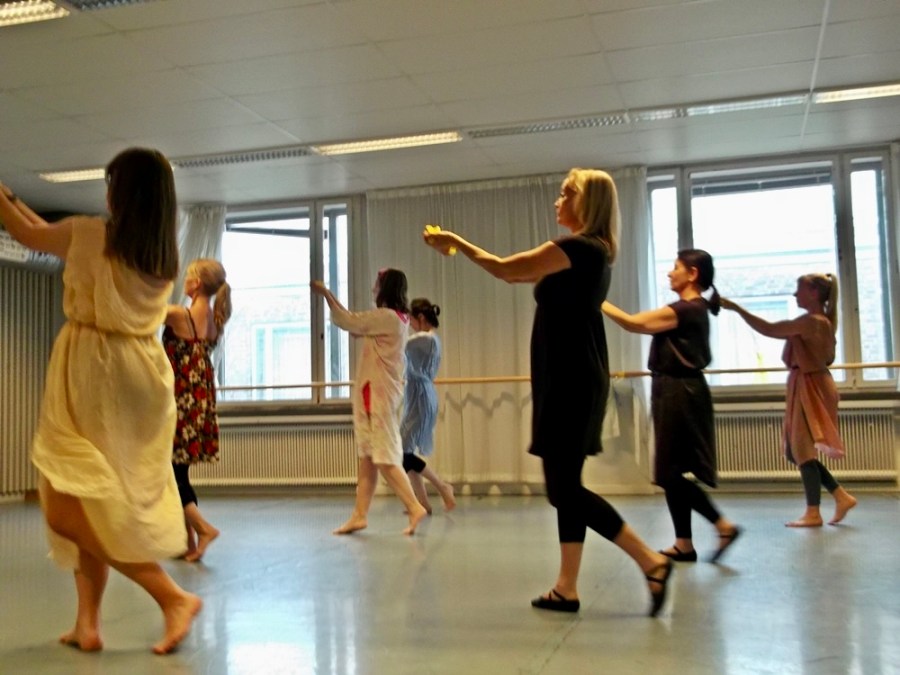
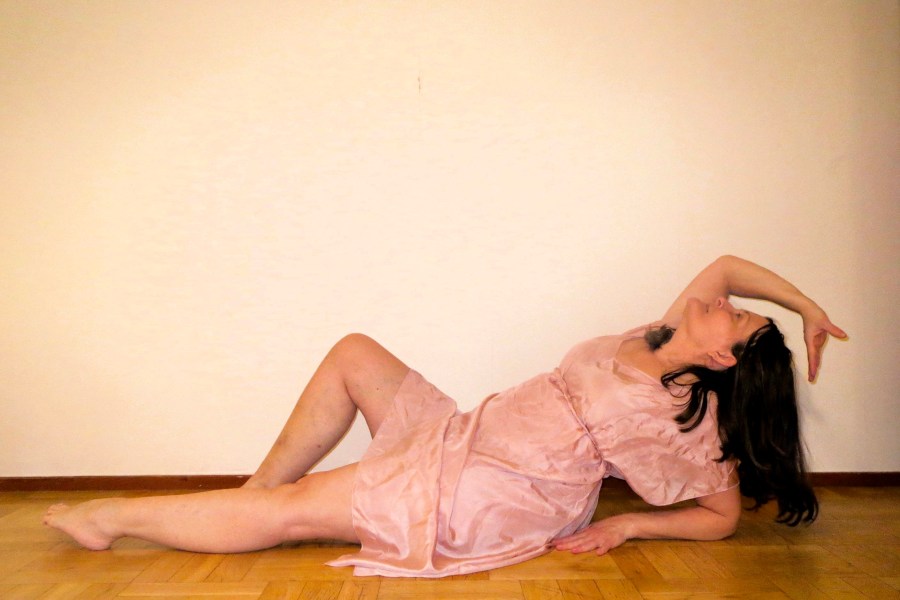
The other way, is to experience the emotions coming because of dancing. The grounding and released feelings. Sensuality and power. Or peace and harmony. All as an effect of our practice. The first time I danced Isadora Duncan’s The Rose Petals in 2014, I felt something similar to what I had experienced when I first had watched Hawaiian Hula. A way of becoming moved, as if stirred by grace and recognition on a soul level. At least, that is how I understand it. And, when I lived in Portugal and took a couple of Isadora Duncan classes through zoom, I felt a cooing laughter bubbling forth, a sincere joy, when I skipped around in my hostel room, reconnected to my younger self in my 20’s and feeling free and abundant. It was during this trip in Portugal 2019 to 2020, that I felt and experienced my inner child as an even younger spirit by me, like a child version of myself that I could talk to and learn about what traumas and fears had driven her away. It was like a sweet sensation of love, of a little girl standing on top of my feet and wanting to dance with me. I embraced this in my heart and danced with it! And since then, she is with me when she feels safe and well.
We can’t always explain what elates us. The music is of course an important part of it. Even if I don’t know all the choreographies yet, each melody becomes interwoven with the motions, that it soon becomes like one. Like the music is calling forth the movement. It’s a wonderful experience!
Would you like to dance? What often comes in the way, is our own inhibitions and our self-consciousness about how we look and the limits of our bodies. We don’t want to make a fool of ourselves and might fear not knowing where our feet are going and how. But there’s a trick. When we let our motions begin in our hips instead, or even our solar plexus for Isadora Duncan, our steps and hand motions become a natural extension of what we feel the music is beckoning us to.
To begin practicing this, listen to a drumbeat or the beat of a bass, feel it in your pelvis and hips, and let yourself move to this beat. Then the added instruments and their melodies and harmonies, become the foundation for the rest of our body’s movement. You might just sway from side to side, try forward and backwards, loosening in your shoulders and then let your arms swing however you please. This is how you can find dance from within.
What is a bit of a challenge with West African dance, is their variety of rhythms. Sometimes, the count is on 6, instead of the regular 8, in different combinations, while Isadora Duncan often incorporates the waltz on 3 and Hawaiian Hula is by 4. Then find the rhythm in your feet and become one with it. This often requires us something even more fascinating, which is to let go of understanding and thinking about what to do at the same time, and just do instead. It’s when we relax and rock ourselves into the rhythm, our bodies can take over and go from there. Through the repetitions of movement, we soon can remember the steps and motions, even in our muscle memory. It’s a way of storing a habitual way of moving our bodies, for better or for worse, because the body can also store and remember any harm that was done to it. Our muscle memory enables us to connect certain motions with certain passages in the music. So, whether you want to take a dance class, go clubbing or just dance around in your living room, let yourself feel joy today!
To listen to this blogpost as a podcast, find The Source Podcast on Spotify, Apple and YouTube.

