Happy World Indigenous People Day! The more we learn to relate to the land, the more the land will teach us and nurture us back. Today is the World Indigenous People Day and thus a day to remember to honor and respect the original inhabitants of the country you live in. It’s said we all originate from the African tribe and from there, man evolved and moved.
Here in Sweden and the Nordic countries, our indigenous people are called Sapmi. They live mostly up north, where they herd and take care of reindeers, used for meat. They have their own traditional clothing and culture, with a special kind of chanting called jojk, and their own local government. The Sapmi people also have a seat in our House of Representatives and are among the tribes recognized as original inhabitants.
In Hawaii, the indigenous people are called Kanaka Maoli, which seen in combination with all the islands of the pacific, becomes Pacific Islanders. In Hawaii, it’s often important to be able to trace your bloodline, to be fully upheld as a Kanaka Maoli. And it’s not without controversy, as many wish to have their sovereignty back from the illegal overthrow by the US Government after claiming sugar plantations to use for profit. If you’re simply local and respect and live according to the Hawaiian values with Aloha, you can call yourself a Kama’aina, which means to be a child of the land, and is part of the very inspiration for my last name Telluselle, that I wish to stand for a brand with indigenous values, regardless of one’s ethnicity.
And then there are of course numerous of tribes both in North America, in the United States and Canada, as well as in South America, Australia and New Zealand. In Europe, one could argue that the original Celtic people from Ireland and Scotland would be the indigenous equivalent, but for the most part, by indigenous we mean those of a browner skin tone and usually exploited by the white. According to the UN, about 6.2% of the world population is indigenous.
As someone fascinated early by Shamanism, it became what brought me to study some of the indigenous ways, first through literature like Carlos Castaneda and Lynn Andrews, and then Sandra Ingerman. When life brought me an opportunity to go to Hawaii, I was gifted with introductions to Hawaiian healing arts, such as lei making, dancing Hula, chanting ‘Oli and doing Ho’oponopono. Receiving their Lomilomi massage made wonders for me, as it enabled me to become fully grounded. When I was staying at the YWCA Fernhurst in Honolulu 2011, one of their staff was a native practitioner with whom I had many talks about spiritual things. She also showed me how she fermented the Noni fruit to make the special juice, seen as medicine. I found it very strengthening and restoring.
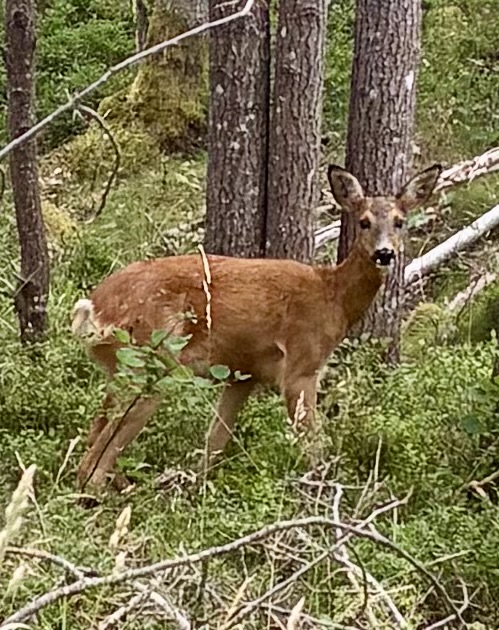
What these people all have in common, I think, is a way of looking at mother nature and all living beings as connected through spirit, which is to show reverence for. We relate, not just dominate. And in this way, a mutual form of respect can be formed also with wild animals. When we show our own soul, they show us theirs.
Another thing in common, is of course the white man’s exploitation. It’s through the chase for profit, often based on indigenous culture, crafts and resources, many lose their own financial stability due to the unfair inequalities emerging through the raised prices due to tourism or agriculture at scale, for example.
When it comes to indigenous practices, it’s important to not be culturally appropriating them. We can learn, practice and study alongside them, but not neither earn money, nor assume teaching without proper protocol. As a comparison, yoga is very culturally appropriated. We all know it stems from India, but how many people practicing do even know what the asanas are called in Sanskrit? Or even why we do yoga? The same with Qigong. Some forms originate in Tibet and some in China. This is more regulated through the recognition of Chinese Medicine, but this too has taken many years. When I first received acupuncture in the mid 90’s, it was considered a little frou-frou. Now, regular doctors even prescribe it! Would you ever go to someone offering acupuncture, without being licensed, taught and trained according to Chinese Medicine? I don’t think so. How come so many just overlook the origin of Yoga?
Here in Sweden, the number of yoga studios and variations with lots of props disgust me. One of them, even have the name YogaMana, which I think they directly appropriated from my blog about Hawaii and falsely and without anyone’s permission used for their business, without knowing a word Hawaiian, less showing any respect for its meaning. I tried to sue them for that but was told there were some Indian languages that the world also existed in, but with dubious meanings! And the judge, ruled that Mana would be considered a fantasy word. I would have to say, I expected far more respect from Sweden than that, but apparently not, if you’re not a blonde, ironically. This, however, will not be the case at Telluselle Living Center, would I be able to build it. At Telluselle Living Center, my plan is to offer classes with only initiated teachers according to each tradition.
To listen to this blogpost as a podcast, find The Source Podcast on Spotify, Apple or YouTube.

