Striving for Ikigai

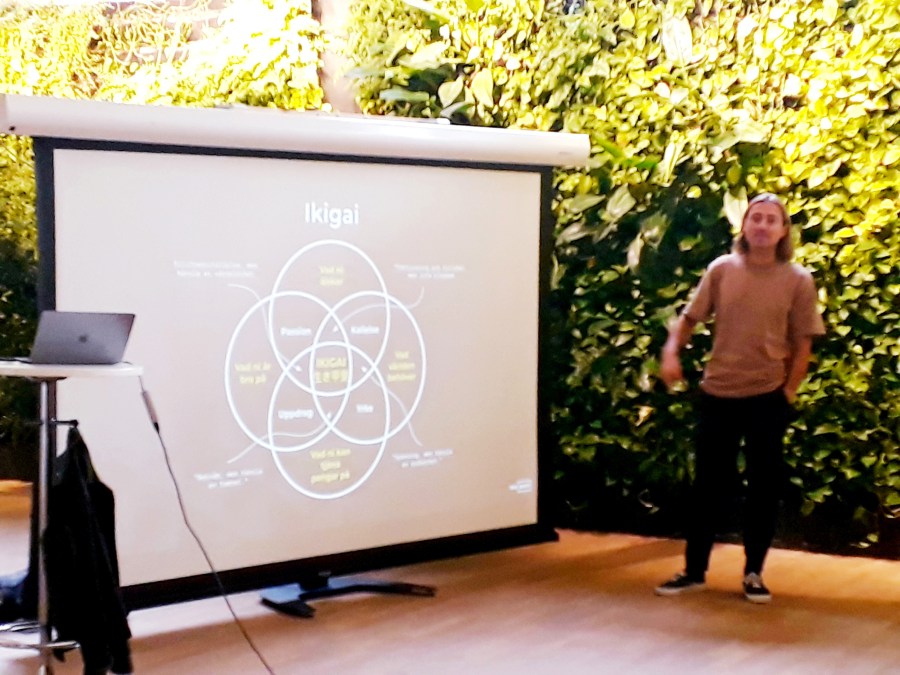
Ever heard of Ikigai? It’s a Japanese philosophy from Okinawa, that encourages us to reflect and look for how to balance ways to live according to the Ikigai – our life’s purpose. According to this philosophy, there are 4 main questions one must ask oneself, not only once, but continuously, and give several examples to have something to choose from. This tool can be especially useful when thinking of becoming an entrepreneur.

The four questions are:

  1. What do you love doing?

This can be anything from hanging out with friends, to spend time alone in nature or a favorite creative hobby.

My personal examples: Dancing, decorating, writing, speaking, wearing dresses and flowing skirts, acting on stage, travelling, cuddle with horses and bunnies, walking in nature.

2. What are you good at?

This can be exemplified through learning what others think you’re good at, as well as you own experience and opinion.

My personal examples: Holding presentations, writing, being courageous and strong, speak up, taking initiative, being creative.

3. What does the world need?

Here larger and more complex issues in society becomes the focal point, which becomes the foundation for trying to solve a problem that the world really can benefit from.

My personal examples: Eco-friendly products, services and practices for the environment, solve homelessness and getting everybody’s essential needs met, create a safe space for a community to have fellowship with, health, peace and change attitudes about racism.

4. What can you make money on?

The harsh reality is, that we need to make ends meet. But, we might not need as much luxury as we’ve become used to or believe to be necessary. How much and for what depends on where we live and how. And what we can make money on, ranges from having any job, to having a profession, to have a business or even receiving citizen pay.

My personal examples: Translations from English to Swedish, copywriting, sell books, coaching individuals and groups towards more sustainability and creativity, motivation and positive growth on the job.

Now, to balance these four circles, one can for examples as in my case, suggest that I can coach and teach others to become better at writing and communicating. What is your ikigai?

Photo showing Jean Baptiste Gérard, giving a workshop at Värmeverket in Stockholm, Sweden  09/14/2023.
What is healthy?

There is a reason why we have both the word wellness and the word health. In fact, it’s illegal to use the word health, if you don’t have scientific evidence to back up any of your claims about something being healthy. In some cases, it’s common knowledge, like that it’s good for our health to have a balanced diet, hydrate, and sleep 8 hours per night. But nonetheless, these are facts that have been researched by an institute that is connected to both hospitals and universities. This is, when we can use the word health.

The word wellness, incorporates anything that gives us a wellbeing, starting with spa’s hundreds of years ago, where the tradition was to drink water from certain springs, that had been found to cure or improve people’s wellbeing. Wellness today, consists of certain supplements, functional foods and most of all a variety of practices, that is supporting our health, but not necessarily proven scientifically. An interesting example is Qigong, that is founded in Chinese Medicine, that also includes Acupuncture and have a history much older than western medicine, yet most often still is referred to as wellness. A helpful way to discern better, is perhaps simply by going by trial and error yourself, to let your own experience guide you. What it really is about, is answering this question:

What can you do to feel better?

Why San Francisco?

Ever since I returned to Honolulu to finish my Master’s degree in Organizational Change 2010, I’ve felt that San Francisco could be an awesome spot to build Telluselle Living Center. I choose San Francisco for a variety of reasons:

  • It’s a relatively small city, with a flair of design and decor.
  • There are opportunities to practice both Hawaiian Hula and Isadora Duncan, wherefore I can find teachers for both here. And Isadora Duncan was born here!
  • The Asian community is fairly big, which makes for a good target group for Feng Shui and Qigong.
  • It’s where United Nations was founded.
  • It’s where both eco-friendly and feminist movements started.
  • The labor market is known to be positive for start-ups, which makes it a good place to host coaching groups and green think-thanks.

My dream come true, would be to be allowed to build this octagon shaped bamboo house in a city park, where I also could live in an apartment, close by.

More about my personal reasons and experience of San Francisco, can be found in my personal blog here.

Why an octagon shaped house?

As you can see in the menu on this webpage, it’s my ambition to host wellness practices that honors nature, in an octagon shaped house. Why is that, you might ask.

I came up with this idea, already in 1999, when I practiced a lot of Qigong, and began learning about Feng Shui. In these practices, there is something called a BaGua, that represents the natural elements and how these interact with each other. The BaGua is an octagon symbol.

To further it even more, building an octagon shaped house, also is to be able to offer a variety of practices that are founded in the spirit of each natural element, as well as aspect of life. In Lifecoaching, we often talk about creating life-work balance, with a wheel, or a pie, where each piece makes up the whole and where the goal is to not have too much of something and nothing of something else, but rather balancing these into a whole. An octagon shaped house enables rooms to be designed like pieces of a pie, coming together as a whole, with the café in the middle. And made of bamboo, because it’s eco-friendly and fairly cheap.

You can read more about this idea here and here.

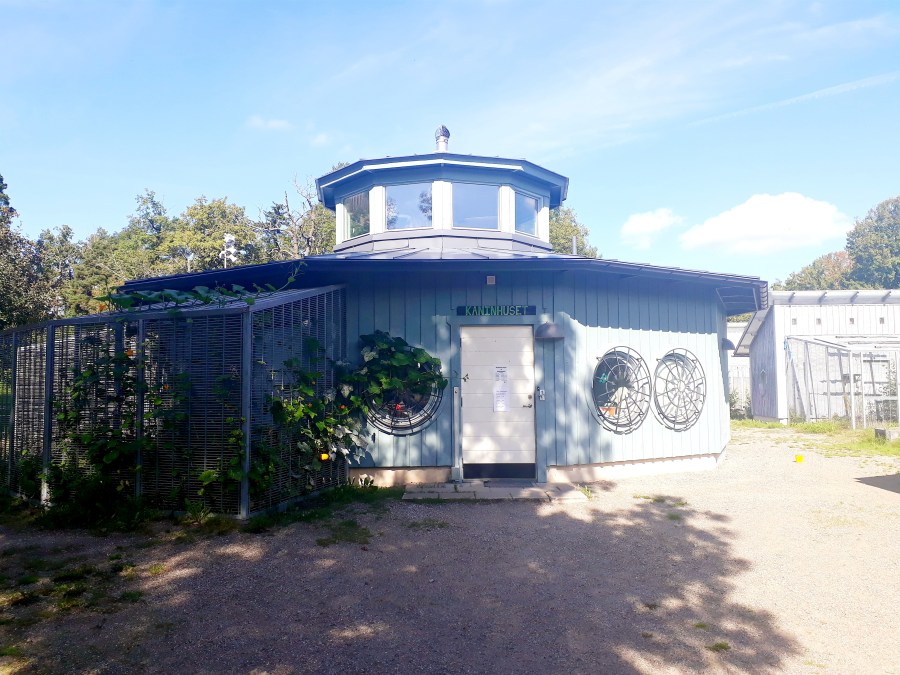
The house above, is a smaller version that I just stumbled on, while out for a walk today in my neighborhood. Inspiring!

Practising gratitude

Want a shortcut to feeling happy and on the receiving end of more good things coming your way? Then you should practice gratitude. I started keeping a gratitude journal in year 2000 after watching it on the Oprah show and reading the book “The Simple Abundance Journal of Gratitude” by Sarah Ban Breathnach. At the same time, I decided to be happy as my starting point in the morning, to use happiness as an approach for my daily encounters. I have kept a gratitude journal ever since.

Simply list things you’re grateful for, whether it be every day or every week, in all circumstances. What’s fascinating is, that we soon notice more things to be grateful for that we yearn to write down during the day. Alas, our focus changes to appreciating the positive more and we become less negative and more happy. So, try it! And don’t forget to express your gratitude too.

Sustainability factors

Sustainability can both be a goal, and the means to reach it. It incorporates what is needed to curb the effects of climate change and it embraces the wisdom of indigenous people. Living sustainably, means to always take into account the generations coming after us, so that our planet still can be a beautiful and healthy home for them. Being aware of this, in all our decision making, makes for a hopeful future.

Sustainability factors include:

  • Awareness and handling of migration
  • Climate change effects
  • Indigenous wisdom about living in relation to the land
  • Organic agriculture
  • Organic manufacturing
  • Lesser transportation
  • Getting basic needs met
  • Efficient energy
  • Affordable housing that is built to last and in harmony with the environment
  • Acknowledging and appreciating the beauty of nature, including spending time in, with respect and curiosity
  • Protecting cultural heritage sites
  • Minimizing waste

So, to get a good reason to live sustainably, go outside, or look at movies and films showing places you feel mesmerised by, indulge in fresh produce, and think of how we can keep it like that. Maybe, you even would like to dance in its honor?

Foraging for fall

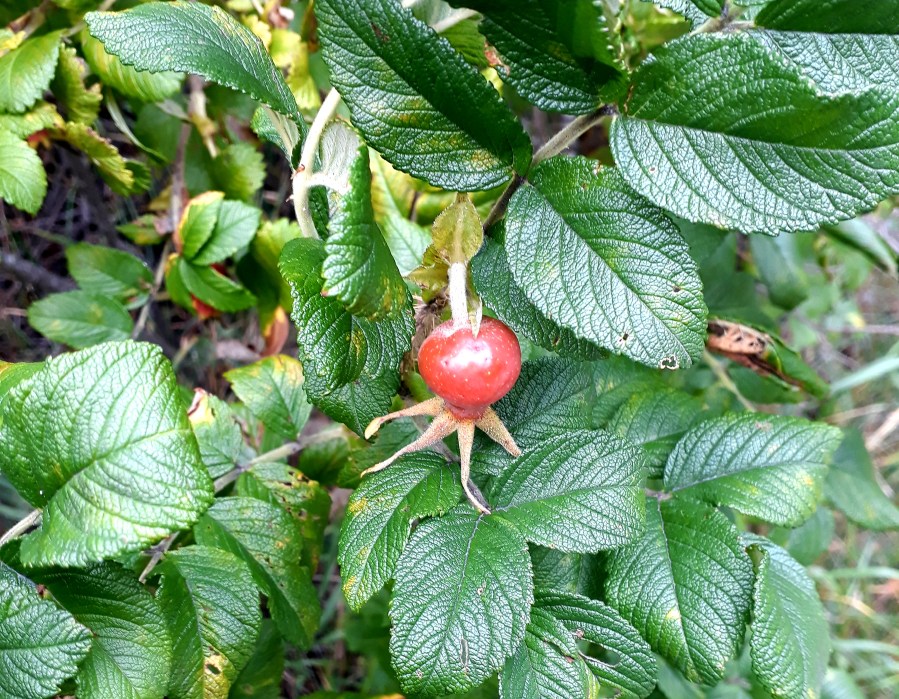
Even though most of us live in cities, without being able to grow our own food, we can still benefit from eating according to the seasons. This is how our bodies best function, according to where we live. One good way to get inspired, is by going for a walk in a nearby forest or plantation, to see what is growing and how. It’s how I got to discover how broccoli grows, in Portugal, and how pineapple grows, in Hawaii. Here in Sweden, it’s now a good time to begin harvesting rose hips.

This little berry, is said to be one of the most potent ones for vitamin C and is traditionally either drunk, or enjoyed as a soup, for a snack or dessert. You can eat it both warm and cold, and add things like little meringues or almond biscuits, or even a spoon of whipped cream to make it more festive. If you’re more into pranks, you might find it entertaining to learn that if you pick a couple of rose hips yourself, and empty the seeds into someone’s clothes, they will develop a terrible itch!

Which berries grow where you live, and when are they coming into season?

Support groups to heal

There is something very fundamentally comforting in realising we’re not alone in a situation, or in having endured a certain trauma. We need others to understand ourselves, and to even admit and accept that we have indeed experienced something traumatic. By hearing someone else’s story, we can recognize our own. And through listening to others, and recognising our own pain, we can also tap into our emotions more naturally, and let them emerge to be released, as well as find forgiveness and an increased understanding. Then it becomes easy to extend compassion with our empathy.

At Telluselle Living Center, I hope to host these kind of groups, where we can come together and bond through sharing the same kind of experiences, not to wallow, but to uplift, encourage and move on, with one another’s support. This becomes a kind of coaching in small groups, with up to 10 participants, sitting in a circle, for a safe setting.

What have you been through? What have others around you experienced? What would you like to change and how? Send me an email to hannah@telluselleliving.com and share!

Finding forgiveness

One of the most important processes one can do to heal oneself, others, and even this planet, is to practice forgiveness. Forgiveness is a part of love and crucial for omitting that energy, and for being able to act with compassion. In Hawai’i, they have a practice called Ho’oponopono, which basically means to make things right again, to realign into aloha.

To practice Ho’oponopono, focus on a person that says he or she has been harmed by you, or that you know in your heart that you may have caused harm, whether intentionally or not, and pray for forgiveness, not only by that person, but also that person’s family and ancestors and anyone in the future belonging to that family. This way, we also honor others impacted by our actions and conflicts.

The prayer goes:

Divine Creator, Father, Mother, Child as One, if I, (insert your name) or any of my relatives and ancestors, have ever caused (insert name of person you ask for forgiveness) or any of his/her relatives and ancestors, any harm, in any form, I deeply apologize and humbly ask for your forgiveness. I ask of you to transmute any and all negative energies and turn them into light and let there be peace. And so it is. Amen.

To forgive yourself, simply ask yourself of forgiveness. I like to use my inner child as the one I’m apologizing to, so that I continue to have her trust and keep her safe and happy. When my inner child is safe and happy, she brings forth the Divine light in me, in all my interactions and endeavours. And she is not trying to take charge from the subconscious part of me, but rather is allowed to give voice to her needs, so that my inner parent can care for myself, and so that I can be an adult with others. Having given yourself forgiveness, lifts off your guilt and lessens your doubt, so that you can be more authentic and loving. Now, imagine to do this together with the person in question, or even between whole families – what a mature society we would have! Could it even be brought into our workplaces?

Find the feeling within, that corresponds with how the other person feels hurt by you, and you will find compassion.

Coaching technique

Ready to improve your life, set new goals and achieve them? Then seeing a professional coach might be helpful. A professional coach works somewhat similar to a therapist, but without offering any therapy. We focus on your present situation, and what you would like to change.

When we coach, we use different parameters in our sessions, such as:

  • Listening – we listen intently also on the third unspoken level, such as being diligent about cues from your tone of voice, body language, and emotional charge behind the words.
  • Mirroring – we often talk back to you the same way you talk to your coach, to see if this is how you want to be perceived.
  • Summarizing – we summarize what you’ve said, to see if we understood you correctly, and to help you clarify what you want, why and how.

At the end of a session, we decide when and if you want another one, and also what you are going to do until then. It can be to assess any personal traits, capabilities or go through your resumé. It can also be to seek more information, make contact with someone with a new approach, or to find a metaphor to help you evolve. Each session lasts for 45 minutes for both of us to be able to keep our focus.

The best way to understand coaching, is by giving yourself an actual dialogue with one! This is also how I coach, together with following the ICF’s ethical guidelines. You can book a session in person, or through Zoom, by e-mailing me at hannah@telluselleliving.com Your first session is for free!

Dancing in honor of nature’s beauty

Sometimes, the green is so lush, the mountains so majestic, the mist so mystical, the flowers so colorful and deep scenting, the volcanoes so powerful, the ocean so moving, the wind and the rain so telling, and the sun so bright: One must care for the place, and one must dance about it!

The majority of Hawaiian songs are describing a place on the islands, a legend about a god or goddess, or the history of its monarchs. All with love, for love. Doing motions that share these stories with our hands and hips, constitute dancing Hawaiian Hula ‘Auana (modern). Most songs are in Hawaiian, but some are also in English. And this is another one of the types of dance styles that I hope to host at Telluselle Living Center, with a teacher, taught by a Hawaiian Kumu Hula, according to lineage.

Making an eco-friendly choice

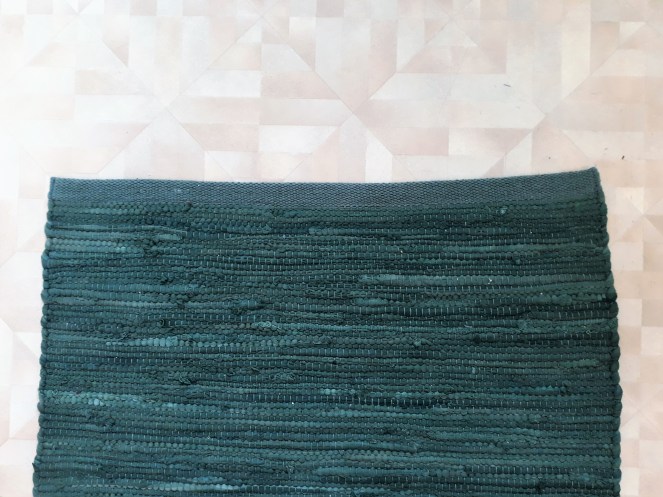
I have been looking around to find a dark green, long, mat for my kitchen for months. Since I live on a small budget, it also can’t be to expensive. Imagine how glad I was to find one for just 30 USD (300 SEK) at Rusta. But, it wasn’t made of cotton and directly the day after, I started sneezing, which I assume was because it being made with an allergen in its material. Not only that, in my very sunlit kitchen, it looked blue during the whole day until nightfall. Then it looked green. It made me frustrated, so I returned it, and luckily found another one elsewhere a couple of weeks later.

This kind of mat, is like I want it, made of only cotton in the right size, so I can wash it myself, and in the exact green hue that I think look nice to match my curtain and placemats. It’s a typical Swedish weaved rug that has been popular here for hundreds of years. And as if this wasn’t enough, it’s also made of recycled fabric from leftover, discarded clothes. So, not only did I score a better quality and color, but also an eco-friendly kind. This one, however, cost 110 USD (1100 SEK) but with free shipping at Nordic Nest. And no more sneezing!

So, what do we pay and for what? How do you reason, when you make choices for your health and your home?

You can see more of how I have it at home here.

Learning to dance Isadora Duncan

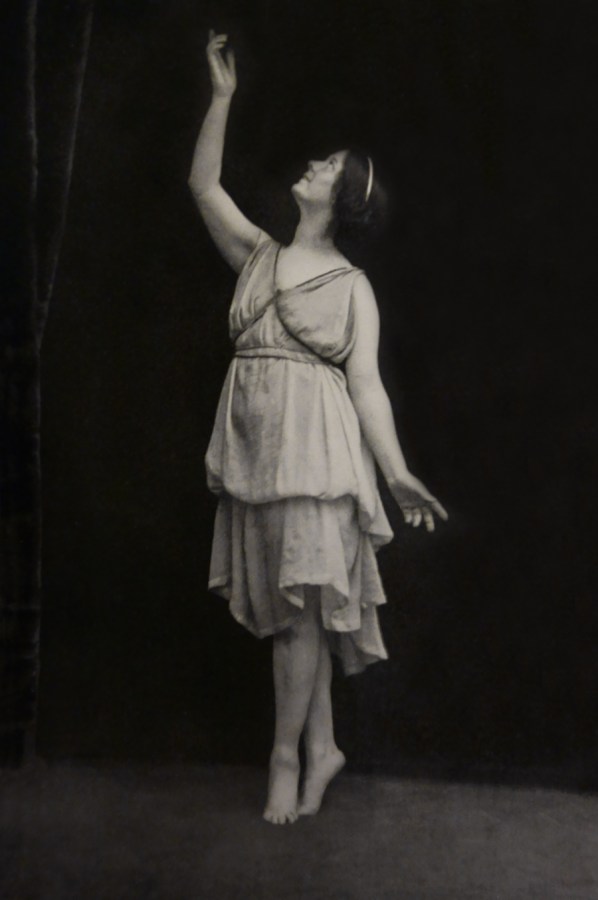
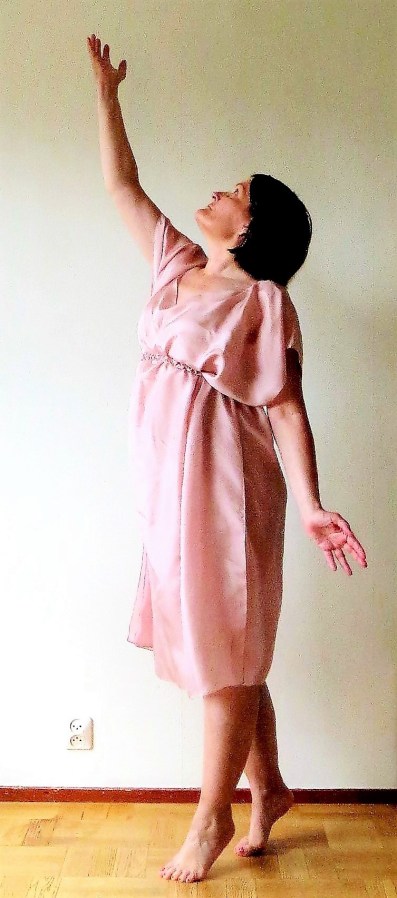
Isadora Duncan dance is one of the kinds of dance practices that I’d like to host at Telluselle Living Center, with a trained teacher. It’s a form of modern dance, evolving from ballet to classical music but with softer and more liberated movements, dancing barefoot. Isadora Duncan was a pioneer in modern dance and developed this style in the early 1900’s, in the United States, across Europe with a fascination for Greek art, culture and legends, and with a visit to Russia that also inspired her for some dances. She also believed in teaching children about life and relating to nature, as she had grown to understand some spiritual mysteries, that she also wanted to forward. This is also part of learning to dance Isadora Duncan. We study her work, including both original photos and videos and interpretations.

Then we try to grasp how the motion came forth and seek this within ourselves, while aiming to express the same.

She is also famous for some profound quotes, like “You were once wild, don’t let them tame you.” and her free lifestyle, including dancing in sheer silk tunics.

More about Isadora Duncan dance can be found in the archives here.

The benefits of coaching

What is it, that you get from being coached? After all, it’s still you yourself, who needs to do the assessments, assignments and action-steps towards reaching your goal. Here are some benefits:

  • Firmer decisionmaking
  • More defined boundaries
  • Better confidence
  • Renewed motivation
  • Clearer focus and purpose
  • Feel supported
  • Realisations about yourself and others
  • More life-balance
  • More organized

There aren’t any side-effects or negative outcomes with coaching! However, you might feel challenged and experience resistance, both inner and by others, as well as change in both your relationships and your work and home-life. After all, it’s what you’re seeking. But, it’s just growing pains!

Coaching questions for you!

In case you wonder, what type of questions I will ask in a coaching session with me, it all depends on what you seek help with. But, a common string of questions with a simple example, might sound like:

What is the problem you would like to solve?

I am tired.

Which kind of solution would you like to see?

I’d like to be rested to be able to do more and be a nicer person.

What do you need to solve this problem?

I need to sleep better.

What is stopping you from solving this problem?

I don’t have a good bed.

What is then the actual problem?

That I don’t have a good bed.

What can you do to take a step towards lessening the obstacle that is stopping you from solving the problem?

Save up money to buy another bed.

Is there any information you can look up? Any person to contact and ask? When will you do that?

I can look at IKEA and in vintage stores for different types, as well as read up on the different kind of mattresses to match my needs, next week.

How will you feel after reaching your goal? What more can you do to make you feel that?

I will feel more rested! I can also take naps.

Coaching dialogues, and sessions, are based on being present for our clients, so that we pose questions and pull out insights and solutions, directly deriving from what you are saying in the moment, as well as summarize it to allow you to become more clear. The only way to see if it works, is to try! Contact me for a complimentary session on Zoom, or in person, to find out for yourself. (I recommend at least three sessions (once every other week) to notice a difference, and usually three months to have reached a goal, or a milestone towards one. If I find that you might need another type of counselling, such as getting help from a therapist, attorney or accountant, I will also say that.) I look forward to hear from you!

Is Yoga a precursor to personal growth?

Many are those in the Western world, who believes practicing Ashtanga or Hatha yoga, is equal to personal growth and even career development. This is simply not true. Standing in any of the asanas, for any amount of time, any amount of days in a row, will not allow you to make more money or become more successful. Or even more happy. What yoga does, is to work out our bodies; muscles and ligaments, as well as internal organs, to form a better balance in harmony with our breath. When our bodies are at optimum health, we also tend to feel better, and can achieve better results in other endeavours. You need not however, to wear malas, drink only smoothies, and become a Hindu. It’s rather all these beliefs about Yoga, that hinder you from functioning on an optimal level. Your ego comes in the way. Yoga is a set of stretches from India, that enables our souls to inhabit our bodies more fully.

After both having had surgery and gaining weight last year, I have had to go backwards in my yoga practice. What I mean by that, is simply that I can’t do all the asanas the way I used to. I simply don’t have the strength or the flexibility to. But this doesn’t make me any less enlightened, less caring, or any less healthy. Enlightenment isn’t achieved by standing in the downward dog. Enlightenment is to expand our hearts with compassion and look and act in the world from this perspective. Some would call it attaining Buddha-consciousness, others Christ-consciousness. God still being the guru.

And being healthy, has to do with eating well, getting enough oxygen and sleep, and using our bodies physically, as well as exercising our intellect, releasing emotional tensions, and feed ourselves spiritually, with a balance between alone time and time spent with others. Choose the practices that makes you feel better.

For career and personal growth, seeing a life-coach once every two weeks for a couple of months, can help you make a plan and start taking action towards reaching your goals in any area of your life.

Leaning on a rock

Where we live on this planet, decides what we think of as a treasure. I thought of that today, when I went out for a walk in the woods nearby where I live. As is so common in the Stockholm area of Sweden, granite rocks can be found easily, even large. This one looked particularly smooth and I wondered how many people have not touched it or sat on it? Granite is said to be a development of lava for thousands of years. Ours mostly coming from the Ice-age, simply left on the ground where the ice melted. But, does granite also hold symbolic healing properties the way many hold to be true for crystals like Rosequartz or Amethist? Are we walking around in gemstone wonderland ourselves but can’t see the beam in our own eye? I doubt that any Swedes, besides children, would carry pieces of granite in their pockets, or medicine pouches like wannabe Native American Indians. Why is that?

The rarer the find, the greater the treasure.

According to Google, the Mayan Indians hold Granite high, as a rock for protection. Probably, because they aren’t very common in South America. To me, Granite stands for stability. It’s simply my own symbolism. What if people chasing gemstones to carry in their pockets, are really longing for a rock to lean on, as in having faith? Did you know? You can decide yourself, what you want your gemstone to mean for you. It can be used as a reminder, as a pretty object beautifying your home or office, or to elevate your energy that it naturally does, carrying energy from where it comes, and because of your own beliefs that together with your spirit can charge it as.

At Telluselle Living Center, we want to come together to celebrate and cherish nature regardless of faith, upholding, and introducing, Indigenous knowledge and culture, by teachers according to lineage.

Sacred Frequencies

According to some healers, different frequencies can be used to restore and promote wellness within our minds and bodies. I’ve just started trying this for myself, to see if I feel any difference. The whole concept is nothing new – chanting sacred mantras are built on the same principle; that pronouncing certain words a certain way, produces a vibration within our mouths, that help us align our own spirit with the Divine.

Everything is like sound; a vibration that can have an effect on our energy field and thus mood. This is easiest recognized simply by listening to different types of music. Sacred Frequencies build on indigenous flutes, digeridoos and the soft beat of drums. With the add of a pulse, we can increase, or decrease, our heartbeat and thus feel better, depending on our needs. It can both soothe and energize us. We can float in a sea of tones.

More about the Sacred Frequencies can be found here.

Letting your needs lead you

Practicing self-care is not about constantly going to the gym or eating the right diet. Self-care is about tending to your needs as they arise in your daily life. To help motivate and guide you towards a better practice, a good way is to observe how you feel after you have done something.

This is how it’s for me:

After I’ve slept well, I feel rested.

After I’ve practiced qigong, I feel refreshed and ready.

After I’ve practiced yoga, I feel warmed up and relaxed.

After I’ve practiced meditation, I feel at peace.

After I’ve eaten a healthy meal, I feel satisfied.

After I’ve listed what I’m grateful for, I feel content.

After I’ve danced Isadora Duncan, I feel happy and alive.

After I’ve danced Hawaiian Hula, I feel more feminine and loving.

After I’ve danced West African dance, I feel powerful and liberated.

After I’ve worked, I feel accomplished and good.

After I’ve had dialogues with uplifting people, I feel inspired to grow and get going

After I’ve taken a shower, I feel clean and fresh.

Now, how do you feel before and after you do any self-care practices? Most of all, how do you feel when you don’t? I think it’s good to strike a balance between booking times and dates to do certain things, and to just feel the need and do it then. I don’t do yoga or qigong at a specific day every week, because then they’ll just add more stress to my day, knowing that I need to check that of my list too. I rather feel that I need to do qigong and then do it. I can be cranky or feel overwhelmed, then I do qigong. When I feel I’ve been sitting a lot, I need to do yoga to stretch and release tensions. And so forth… So, what is a need you have, and what is a practice you want to make into a habit, or is even for you to have as a reward in itself?

At Telluselle Living Center, I hope to create a combination of fixed classes and an open membership, with timeslots and space to practice on your own. Which do you prefer?

Photo shows me doing a West African dance motion, as taught by Carin Dackman.

Getting uncomfortable

One of the more important aspects of Lifecoaching, is to lead your life and therethrough set boundaries. Recently, I was met with a situation that became an example to practice this. I’ve been seeing a physiotherapist for a couple of months, due to having experienced some pain in my shoulders, sitting bones, and knees that I needed help to cope with. But, last week, my physiotherapist here in Sweden, had just made an appointment on his own, that I received a confirmation on by text, without talking to me first.

Since I didn’t have any other appointment booked at that specific time, it became hard to find a reason to turn this down, but both did I have other things planned to do, the commute is long and I didn’t feel it was necessary to come so often (Since I dance, it’s fairly easy for me to remember exercises to do on my own). But most of all, I didn’t like the way he set it up, not asking me first. Or was I wrong? Did I need this more than I realise myself? When it comes to healthcare, it isn’t always so easy to discern, and to trust your own gut feeling, but, we must!

The day after, I called to cancel. They only had their answering machine on, but I left a message. Later that same afternoon, they called but without hearing my cancellation. My physiotherapist had fallen ill and had to cancel himself. Thus, we postponed it to next week and I also shared why.

Do you have any situations or relationships that you don’t feel treated the way you need, to feel good about them? Discussing this with a life-coach, and then trying different approaches for yourself with your own examples, will enable you to lead your life better too.