Which will be your goals for 2026?

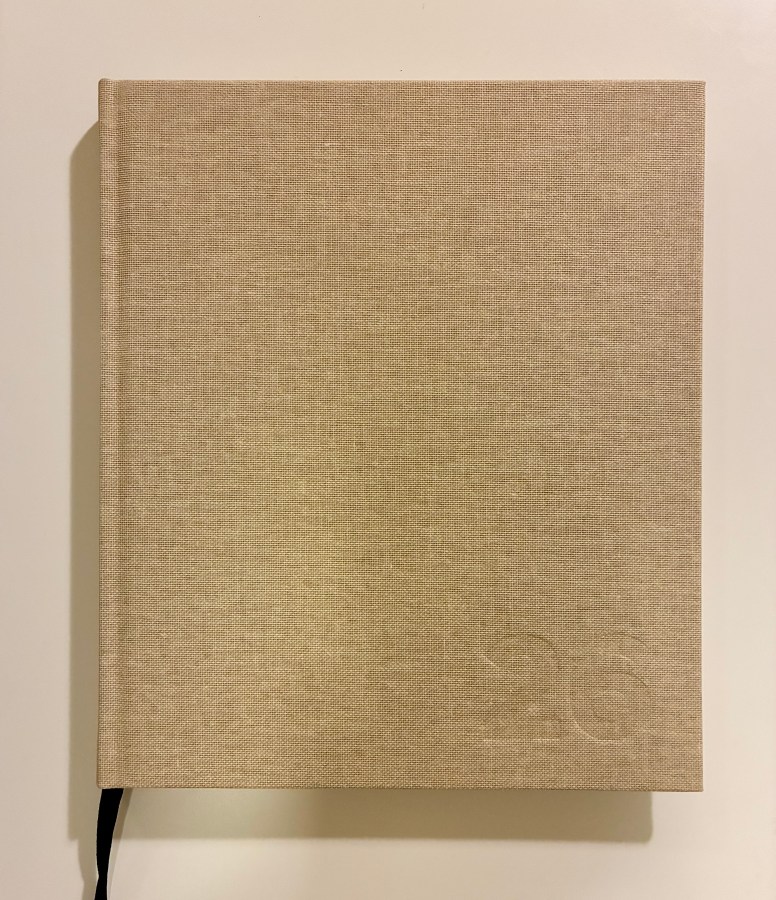
There is something refreshing about opening a new planner and see all the room available for new opportunities. While most of us simply continue what we’ve already started, it can also be a good time to start something new, or to change something, due to this psychological feeling of entering a new year. Either way, writing down your goals makes it easier to define which steps you need to take to reach them. An even more important thing to consider, is what you need in order to reach them. Often, we tend to write down lofty dreams or some might believe they should just become “manifested” and appear on their own. So, is usually not the case. To begin writing down your goals, you can start by visualising what it is you dream about. Then see what it is inside this dream that you actually can achieve, when, where, how and with whom. If your goal requires someone else to become fulfilled, you have to make the goal together with them, or it probably won’t. An easier way to understand this, is that you might dream about winning a million dollars in a lottery. That is nothing you can be sure to achieve. However, you can think of ways to make a million dollars, where buying a lottery ticket can be one of many action steps you take. Other steps would be to take a loan, to invest, to sell something, to work and save, and/or to inherit. Then the goal of making a million dollars becomes achievable.

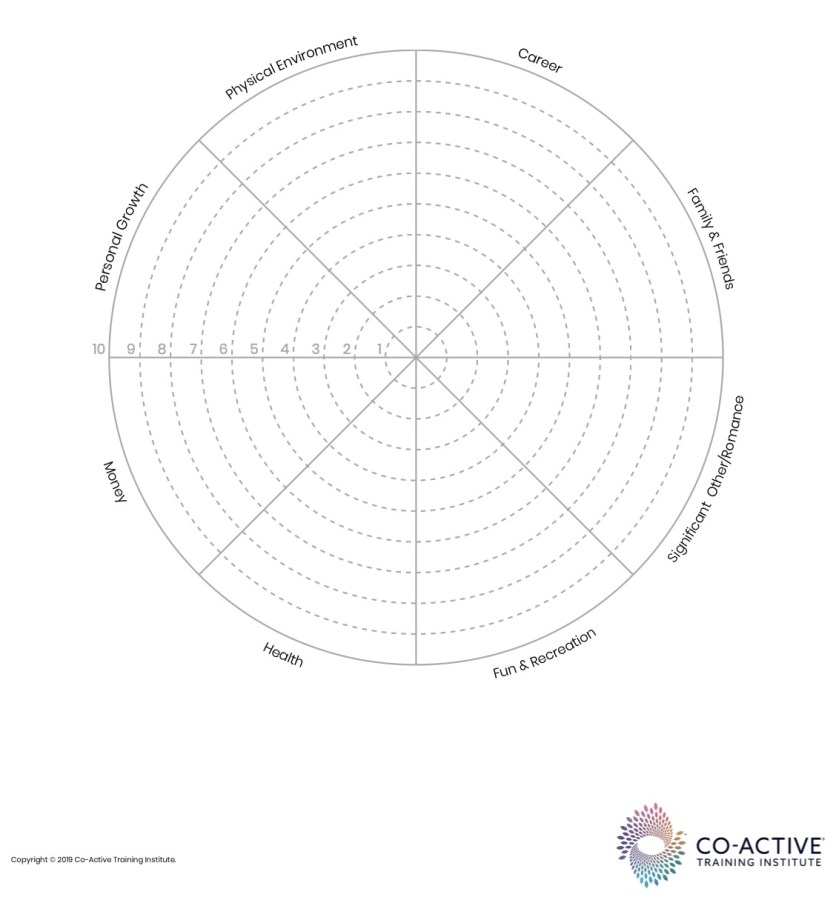
Your goals can be set in various life areas such as:

Physically – how you treat your body

Intellectually – how you enrich your mind

Emotionally – how you handle your experiences

Spiritually – how you practice and pray

Environmentally – how you live and where

Financially – how you handle money and work

Socially – how you relate to others

Soulfully – how you express yourself with art

Now, go through which resources you need to have in order to reach these goals. See alternative routes, such as borrowing books at the library, or buy e-books, if your goal is to learn a new subject. You can arrange gatherings and potlucks at your place rather than go out at fancy restaurants to socialise cheaper, plan and prepare meals in advance to ensure a healthy diet, buy a membership card at the gym, buy new sneakers, look up more information, or the like. If you don’t have the resources, then getting resources will be your goal and your goal will become your reward!

Then of course, you can add a layer of sustainability and your connection to nature in all these, if you so like. To have nature in mind when you make decisions and strive towards your goals, whether that is to buy environmentally friendly products, learning more and study nature, practice outdoors or practices grounded in nature, such as qigong, Hawaiian Hula, 5 rhythms or Isadora Duncan dance. I used to meet with a friend once a week to go for a walk in nature together, which then enabled me to both socialise and catch up with her, as well as enjoying being in nature.

If you’d like a sounding board to create your goals and action-steps with, you can do so with a life coach like me. Simply email me at hannah@telluselleliving.com to book your first complimentary session to try!

And… here is my first podcast episode talking about this content!

Making a New Year’s resolution that works

Are you tired of trying to make promises and New Year’s resolutions that you can’t keep or not follow through on? Whether this is due to your own busyness, laziness or even forgetfulness, or due to others’ imposed conditions that you can’t do much about, I have a solution that you can hold onto. 

For several decades, I’ve instead of making a promise or a New Year’s resolution, opted for a specific word, theme or topic that represents a trait or something I’d like to improve or develop within myself. This thing is something I can work on regardless of any circumstances beyond my control or when changes forces me to alter my course. Some years, I’ve chosen traits like “integrity” or “softness”. This past year, I’ve focused on “articulating better” and “being more gentle”. This came about as a result after having had multiple teeth surgeries done for altogether three years and getting dental implants, prompting me to hide my mouth and hide my smile for just as long, until this year. And since I’ve often been told that I have a tendency to speak too fast, especially in my native tongue Swedish, getting dental implants provided me with an opportunity to try to improve this too. Being gentle, is part of my strive to embody more femininity in a cold and harsh world, such as when I brush my hair and the way I open and close doors, grab things etc.

Next year, I aim to set lower expectations and therethrough create less resistance with others, and instead focus on “hope”. Hope is a timeless asset and always needed, as well as referred to as the anchor for our soul in the Bible (Heb 6:18-20). Alas, something we always can hold onto.

Which theme or word will you focus on 2026?

Following through

This past year, I’ve had articulating better and being more gentle as my focus and theme for my personal growth. Since I used to work in advertising, I’ve been very self-conscious about posting any videos of me speaking, since normally any of my videos would be done in a studio with proper lighting and by a professional photographer, but since I don’t have the funds to access that, as well as have undergone dental surgery to get implants for several years, I haven’t been able to. Now this past year, I challenged myself to improve my speech by practicing in front of a camera again on my own. Here is the result:

In fact, I’ve also been known to talk too fast, which is one of the good things about speaking in your second language. It has naturally slowed me down. I also used to sing when I was younger, in choirs, so these coaching tip videos I’ve been posting on my social media, has been good for me to reclaim my voice, both literally and figuratively. One would think that in a country like Sweden, it wouldn’t be a problem to perform with talks and be featured in the press again about your books and cases, just like I have been my entire life up until 2014, but authorities then tried to stop me from selling my books through their misguided reports about me and my mental health, while forcing me out on the street. One would also think, it would be better for the state that I worked with my normal salary, paid taxes and paid off my student loan. Not being able to, together with heavy libel and unresolved stalking, is the foundation for my aim to move abroad.

We all have battles and we all can work on improving ourselves. Have you had a theme or word to focus on yourself for 2025? How did it go? I will share my next one for 2026, in a couple of weeks.

Ensuring balance

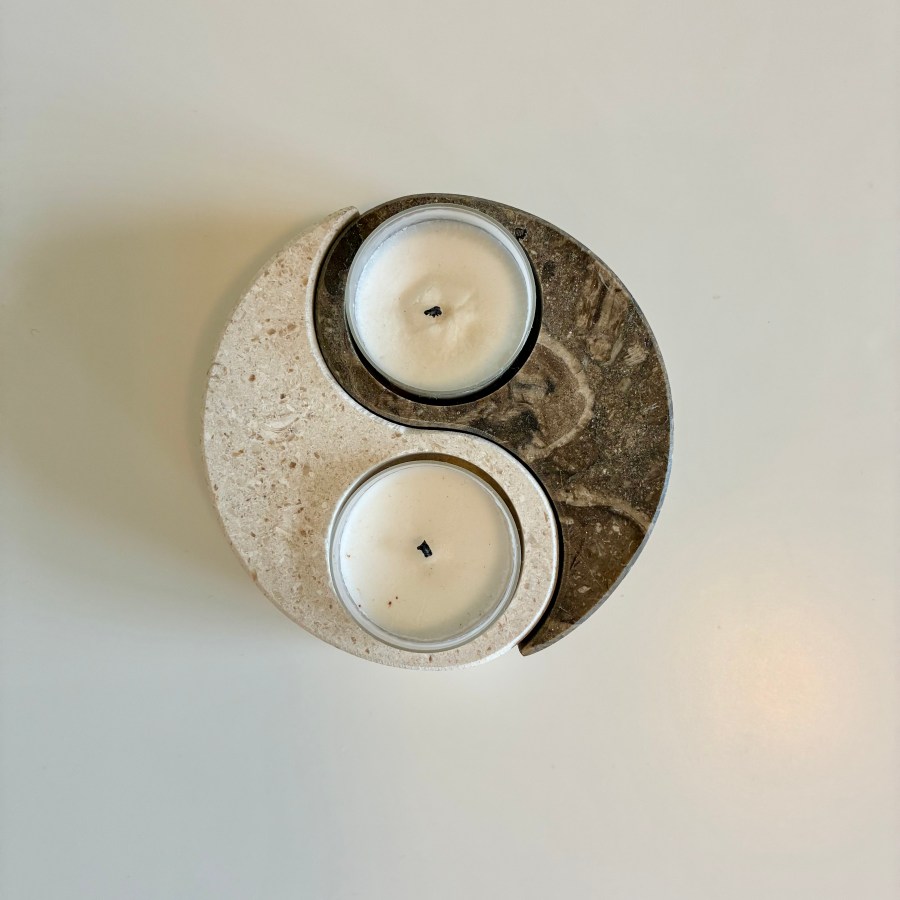
As we approach the fall equinox tomorrow here in the northern hemisphere, I feel inspired to write about balance. The fall equinox (and spring) is the time of year, when day and night are equally long, where there is perfect balance between light and dark, of yang and yin. What better opportunity then, to bring in some more balance to our lives?

To create more balance in your own life, think of how much time you spend doing certain things and see if you can compensate with the same amount for rest and sleep. While scrolling too much is never good, it can still be a way to relax and unwind after hours of intense study or writing, for example. Then there is of course tending to all our needs. Balancing alone time with time in good company with others is important, just like what you put on your plate and hydration. Having balance between giving and receiving, is the foundation for all health and relationships.

What if, this balance is the pre-cursor to creating more balance in your family and community too? In our cities and countries? Can we help each other to create more balance? To me, balance is fairness. When we treat others with fairness, we can see that justice becomes served and that everyone can receive equal opportunities, especially when it comes to take care of and meet their own needs. To not only be allowed to work, but be able to pursue the path we choose based on our actual ability and competence. And with this notion, comes the brutal truth of putting limits on immigration. Movement across borders becomes the precursor to more movement. Do all immigrants really need to migrate? Can we who do, be discerned among the masses? Or should we open all our borders to anyone and everyone? Would I have to migrate if I had a good job, made my own living, had my own home and family? If I could feel safe from authorities’ imposed suspicions of both my ability to work and my mental health, and yet assumed cheating? With little respect of both my physical safety and health, and emotional health? And if I can’t find that here in Sweden, who loses on me finding it elsewhere?

Balance is fairness. Fairness is justice. How about we all try to make life more fair?

Forming a habit

Have you ever felt a need in your body to do something more than out of reflex? I think, this is where the secret to forming a good habit lies. We set out to practice once a week for example, and then sometimes we can’t, or don’t want to, and we become upset as well as lose our practice. Then we try again to hopefully be able to stick to our new routine. And while this can become a positive and life-giving routine, we can lose touch with our bodies’ actual needs, whether that is to rest more, to be outdoors more, or to exercise more. If we don’t listen to this, our practice can become something negative rather than positive for us, which is why it’s so important to be flexible. But at a certain point, our practice becomes an inevitable need that our body craves and tells us.

By beginning practicing at home more, because of Covid, I’ve become more in tune with my body’s needs. One day, my back is feeling tight and that means I need to do yoga. If I feel cranky, shrinking inwardly and almost in a slump, it’s definitely time to dance more. If I feel overwhelmed with unwanted emotions and stress, I do qigong. This more fluid way of practicing, adapted to what we go through, can be an alternative, when we live in circumstances that prevent us from practicing on a regular schedule. Then our way of meeting these needs, can become the good habit that forms a good routine.

We live with lots of routines – whether that is in which order we get ready in the mornings such as whether we shower and get dressed, or eat breakfast, first. You’d be surprised how much difference that can make for your physical wellbeing as well as your emotional stress-level. The same thing for how we go through emails or what we do online and when. Setting our own boundaries can start with getting to know our own routines and habits. How do we do now and how is this working for us? What would we like to change, why, and to what? What is a must and what is your own preferred way?

If you’d like to have me as your sounding board for forming habits, I can coach you through zoom in Swedish or in English. Just send an email to hannah@telluselleliving.com to set an appointment. The first session is complimentary!

Setting our standards

A good way to enable boundary setting, is by looking at, and deciding, our own standards. A standard is a value that we live by, a level of what we think is good enough to let into our lives. This can be set in terms of what we acquire, the things we buy or eat, such as choosing organic when possible. And they can also be set in terms of what we allow ourselves and others to do or not to us or with us. These standards and their adjoining boundaries, then becomes our way to uphold integrity. They also say something about our taste and style; what we prefer and who we are.

Generally speaking in society, good standards can be to have access to fresh water, and to be able to heat up our apartments during winter. It can also be that most people have their own jobs and can afford their own living.

What setting standards boils down to, is what we find good or bad. It can be what we think of certain brands, or for example certain type of TV-shows or books. This is usually defined as culture vs pop-culture. When I grew up, it was important in our family to only consume good literature and what is deemed of high cultural value, such as real art. Of course though, this meant for me to excitingly explore some of the more commercialised sides and therethrough develop my own standards, and also to learn the difference between art and entertainment. This in turn becomes a standard for creativity. What is truly our own and authentically unique, is usually very artistic, whereas the more common, general, and mainstream, something is, the less creative it’s usually considered. A standard thus, is a matter of the quality that we strive for.

Which are your standards? Where do you draw the line for what you want to let into your life? And for what you let out? While this can be seen as setting high expectations, it can also omit what’s not good for us, and more distinctly help us to find our real tribe.

Understanding the spiral

A couple of days ago, I passed by this cute little snail with its beautiful shell in the form of a spiral. It got me thinking of how brilliantly it can be used as a metaphor for life coaching and personal growth.

When we walk slow enough like a snail to be fully present in the moment, we can notice if we feel like we’re going around in circles. That can be things like, the same things happening again, we enter a relationship with someone similar showing up the same way, or we simply respond to a situation the same way we usually do. And get the same result. But, if you notice that resemblance in the moment, you can see it as a call to change. If you then change your choice, your response, or how it’s delivered, you’ve been able to raise a level and start a new circle, a positive spiral, and evolve.

Can you think of a relationship or situation that you would like to change? See if you can pinpoint the moment it tilts a certain direction, and think of the spiral.

Forgiveness through generations

When we take responsibility for our actions and communication, we feel empowered and can either solidify our stance, or change easier. This is especially important when it comes to conflict resolution. Through the Hawaiian Ho’oponopono prayer, we can use it either together with the person we’re in conflict with, or by ourselves, as well as including previous generations and wishes for the future generations, to be healed and find peace. Imagine what this world could look like, if we all practiced this!

We start by communicating what the harm is, that we feel we’ve been subjected to and why. Then we listen to the other, who may even have misunderstood us, or feel hurt him/herself. When both sides have shared their points of view, both can agree to ask one another for true forgiveness and move on. This was especially important in old Hawai’i, where everyone is dependent on everyone since they live on islands far away from any mainland. Ho’oponopono means making things right again; to return to integrity and love.

If it’s not possible to communicate and solve the matter directly with the other person, we can work on ourselves by recognizing any other situation, relationship, or event, where we’ve been the one causing similar harm to what we now experience. Then, we can ask for forgiveness for that time through prayer, and understand the current situation better. We can also ask for forgiveness in prayer regardless, not knowing exactly what the harm was another refers to, or experience, but with sincere intention. The prayer goes like this:

Divine Creator, Father, Mother, Child as One, if I, – insert your name -, or any of my ancestors, relatives or family members, have ever caused or inflicted any harm upon – insert the other’s name -, or any of your ancestors, relatives or family members, I’m deeply sorry. Please forgive me. Please transmute this situation into light. Thank you. I love you. Amen.

Then visualize sea green light wash through you, to clear this event in the past, in the present, and in the future.

One of the known Hawaiian practitioners to use this prayer, was Morrnah Nalamaku Simeona.

Setting a goal

One of the cornerstones of lifecoaching, is to set a goal and then make a plan to reach it, checking off your actions as you go. Setting a goal, isn’t something lofty, but a very precise process, that has a couple of components that are important for it to work.

Here are seven things to consider, when you set a goal, with an example. A goal has to be:

Specific – define exactly what you’d like to achieve, such as: “I’d like to lose weight.”

Measurable – define how much, or any other factor that you can measure, such as: “I’d like to lose 10 lbs.”

Attainable and Reasonable – state something as your goal, that you know you actually can reach. Don’t opt for wanting to lose 30 lbs in one week. That isn’t attainable and reasonable.

Time-bound – set a deadline for when you’d like to have reached your goal, such as: “I’d like to lose 10 lbs before June.”

Action-oriented – include something about how you intend to reach your goal, such as: “I’d like to lose 10 lbs by going for longer walks, three times per week, before June.”

Purposeful – stating why you’d like to reach your goal is important to make it feel purposeful, such as: “I’d like to lose 10 lbs, so that I’ll feel better about myself, get in better shape, and look better.”

What is a goal you’d like to reach?

A coaching exercise to define a goal

Sometimes reaching a goal can make us feel more unsatisfied than we start out, because what are we then now going to do and why? I felt like this, when I first became a copywriter. The year of study and practice was intense and I didn’t focus on what I was going to do after, only to get that diploma. At first, it made me feel happy and accomplished, but soon I realized I had reached a plateau. I had to set a new goal, that would become deciding my purpose. Once I got clear on that, it was smooth sailing for a while.

An example that most of us can relate to, is setting a goal to make a million dollars. What happens is, that we start deciding and counting in our head, what we would do with the money. But therethrough they already feel spent, and we need more. Was it then the million dollars we wanted, or was it what we wanted to buy for them?

What would you do with a million dollars? Let’s say, you would write a list stating things like: Buy a new car, invest in a home, go on a trip, and donate some to a charity.

Now, redefine these things to goals. Let’s say that you want a new car. If you don’t lock yourself to the outcome but instead explore how you could reach this goal, an interesting phenomena occurs: You start seeing a multitude of opportunities and begin to foster a mindset of abundance. You could for example start working at a car-dealer and get a discount, you could buy a lottery ticket, you could build your own, you could import one directly from another country cheaper, or you could inherit one. Or you could simply save a set amount every month, deducted from your salary.

The same technique applies to any goal you would like to reach. Let’s say you want to lose 30 lbs. Making that your goal, will have you stare at the scale and get a fluctuating mood just like your pounds. However, if you think of what you would like to achieve with that goal reached, you open up for more possibilities. Let’s say you want to wear a certain dress, or feel more confident. Then, that is what you should focus on. What can you then do to be able to wear that dress, or become more confident?

By ensuring that our goals are not the same as our means, they becomes easier to reach.

Make a wish!

Now that we’re approaching Christmas and New Year’s, it’s an opportune time to think of what we wish for ourselves (and for others). This exercise, will allow you to become more clear about what you want more of, and why.

Make a list! Write down everything you’d like to have, or get. Anything from things you’d like to buy, to having more abundance and love. Now, if you would make your case to the Universe about these items. How can you argue why you should receive them? What is it that you’re going to do with it and why do you want it? For example, if you’d like a new pair of glasses, you could state that it would enable you to see better and therethrough work better and serve others more with more proficiency. And almost like magic, when this is set with a pure intention, you tend to attract these things into your life a little easier, with a better price. Try it!

Making a wish list, can also help you see what you’d like to increase next year, to have as your personal theme and goal. What will be your focus for 2024?

Making the most of waiting

Today, marks the 1st of Advent, that we celebrate in Sweden as a countdown for Christmas. Traditionally, we light the first candle of four, and continue each Sunday, as a preparation for its arrival. It’s a time, when everyone pulls out their stars, or candleholders, and put them in their windows. Advent simply, means to acknowledge the wait. So, how can we use this as a metaphor for our own personal development too, according to wanting to live by season? Is there something you are waiting for in particular? What can you do meanwhile, instead of becoming frustrated?

Our waiting time, can be used as a time for preparation. Here are some things you can consider:

  • Get your physical needs met, by sleeping enough, eating better, resting up, and exercise
  • Organize your home and office
  • Sort through your e-mails
  • Update your online profiles, with your latest information
  • Go through your wardrobe
  • Cultivate a feeling of readiness; open yourself for new things or relationships
  • Save up some resources
  • Look up any information that might be needed
  • Do some research with other people, who have already done what you’ve set out to
  • Prepare a presentation, such as by writing a speech or making slides
  • Come up with ideas to reward yourself after, as well as what to do after

And most of all, enjoy your time!