The gift in grieving
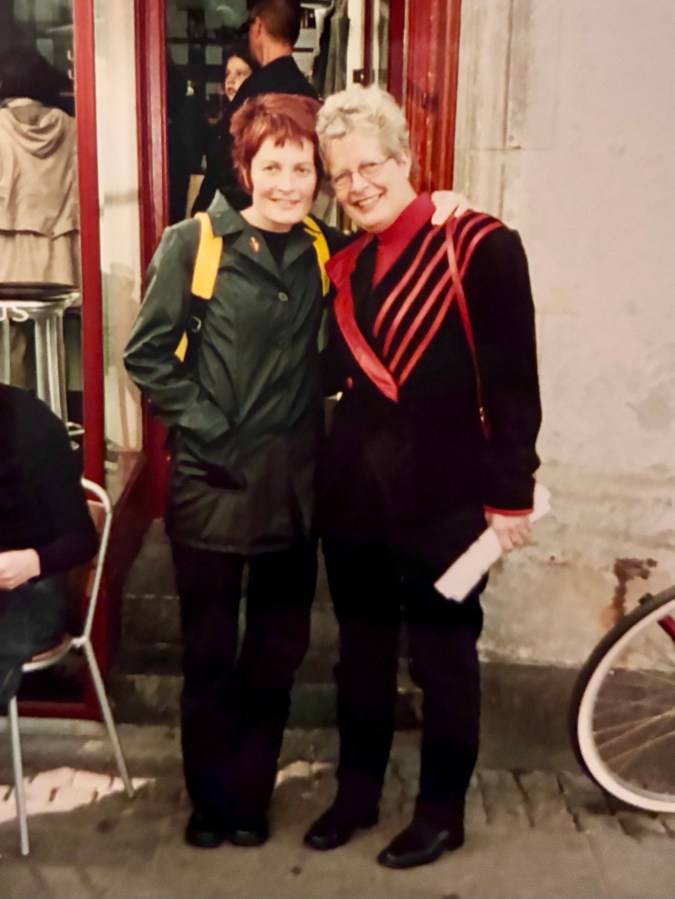
When I first received acupuncture and learned Qigong in 1995, I was introduced to Chinese Medicine and the school behind connecting our organs and emotions, to the seasons and natural elements. This has helped me find a holistic approach to healing, which I’ve used throughout my life, especially after my mother passed away. Here is an old photo of me and her from 23 years ago:
It’s said that our breathing can be constructed due to a build up of unresolved grief and stress, which even can affect our stomach, if the lungs can’t hold more. And if you think about it, we wouldn’t feel in a need of a good cry, if it wasn’t called for, so we can release and rejuvenate our breath. In fact, I used to have asthma for a couple of years, but have been able to heal from that completely.
Do you have any unresolved grief that you need to tend to? Grief isn’t only an emotion that comes with deaths of loved ones but can also be a natural response to loss of any kind, whether relationships, work or even things. A way to tune into grief, to see if you are holding any, is by thinking of what you might be missing. Do you miss a certain person, place, or time in your life? What makes you feel connected to that? Any particular song, movie, event, or do you have some photos to look at? Doing so, isn’t only to sit and cry, but to realize how much love you have, or had, for what you now are missing. You see, without feeling love, we wouldn’t grieve.
If you instead, or too, feel anger rise within, when you think about a loss, investigate this emotion to see what lies behind it. Is there something you need to forgive someone for? Is there something you need to forgive yourself for? Are you not feeling safe to express your grief?
Then it’s time to tune into self-compassion. Losing someone or something valuable, has been hard and it’s ok to grieve that for a while. It’s ok to not be cheerful all the time, and it’s ok to not just put it past you. Hold your own heart in this knowing. Hold your own inner child in this knowing.
When I lost my mother more than 20 years ago, I learned first-hand what grief can be. I soon realized that mine came in waves, with only a couple of days apart. Eventually, it became more days apart from crying and reminiscing, and finally weeks, months, and even up to a year without even thinking about her. Life does move on. But to be able to move on, we must first go through the various stages of grief: the shock, the disbelief, the process, and the finding of new ways to live without him, her, or it. Sometimes, I found that the best I could do for myself, was to just sit still. Sometimes, I danced. First West-African, grounding me with the beats of the drum in new rhythms forcing me to let go of my intellectual mind, and get back deep into my own body, flowing with the music. Then, I turned to Hawaiian Hula after feeling a pull to go there to heal. Dancing Hawaiian Hula enabled me to use soft motions to express myself, with the addition of soft swaying my hips. Hips, that directly is connected to giving birth and motherhood. I’m pretty sure, my mother carried me on her hips sometimes when I was a young girl. Dancing, let me become more present with my own body and all the emotions I had stored. Then to process it all, I went for many walks outdoors to let go and to breathe in new fresh air and energy. Something I still do.
Fast forward ten years, in 2014, I found Isadora Duncan Dance and through this practice, I found joy again.
Our lungs are connected to the Metal element and Autumn according to Chinese Medicine. To learn more about which one is connected to Winter, tune in to the next episode of The Source Podcast on Spotify or Apple, January 10th.

 TELLUSELLE LIVING CENTER