And… breathe.

Whenever I find that, I feel disconnected from my true emotions, or simply being too much in my head and worrying, I remember to breathe. To stop, feel and then think and act. As I undergo examinations or treatments, I try to breathe forcefully to withstand and endure them. This too, I’ve found, connects me with my heart and lets me check in with what I truly feel. Am I afraid? Am I sad? Am I angry? Am I coy? Whatever it is, it can be my true source of energy in my interactions, and to reflect on after. (Of course, it’s not my only source of energy, but I mean that our emotions can fuel us, as we talk or perform an action. Knowing this, we can use it to our advantage, by consciously tuning into it.) I’ve had to step aside, perhaps disassociate, at times to be able to survive in conditions and relationships, where I haven’t felt safe. Safety of course, is a pre-requisite to authentic communication, including displaying what we truly feel. But, it also is a matter of feeling safe within ourselves, learning to trust ourselves.

Expressing our true emotions, in the present moment as they arise, is how to feel alive and blossom.

Analyzing media

We want to stay on top of what is going on in the world, but at the same time, we hear about disinformation and growing distrust, while more journalists seem to become threatened or even killed, while doing their job. Are we facing reality or just indulging in drama? How should we look at media and the news in particular?

Dare to analyze what you’re reading (watching or listening to). Here are some questions you can ask:

Who is behind the article? Who is the writer and what is he or she associated with?

Who is he or she in turn working for? Which values, such as political affiliation or religious views, is this outlet associated with and wants to support and promote?

What is the purpose of this article, or broadcast, or post?

Who is their desired audience?

What is it that I’m supposed to do, think and feel after seeing this post? Are my personal view, knowledge and experiences in alignment with this? What do I agree with and what not?

Do I need to know this? Do I need to learn more, or should I read (watch, listen to) something different?

What we take in, is what we digest, also in terms of impressions. When I grew up, I was told that watching certain movies could give me nightmares, just as some videogames can produce more violence by the viewer. So, what is it that I’d like to feel? Remember to read (watch, listen to) that too!

Extending compassion

To care about ourselves, others and earth, is a choice. It’s a deliberate awareness that we take into action, by genuinely listen and respect our own needs, others’ needs, and the environment, not for the sake of politeness or political correctness, but because we want to learn in order to connect and relate better. But how do we find this sense of care, to become a natural way of relating?

Through empathy! When we open our hearts and are present with another person, whether literally in the same room as us, or online, or even watching the news, we can often relate with our own experiences; that we have gone through similar hardship and most of all have felt the same emotions. We all share the same emotions, regardless of our ethnicity, gender and so forth. Anger is anger, grief is grief, fear is fear, regardless of who feels it. In fact, our emotions may be expressed differently according to culture, but are nonetheless the same. And in this sameness, we can find a sense of connection and oneness, that enables us to also extend compassion. Thus, compassion stems from our ability to empathize. Learning to extend compassion is also the way to go, to not become drained or pulled down by our empathy, but instead use it as an understanding that enable us to express genuine concern and care. And remember, we can also share the same feelings of joy and love!

If we all cared about one another on this planet, we would have a more loving world and most of all: Peace.

Making progress at yoga

Late Thursday evening, after I had practiced yoga and done some physiotherapeutic motions, I noticed that I felt back into my flow. It was a wonderful feeling! I have dealt with some pain off and on for more than a year, due to unforeseen weight-gain and stress, and while I still can’t do the asanas the same way I used to be able to, a couple of years ago, stepping onto the mat still helps me. I never stopped practicing, but for certain motions due to injury.

Like with all physical exercises, I think most of us, do it to experience the feeling of relief and relaxation afterwards. My mind becomes clearer and more focused by doing yoga, perhaps thanks to the breathwork. And my body becomes stretched out which alleviates any tension. And, since I do it regularly, it becomes easy to compare with myself, how my strength and flexibility is. How did it feel last time? How did it feel this time? Why is that? Is it something I can improve or change, for example at which hour I practice, or does it have to do with my shape of the day and whether or not I slept good enough? If I’m hungry, it becomes harder to concentrate, but if I just ate, everything feels heavier. All these things are like little lessons for us to find our own best flow. Mine is at late evenings. When is the best time for you?

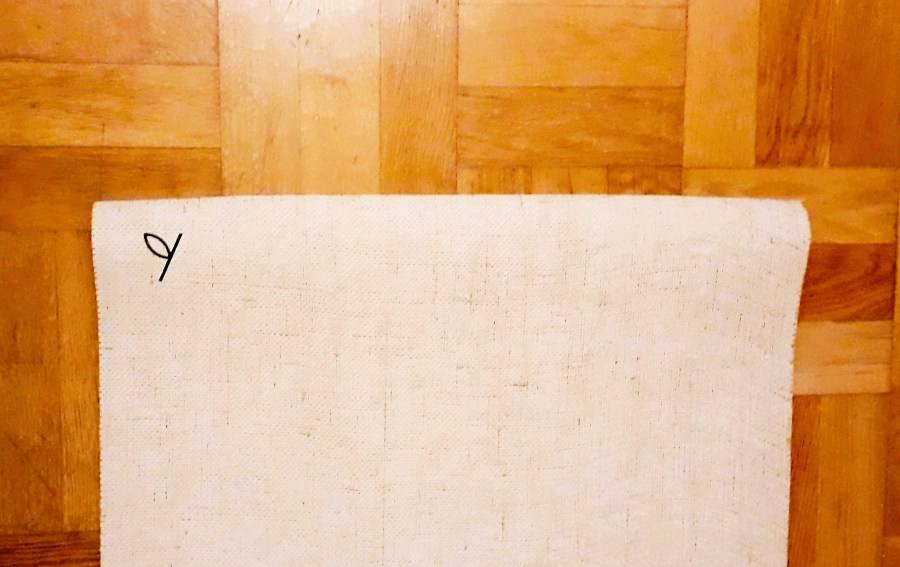
This yogamat is made of organic material from rubber and jute, by Yogiraj.

What is important for a dancer?

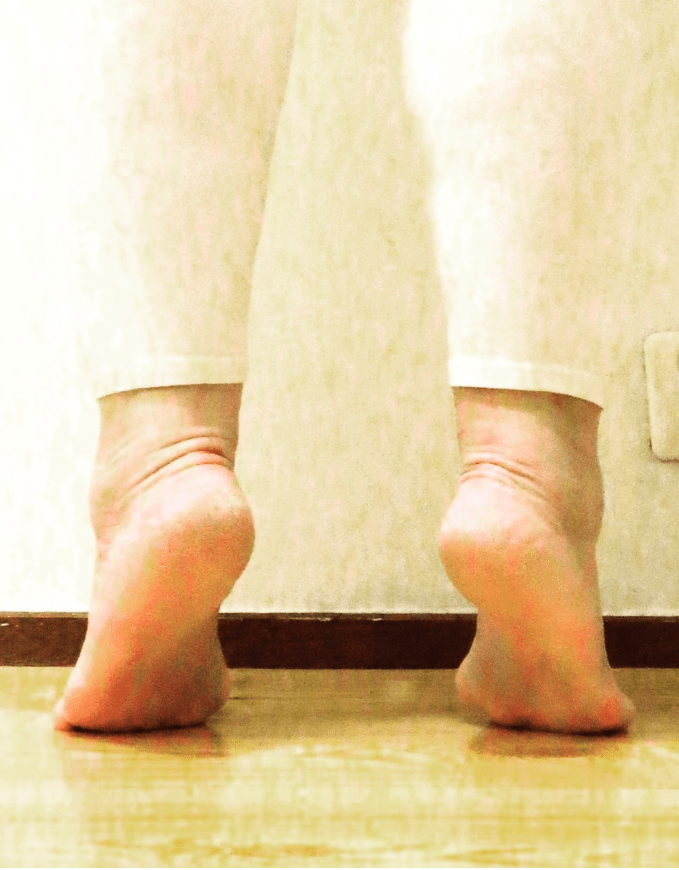
The most important thing for a dancer, is to learn to do the motions right. While this may look good, it’s not about looking good, or even being able to do the highest jump, but to do it the right way.

Some things that need to be right are:

  • Right line
  • Right balance
  • Right weight put on feet
  • Right angle for turn-out
  • Right engagement of specific muscles
  • Right posture
  • Right focus
  • Right where to look
  • Right stretch and extension
  • Right tempo and rhythm
  • Right expression

And most of all, warm-up enough to be able to make the dance motions the right way, without hurt. Eventually, with enough practice, we train our muscles to do it the right way, so that it comes more natural directly, with less correction. However, this may change according to style of dance. And the reward? A relaxed sense of grounding and joy!

A letter to Mother Earth

Forgive us Mother Earth, we don’t know what we’re doing. We litter and pollute. We destroy and clutter. We ravish and exploit. Meanwhile, both our own fellow human beings and animals suffer because of the destruction.

We need your beauty, your lifegiving breath, your winds of change, your streams of water, that even by their sound alone, brings us joy and tranquillity. Your energy of renewal, of withdrawal and of expansion. Your source of nourishment. We need it all, we need you. Please, forgive us.

Practising interfaith

To dance Hawaiian Hula, Isadora Duncan, WestAfrican dance and 5rhythms, as well as practicing Qigong, Meditation and Yoga, or sitting in conversation circles about various topics, including coaching for green innovations and better life-balance with more sustainability, doesn’t require you to belong to any specific religion. However, having faith and being open to spirituality, helps to understand the depth of the knowledge embedded in these practices. A common thread amongst these belief systems, is exercising compassion both towards oneself, others and our environment, as well as respecting the greater good.

At Telluselle Living Center, you’re welcome regardless of religious affiliation.

A more meaningful life

Do you feel like you have a good purpose for your life? That there is something motivating you, greater than just what it takes to get through the present moment?

To find this motivation, it can be helpful to try to find a meaning with what you have been through. In order to to do so, you can think of two ways:

  1. See what you have learned
  2. See what it has led to

Creating a meaningful life, has to do with finding satisfaction in what you are working with, as well as your relationships and your faith. To find this sense of satisfaction, choosing approach is crucial. By choosing to approach life, to view life, from a certain perspective, you can easier feel rewarded through recognizing examples of how this fits. Here is an example of mine:

When I was detained in Honolulu 2011-12 by Immigration Customs Enforcement, after I had come into a conflict with my academic advisor about which classes to take at the university, to complete my degree with the inclusion of previous credits, I created meaning out of this experience through seeing that I learned more about how to feel safe, as well as finding a purpose through submitting witness testimonies to the UNOHCHR, and of course, what made me endure the time, was the prospect of being allowed to remain in the United States and not be deported.

What have you been through? What did you learn? How can this become meaningful for you?

Contact me for a coaching dialogue to help you sort it out, would you want to.

Posing like Isadora Duncan

I look down to the earth. I look up to the sky, knowing that I am an instrument for both.

When I dance Isadora Duncan (or Hawaiian Hula, or WestAfrican dance), my body becomes the link between nature and God, a seeking of expressing the fullness of creation. And in each pose, I get to focus on all the little details; exploring, trying and correcting the angle, the posture and the motion. All to become incorporated in her dances to classical music.

Grandmother Oak

When i lived again in Honolulu, HI 2010-12, I took classes in Hawaiian Hula in the evenings for Kumu Marian Ka’ipo Park. She did wonderful choreographies, that I’ve been able to recall over the years thanks to others’ videos. This one especially, is to a song I’m very fond of, since it speaks of an oak tree and how we can be one with nature, called Grandmother Oak.

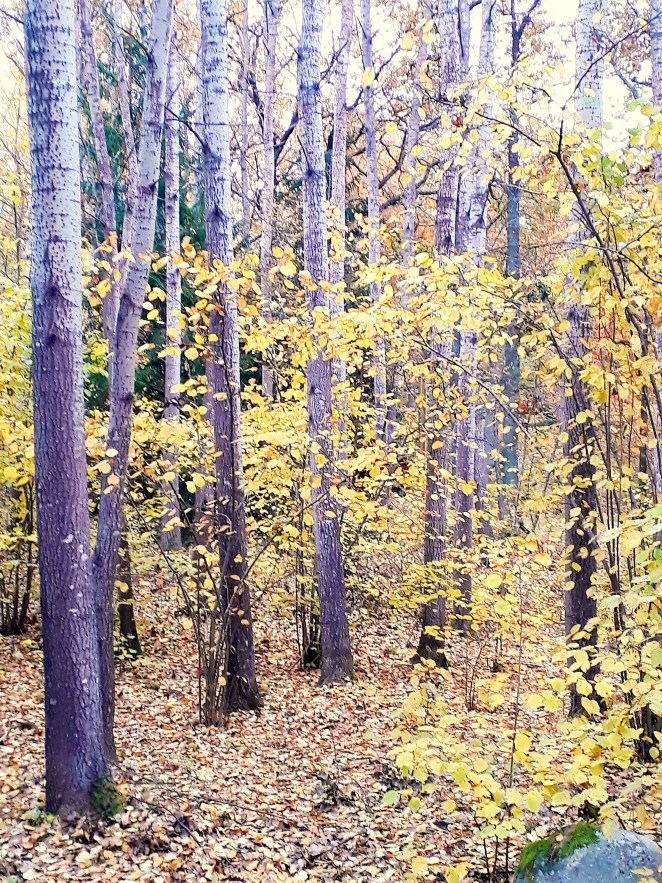
Growing up in the south of Sweden, my Junior High was called after an oak tree that stood in the middle of the yard, and it was also here my mother was a teacher in English. Oak, to me, represents wisdom and creativity, with its wonderful and unique leaves.

Relating to nature

One of the fundamental cornerstones in indigenous traditions is to foster a relationship to nature; to the land of our ancestors, and to the home for generations to come. It’s first and foremost for us to get food from, but also shelter and inspiration. But, how does one foster such a relationship to nature? How does one even have a relationship with nature?

Two things come to mind:

First, acknowledge that nature is alive. That it’s full of life, and for you to recognize this resemblance between you and nature. To start off from a sense of kinship through spirit. And to befriend.

Second, let the shifts of seasons guide you through your relationship. See how nature changes, depending on where you are and when. This too, can be compared to ourselves. How we too, change according to seasons.

Touch, scent, listen, see and talk to nature. It’s our source.

Creating peace with meditation

I just realised today, while I was pondering if it wouldn’t be better to just pray for peace, than to meditate, that since the original intent with meditation is to open up the channel between Higher consciousness, Middle consciousness and the Subconscious, according to Master Marcus Bongart, this is how we can alter the state of the world. Once in Honolulu, I and a friend decided to try to change the vibration in a scene where a couple was arguing, to see if this would change enough for them to make amends. It did, and they did! Alas, if violence stems from our subconscious level, we can override it with more presence in higher consciousness. I think, this is the greater purpose of meditation; to find inner peace and let it extend outwards.

Our subconscious, is where we store our experiences, that often are too hard to process or grasp directly, but nonetheless can affect us. It’s the home of our instincts. It’s also our subconscious that creates our nightly dreams. The question is, do we also have a collective subconscious, just like we have with the higher consciousness? Higher consciousness is the enlightened state, from where we can access our intuition and feel connected with the Divine, while our Middle consciousness is busy with our daily interactions and being present. When we can join all these three levels, and communicate in a way that aligns with all three, we can reach the goal of mastery.

In conflicts, to create peace, we must see to that the needs are being met on each side and look for what unites us. To listen to both sides equally, without preferences and judgment and find a solution that creates a win-win.

Prayers, on the other hand, goes direct to the Divine from our troubled hearts and minds, when we are being honest and sharing our true vulnerability.

Peace, be with you.

Dealing with stress

We are many who have gotten “it’s just stress” as a reply to any of our conditions and symptoms. I believe, that it’s rather that stress aggrevates our symptoms and conditions, especially if we aren’t getting our needs met. All stress implies an underlying real threat to our survival. Read that again. Not just perceived, but real and actual.

What I have come to realize, is that our stress reactions are the exact same as our reactions when we become threatened, for example by a wild animal. This evoked fight or flight-response isn’t taken seriously in today’s society. We sweep it under the rug, and pretend that in our sophisticated lifestyles, no threats exist. This is of course wrong. There is always a valid, factual, threat when we respond with fight or flight, when we become stressed. The threat can be for example not being able to buy food or pay rent. Or be on the way away from a threat, or being afraid of not getting to a meeting on time, that could result in not being able to buy food and pay rent. If you’re late for work, would you then not possibly loose your income? Is this not a threat to your survival? These things are not just to be discussed, evaluated, judged and investigated for months on end, and perhaps even meanwhile assuming that the fight or flight response would be a mental health issue. As if the threat wouldn’t be real. It’s to be dealt with, by ensuring that we get our needs met. That we get the undisturbed sleep we need, that we feel safe, that we have clean clothes, and eat food that is healthy for us. Not what you believe it should be, perhaps to feel better than, but what the individual actually needs.

By understanding, and above all, respecting, that the perceived threat is real, it becomes easy to lessen it, and hopefully to remove its cause. For example, like I’ve experienced myself, if I get upset and angry for not receiving social security when I literally have little to no income, it’s a matter of defence. We all need to eat and pay our rent. The cause of my anger doesn’t disappear with a mental illness diagnosis or a pill. I still have to eat and pay rent. This development in western society, is by far worse than any wokeism.

To deal with the stress, is where our strength and wellness practices like mindfulness, being out in nature, etc are helpful. The problem though is, if I for example don’t become angry and just sit calmly and dress nice, my need is not perceived as imminent. What if, we all, especially authorities, instead would assume that any angry person, really just is defending him/herself against an actual threat to his or her survival?

Improving society through sacred circles

In order to easier define, develop and cultivate love in its broadest sense, I’ve come up with various aspects that I think constitute, and are necessary to foster, healthy relationships. These are described with various examples in my books and are thought to also be the foundation for discussions in sacred circles in groups, that I aim to host at Telluselle Living Center.

What I refer to as, the keys to paradise, are:

Respect, Honesty, Integrity, Acceptance, Trust, Forgiveness, Gratitude, Happiness, Compassion, Kindness, Care, Tenderness, Softening Ego, Humility, Courage, Validation, Desire, Joy, Light, Consciousness, Hospitality, Dialogue

What I refer to as, the feathers of the eagle, are:

Safety, Freedom, Protection, Strength, Knowledge, Power, Authority, Provision, Fairness, Willingness, Determination, Action and Responsibility

What I refer to as, the pearls of wisdom, are:

Vulnerability, Flow, Presence, Play, Softness, Touch, Support, Needs, Energy, Affection, Trust, Compliments, Simplicity, Borders, Serenity, Wellness, Purpose and Faith

The question is what these mean to you? Which are your examples? How can we increase these aspects in our own relationships, our communities and eventually society? Which aspects would you consider important when you’re relating to others? Are some more important between friends, than between spouses or between colleagues?

Sacred plants

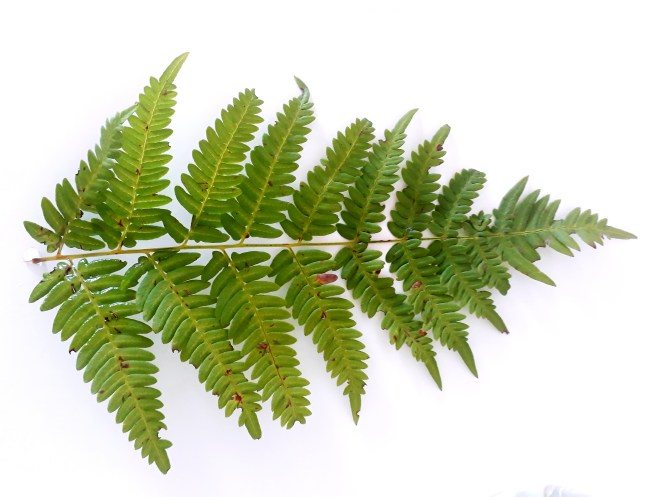
When I grew up, my mother taught me that having fern inside as a potted plant, improves the air quality. When I later came to Hawaii, I therefore found it comforting to see so much fern grow there, as well as it being used in Hawaiian Hula dances for ornamentation. It’s also one of very few plants that grows both in Sweden and in Hawaii. For a while, I also stayed at the YWCA Fernhurst in Honolulu, where they even have ferns growing like spirals. It made me fascinated, and provided me with a feeling of confirmation.

Even though, I don’t eat it, it’s still a healing plant to me. I always feel at home with fern, and therefore grateful to have it growing in the forest, close to where I currently live in Sweden too. Going for walks in the woods, was something my grandparents often did, on both sides in my family. Now, I do too and keep two wild leaves in a vase with water, that stay fresh for weeks. It keeps me connected to Hula, and to the spirit of the dance, as well as align with my ancestral lineage.

Which plant is sacred to you and why?

Here, is a webpage about some of the folklore and myths about fern in Hawaii.

My rights are also yours

In the United States, civil rights are often asserted in political dissent. In Sweden we sometimes talk about citizen rights. And globally, we can refer to the human rights. Unfortunately, it’s been my experience that many authorities gladly say that I, or someone, can file a report – as if that was the goal and the remedy. It’s not. The goal and the remedy is to enforce and apply these rights, especially by authorities. In fact, by asserting our rights, we ensure that our needs are met and can understand and exercise more compassion towards others, understanding their needs too.

The human rights are all founded on getting our needs met and can be used as a smart little list to check off, for all decisionmakers. They are inalienable for everybody regardless of gender, race, nationality, sex, religious affiliation or any other status. The human rights are:

Article 1
All human beings are born free and equal in dignity and rights. They are endowed with reason and conscience and should act towards one another in a spirit of brotherhood.

Article 2
Everyone is entitled to all the rights and freedoms set forth in this Declaration, without distinction of any kind, such as race, colour, sex, language, religion, political or other opinion, national or social origin, property, birth or other status. Furthermore, no distinction shall be made on the basis of the political, jurisdictional or international status of the country or territory to which a person belongs, whether it be independent, trust, non-self-governing or under any other limitation of sovereignty.

Article 3
Everyone has the right to life, liberty and the security of person.

Article 4
No one shall be held in slavery or servitude; slavery and the slave trade shall be prohibited in all their forms.

Article 5
No one shall be subjected to torture or to cruel, inhuman or degrading treatment or punishment.

Article 6
Everyone has the right to recognition everywhere as a person before the law.

Article 7
All are equal before the law and are entitled without any discrimination to equal protection of the law. All are entitled to equal protection against any discrimination in violation of this Declaration and against any incitement to such discrimination.

Article 8
Everyone has the right to an effective remedy by the competent national tribunals for acts violating the fundamental rights granted him by the constitution or by law.

Article 9
No one shall be subjected to arbitrary arrest, detention or exile.

Article 10
Everyone is entitled in full equality to a fair and public hearing by an independent and impartial tribunal, in the determination of his rights and obligations and of any criminal charge against him.

Article 11
Everyone charged with a penal offence has the right to be presumed innocent until proved guilty according to law in a public trial at which he has had all the guarantees necessary for his defence.

Article 12
No one shall be subjected to arbitrary interference with his privacy, family, home or correspondence, nor to attacks upon his honour and reputation. Everyone has the right to the protection of the law against such interference or attacks.

Article 13
Everyone has the right to freedom of movement and residence within the borders of each State. Everyone has the right to leave any country, including his own, and to return to his country.

Article 14
Everyone has the right to seek and to enjoy in other countries asylum from persecution. This right may not be invoked in the case of prosecutions genuinely arising from non-political crimes or from acts contrary to the purposes and principles of the United Nations.

Article 15
Everyone has the right to a nationality. No one shall be arbitrarily deprived of his nationality nor denied the right to change his nationality.

Article 16
Men and women of full age, without any limitation due to race, nationality or religion, have the right to marry and to found a family. They are entitled to equal rights as to marriage, during marriage and at its dissolution. Marriage shall be entered into only with the free and full consent of the intending spouses. The family is the natural and fundamental group unit of society and is entitled to protection by society and the State.

Article 17
Everyone has the right to own property alone as well as in association with others. No one shall be arbitrarily deprived of his property.

Article 18
Everyone has the right to freedom of thought, conscience and religion; this right includes freedom to change his religion or belief, and freedom, either alone or in community with others and in public or private, to manifest his religion or belief in teaching, practice, worship and observance.

Article 19
Everyone has the right to freedom of opinion and expression; this right includes freedom to hold opinions without interference and to seek, receive and impart information and ideas through any media and regardless of frontier.

Article 20
Everyone has the right to freedom of opinion and expression; this right includes freedom to hold opinions without interference and to seek, receive and impart information and ideas through any media and regardless of frontiers.

Article 21
Everyone has the right to take part in the government of his country, directly or through freely chosen representatives. Everyone has the right to equal access to public service in his country. The will of the people shall be the basis of the authority of government;this will shall be expressed in periodic and genuine elections which shall be by universal and equal suffrage and shall be held by secret vote or by
equivalent free voting procedures.

Article 22
Everyone, as a member of society, has the right to social security and is entitled to realization, through national effort and international co-operation and in accordance with the organization and resources of each State, of the economic, social and cultural rights indispensable for his dignity and the free development of his personality.

Article 23
Everyone has the right to work, to free choice of employment, to just and favourable conditions of work and to protection against unemployment. Everyone, without any discrimination, has the right to equal pay for equal work. Everyone who works has the right to just and favourable remuneration ensuring for himself and his family an existence worthy of human dignity, and supplemented, if necessary, by other means of social protection. Everyone has the right to form and to join trade unions for the protection of his interests.

Article 24
Everyone has the right to rest and leisure, including reasonable limitation of working hours and periodic holidays with pay.

Article 25
Everyone has the right to a standard of living adequate for the health and well-being of himself and of his family, including food, clothing, housing and medical care and necessary social services, and the right to security in the event of unemployment, sickness, disability, widowhood, old age or other lack of livelihood in circumstances beyond his control. Motherhood and childhood are entitled to special care and assistance. All children, whether born in or out of wedlock, shall enjoy the same social
protection.

Article 26
Everyone has the right to education. Education shall be free, at least in the elementary and fundamental stages. Elementary education shall be compulsory. Technical and professional education shall be made generally available and higher education shall be equally accessible to all on the basis of merit. Education shall be directed to the full development of the human personality and to the strengthening of respect for human rights and fundamental freedoms. It shall promote understanding, tolerance and friendship among all nations, racial or religious groups, and shall further the activities of the United Nations for the maintenance of peace. Parents have a prior right to choose the kind of education that shall be given to their children.

Article 27
Everyone has the right freely to participate in the cultural life of the community, to enjoy the arts and to share in scientific advancement and its benefits. Everyone has the right to the protection of the moral and material interests resulting from any scientific, literary or artistic production of which he is the author.

Article 28
Everyone is entitled to a social and international order in which the rights and freedoms set forth in this Declaration can be fully realized.

Article 29
Everyone has duties to the community in which alone the free and full development of his personality is possible. In the exercise of his rights and freedoms, everyone shall be subject only to such limitations as are determined by law solely for the purpose of securing due recognition and respect for the rights and freedoms of others and of meeting the just requirements of morality, public order and the general welfare in a democratic society. These rights and freedoms may in no case be exercised contrary to the purposes and principles of the United Nations.

Article 30
Nothing in this Declaration may be interpreted as implying for any State, group or person any right to engage in any activity or to perform any act aimed at the destruction of any of the rights and freedoms set forth herein.

More information about these rights can be found on UN’s page here.
Benefits of meditation

Ever since Buddha lived, people have believed that meditation produces insights about life. While this may be true for some, it’s not how it is for me. I get my insights by thinking through a chain of events and seeing what can be a cause and an effect. It can be recent events, or it can be events from a long time ago. This is, what I refer to, as doing an inner journey. Often, my insights come through association, ie when one word can mean, or symbolise, or describe, two things, which means I can access a memory by association and then look at it from an adult point of view.

However, what meditation does for me, is to clear my mind, to wind down, to relax, to center myself, and to slow down, or silence, my thoughts. This eventually produces stillness and therethrough the opportunity to start anew, to begin thinking of something more deliberately by choice, or even to start creating something.

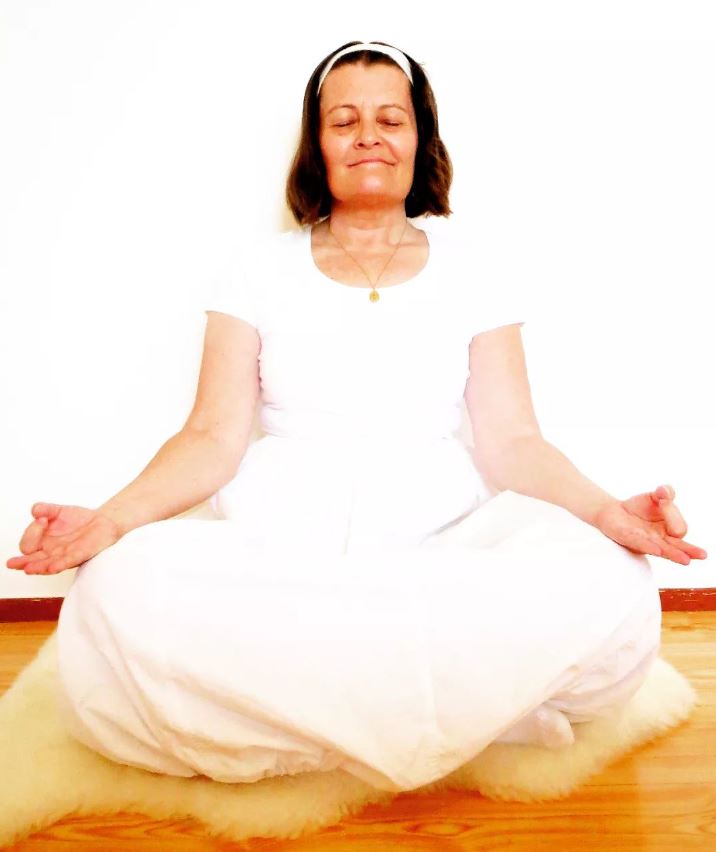
Inhale. Exhale.

Sophisticated Hula

Hawaiian Hula has many forms. Some are danced to chanting and the special drum called Ipu Heke and is then referred to as Hula Kahiko. These dances are more spiritual to their nature and speak of legends, myths and the history of the islands.

Then there is also a more modern form that is called Hula ‘Auana, which often is danced to ukulele or slack key guitar. These songs are often describing the nature of the islands and love songs to a dear one. When the lyrics are in English, and the dance is more for entertainment purposes, it’s called Hapa Haole, referring to the dancers being of a mixed or white ethnicity.

This particular dance, that I show in this video, is a traditional entertainment piece, that can be danced both with implements such as with sticks or maracas, called Pu’ili or ‘Uli’uli, or simply as is.

Enjoy!

Coaching through change

There are two types of changes we encounter in life: the one imposed on us by others, such as being laid off a job, loosing a home or a dear one, and the change we take initiative and implement ourselves. In order to get through a transition smoother and with more empowerment, coaching can help.

Things we have to consider, when we’re facing a change, are:

  • Why the change is needed – a definition of the problem
  • What the goal is – what we want the change to do for us
  • Which resistance we have – how to use resistance energy as the friction that we need to act
  • Which resources we need – time, money, knowledge, contacts etc
  • What the obstacles are – our own resistance, others’ resistance, laws, location, market, culture
  • How we’re going to conduct the change – problemsolution, others’ support, technology etc

As always, communication is key.

Contact me if you’d like a sounding board at hannah@telluselleliving.com. I offer coaching for individuals, small groups and leaders, in person, through Zoom, and as projects on location.

Eating more organic

To live a more healthy life, more in tune with nature, try to exchange what you already eat and drink to a more green alternative. For example, instead of having black tea with sugar, you can try herbal tea with honey.

Instead of white refined sugar and salt, you can use brown raw sugar and sea salt. Instead of candybars, you can buy dark chocolate. Instead of your regular preferences of rice and potatoes, you can opt for organic brands, that guarantees there hasn’t been used any pesticides in the crop. The same is true of all other ingredients, and produce too of course. This way your body doesn’t have to deal with breaking down un-natural sweeteners and toxic chemicals and waste, which makes you feel lighter and healthier.

Have you ever tried to? What is your experience? Do you feel any difference=