Turning your dream into reality

How do we make our dreams come true and manifest our intentions? Here is a simple outline that you can follow:

  1. Write down a vision you have. Describe your dream or your wish.
  2. State your intention that you’d like to see this become real.
  3. Create goals.
  4. Make a plan for what to do.
  5. See to which resources you’ll need.
  6. Find support.
  7. Take action!

We start by dreaming big. What does your dreamlife look like? What is it that you’d like to accomplish and why? What is the feeling you’re seeking, through this dream? For example: financial independence, becoming popular, be creative, be productive, make a difference… You can also add why you think this is important (This will give you a sense of purpose.).

Then, we state our intention with a mission statement. Our intentions are like little seeds that we plant; a wish we would like see happening. You can simply finish this sentence: “I’d like to…”

To begin manifesting this dream, dilute it into goals. A goal is something that you know is attainable, affordable, possible and with a deadline, or time, for it to be done.

Now, it’s time to map it out with a plan. What is it that you need to do? Do you need more information? Learn something? Which contacts do you need? Is there someone you could meet with? Do you need any legal permits, licences or visas? Who are you going to work with? Who are going to find use for your goal? Where do you want this to take place?

Nothing can get done without money. It’s a cruel fact. So, how much do you need and for what? Do you have anything saved? Can you take a loan? Work extra? Find sponsors? Meet with investors? Do it together with someone else? Is there any equipment involved? Can you lease it instead of buying? A resource can also be your own actual ability, such as if your health permits, your location and your family status as well as your knowledge.

We all thrive better with support. If you know of someone who has done what you plan already; ask him or her for advice. He or she can be your mentor. You might also decide on which friends or co-workers you can tell this to and thus get their support and cheer. Perhaps, there is a group online or where you live, that can be helpful?

Finally, make a checklist of all the things you need to do. To call, to find, to apply, to read up on, to e-mail, to go and see, to measure, to count, to follow up and when by….

To make this process clearer with your own dreams, goals and wishes, as well as to build your own confidence, you can book a meeting with me as your lifecoach. I can coach you through Zoom, or in person, and also take on small groups. Contact me here to try!
Understanding the natural elements

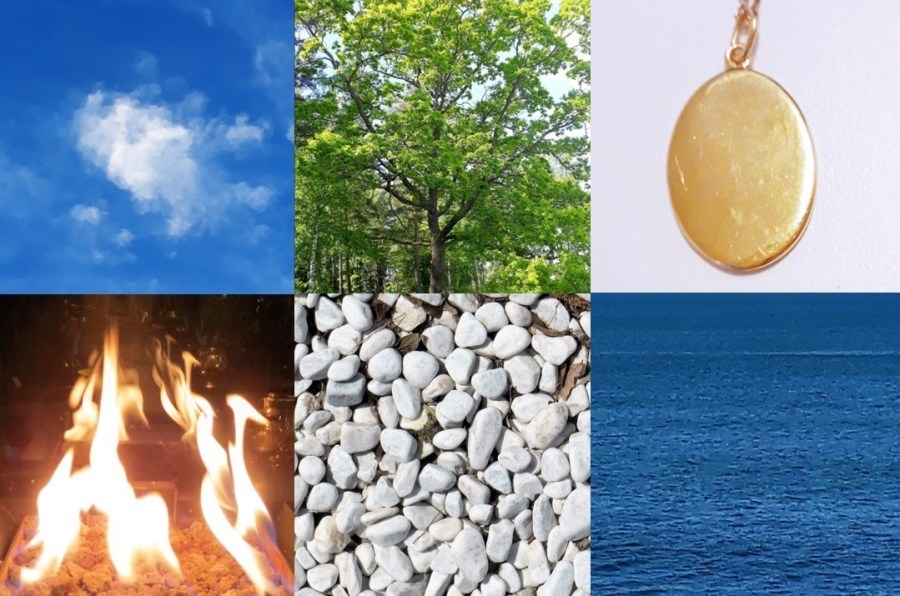
Humankind has always wanted to make sense of life and this starts by observing nature and trying to understand how it works. Its starting point is. that everything can be divided into dark and light, night and day, winter and summer, feminine and masculine, yin and yang. Everything is in motion towards one or the other, all intertwined and affecting each other. Our bodies in turn, can also be interpreted within the same framework, where some of our organs are considered yin and others yang, according to Chinese Medicine. If we’d like to, we can also translate this into how we best create balance and beauty with comfort in our homes, to set the stage for us to grow in abundance, health and prosperity, called Feng Shui. All based on using the natural elements to create harmony for our health.

Winter is considered yin, and is represented by water (kidneys) moving towards wood (liver and gall bladder). Spring is considered growing into yang, moving towards fire (heart). Summer is yang and fire, moving towards air (lungs and large intestines) becoming yin, ie fall. To make it even more interesting, one can also connect each organ with an emotion, such as anger lives in the liver, love lives in the heart, fear in the kidneys, pondering is in the spleen and stomach (earth), while stress and grief becomes affected through the lungs and large intestines, where our skin can be looked upon as our third lung. Seeking to balance all these, is to seek health. Both acupuncture and Qigong are used for this, while we also can seek to understand these dynamics in the way we dance – from contraction to expansion, and in all their variations.

The ten right questions

To improve your decision making, asking these questions, can help you see clearer if the choice you’re about to make, will help you achieve your goals and are in alignment with your values. They come from the book with the same title, by Debbie Ford:

1. Will this choice propel me toward an inspiring future or will it keep me stuck in the past?

2. Will this choice bring me long-term fulfilment or will it bring me short-term gratification?

3. Am I standing in my power or am I trying to please another?

4. Am I looking for what’s right or am I looking for what’s wrong?

5. Will this choice add to my life force or will it rob me of my energy?

6. Will I use this situation as a catalyst to grow and evolve or will I use it to beat myself up?

7. Does this choice empower me or does it disempower me?

8. Is this an act of self-love or is it an act of self-sabotage?

9. Is this an act of faith or is it an act of fear?

10. Am I choosing from my divinity or am I choosing from my humanity?

Using these questions, let you try your perspective and reasons for choosing what you do.

To live the life you would like, having a coach to discuss these with, can help you. Contact me for a session by Zoom (or in person if you’re in Stockholm, Sweden), where we start probing into which changes you desire and why, which problems you might have that you want to solve, and what your needs are.

Making New Years resolutions that work

It was when I worked as an editor for a fitness club member magazine 23 years ago, that we talked about how to make New Years resolutions work. Many, like to get fit, loose weight, quit smoking and so forth, and make this into a resolution, but often not lasting more than a month. Why is that, and how can we change it?

After reading Cheryl Richardson’s books, newsletters and watching her Life-makeover series on Oprah, I came up with the idea to instead decide on a word that can be used as a focus for the upcoming year, and have shared this in my own coaching newsletters since 2002. I used to journal on it, after practicing yoga as my own little ritual at home, for a couple of years. It’s not a goal that I’m trying to manifest, intend or achieve, but instead something that can guide my personal growth and journey towards creating more peace, love and happiness. In 2021, I had Integrity as my theme, in 2022 Posture, as my focus word and thus I practiced on improving my posture as often as I could remember, such as when standing in line somewhere. This year, I’ve had Enthusiasm as my theme. With this, I’ve simply asked myself if any decisions or choices I’m standing before, ignites my enthusiasm. It has, and thus I’ve let it guide me. In 2024, I intend to focus on Relationships, ie how I relate.

By nature, each action has a reaction, or simply put its opposite reflection. A desired change, therefore often produces a feeling of resistance. But, resistance tells us that we must understand why, we need to change, and let this friction within (and outside of us) become the fuel, the actual energy, with which we can implement change.

For success to be possible, we must create the right conditions for it to happen. It’s like making sure we have the right pot, soil, water and light, rather than asking the plant to grow faster or taller or bigger. It will naturally do so, when the conditions are right for it. This is an important part of lifecoaching – it’s not about struggling to reach a goal, but to look into what needs to be done to do so.

What do you feel would help you, to focus on next year?

Taking the lead

While I was thinking of my cousin yesterday and how we’ve spent some fun Christmases growing up, some years, I received an insight. I’ve decided to make Relationships my theme for 2024, and while contemplating this, I felt called to remember that I must resume taking the lead. I’ve most often done so, most of my life, whether it’s been creating a new subsection of our local riding club, suggesting improvements at the workplace, being president for the south county fraternity for former exchange students, or simply being the first one that enters the dancefloor on a club, it’s been me. During spring 2003, I decided to not run for becoming the president of another fraternity organization at the university, like I first thought of, but instead be the one suggesting others for the election committee. I shouldn’t have done that. I thought of it, as something that leaders also do – enabling others to take the spotlight and support them. But, I am a leader, and I should not step aside out of false humility, to not always be the one in the limelight. I can have that position.

In my relationships, I’ve done the same to feel accepted, and to not create friction, but often felt like I’ve had to compromise away my preferences and priorities. Now, that’s no good for anyone. So, I visualised, and tuned into, the feeling of taking the lead again, also in my relationships. Not necessarily always taking the initiative, but to reclaim my power and lead again. To step back into my confidence and invite others to tag along.

Looking forward to try this in 2024!

Take heart!

Are you wondering why you are not reaching your goals or manifesting your intentions? Take heart, you’re not alone, and you are not a lesser of a successful person. Your success can only be truly measured by comparing yourself with yourself and your actual abilities.

For us to create the life we want, there are two things we need to have in mind, that can hinder us.

  1. Your own ability to follow through: After you set an intention, such as getting an idea and sending it out as a wish to Universe, you must follow up with action towards its fulfilment. In fact, I believe that setting an intention, is like throwing out a fishing net. If we’re not careful, someone else might try to steal our catch, simply by being quicker than we are, by noticing it, or just have more resources at hand to.
  2. Other people’s decisions: Whether it’s a matter of getting your applications denied, trends in society, lack of replies, change of laws, or even wars, others can, and will, try to get in your way.

(For example, when Instagram started in 2010, I didn’t have the means to buy an iPhone in the US, where I was, so I couldn’t “jump on the train”, as well as having to deal with authorities and their decisions for many years. I also had to live without owning my own computer in Sweden for several years, even though I’m a professional copywriter and need one to work.)

Unfortunately, in today’s society, it’s looked upon as of lesser value to not have millions of followers, a high income and/or to own your own business. This is far from true. What would these people be without their followers or customers? Not to mention students. If everybody decided to become teachers, who would they teach if not some of us accepted our levels, and devoted ourselves to be good students? So, to make next year a better year than this one, simply focus on this to begin with:

What can you improve and how?

Go through all the pieces of the pie; physically, mentally, emotionally and spiritually. Add socially, financially and logistically. Set a goal for each, and make a list of priorities. Notice that some of your goals may be the resource to another, such as having a good health or steady income. Thus, these needs to be fulfilled and reached first in order for you to work on getting onto the next one.

My own example is, that I’d like to ensure that all my teeth are fixed before going to the United States, since in order to do the same treatment of getting dental implants there, I would have to be a taxpaying resident for five years first, to be allowed to use my Swedish healthcare system benefit (I still have my lower jar to do, my upper jar took 3 years.). I also want to ensure that I have the right diagnosis filled out in my forms, and heal the health issues I have, as much as possible, including recovery. I also would like to have my business plan updated, my social media, and finish writing my third book, so that I can devote my time, when I do move, to work with full force. And when I have this in order, I can also devote some of my time, to develop new relationships.

Choosing a Christmas tree

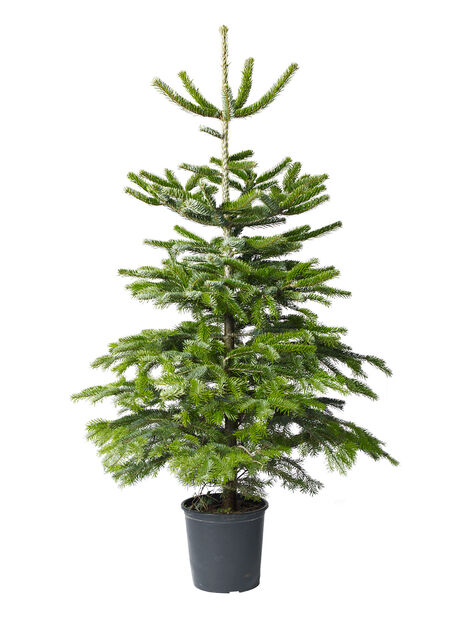
Plastic or real? Or a Juniper instead? When it comes to choosing a nice Christmas tree, it’s hard to know, what really is organic and sustainable. A plastic tree, can of course be used several years in a row, and thus save the environment from excessive growing going to waste. On the other hand, a real tree, has a Divine scent and makes the holiday seem more homey, nice and natural. But, what are the alternatives?

When I lived down south of Sweden, I used to have a large chandelier made of black iron and designed by my mother, standing in a corner, that was as large as a mid-size tree, and that I would decorate with a couple of Christmas balls and garlands. Before this, I would buy a small Juniper, instead of a tree. This too has a nice scent and can last longer, without leaving any traces of dry spruce. And the other day… I found this nice option! A real tree, but small, in a pot. Isn’t this the most organic and eco-friendly alternative?

Imagine if we all would go outside into the woods and cut ourselves down a tree. That would be a million trees just in Stockholm, and no trees left in the forest! And all trashed in a couple of weeks! People could at least make wood of them. On the other hand, doesn’t it require non-organic material manufactured in a not eco-friendly way to make plastic trees? So, what if everybody bought small ones in a pot instead? And kept them on their terraces, or planted them outside, after the holidays? What if it’s even possible to keep them in a pot for next year? I think this would be a much more sustainable idea. Merry Christmas!

Photo from Plantagen, in Stockholm, Sweden.

UPDATE: I read in the news, that some of the used Christmas-trees in Sweden, are put into certain rivers to make it a playground for fish to mate. Pretty cool!

Make a wish!

Now that we’re approaching Christmas and New Year’s, it’s an opportune time to think of what we wish for ourselves (and for others). This exercise, will allow you to become more clear about what you want more of, and why.

Make a list! Write down everything you’d like to have, or get. Anything from things you’d like to buy, to having more abundance and love. Now, if you would make your case to the Universe about these items. How can you argue why you should receive them? What is it that you’re going to do with it and why do you want it? For example, if you’d like a new pair of glasses, you could state that it would enable you to see better and therethrough work better and serve others more with more proficiency. And almost like magic, when this is set with a pure intention, you tend to attract these things into your life a little easier, with a better price. Try it!

Making a wish list, can also help you see what you’d like to increase next year, to have as your personal theme and goal. What will be your focus for 2024?

Deciding the steps

Since there aren’t any Hawaiian Hula teachers in Sweden, I have to rely on my own memory and others’ videos to learn the set choreography to certain songs. However, sometimes they differ. Kumu Marian Ka’ipo Park, changed the ending for Grandmother Oak, I just remembered. Should I do that one instead? She was also the one who introduced me to Sophisticated Hula, but with implements, that I haven’t fully learned yet, so I decided to do another version. And, while I have performed Mele Kalikimaka at Unity Church in Honolulu 2010, I found a more fun rendition on YouTube recently, so I recorded this one, with my own combination today:

To make it even more challenging, each dancer has his or her own style and expression, that too can make a dance look different if the choreography is a little bit changed. The question is, should we always resort to the oldest original, or should we allow ourselves to develop it as we go?

Healing our inner child

For many years, I’ve been on the path of healing my inner child. What does this mean, and how does this apply to you? According to the psychology theory called Transaction Analysis, we tend to take a role of either being as a parent, being as an adult, or being as a child, when we communicate and relate to others. This is true across the board, both professionally and personally. Thus, this is also how we can get stuck in relationship patterns, creating the same type of dramas and dynamic, over and over. I wanted to break free from mine, which often was assuming a parental role towards others, and decided to do so, after my mother had passed away, in 2004. It’s also said in the Bible, that we should be like little children, to be able to enter heaven. Alas, this path has become also about finding faith and living by it.

Healing our inner child, simply means to reclaim and reconnect with our childlike essence and spirit within, and let him or her shine through us. We do this, by tending to our needs, by making our bodies and our homes, a safe and nurturing place to live in, and by setting appropriate boundaries for ourselves, that we enforce. A healthy inner child exuberates joy, curiosity, enthusiasm with a strong will to explore the world. It also thrives on living our passion and meeting with others that feed our inspiration and support us to do so, with a sense of being playful. Most of all, healing our inner child is about becoming our own best parent to ourselves. After doing so, I believe, we also will have healthier relationships to others that will ripple into society, also becoming more empowered and healthy.

More about my journey can be found in my books, with the third one on its way!

Walking meditation

There is something comforting in hearing the sound of snow, crunch lightly, when we tread on it. It reminded me of practicing walking meditation again. Have you tried it?

This can be done both outdoors and indoors (where it might be easier) and is simply a way of walking slowly in harmony with your breath. Let each step, be in sync with your inhale, gently putting down your foot on the exhale, by rolling it from heal to toe. Inhale as you lift your other foot and move it slowly upwards and forward. Exhale again, when you put it down.

This is an awesome exercise to land into presence!

A message of hope

This past weekend, while I was trekking through piles of snow in the forest, across the street from where I live, Mother Earth whispered a message to me. Lately, I’ve discovered that all trees, although bare of leaves for the most part, during winter, keeps at least one leaf hanging. Go outside and look! Have you noticed? Why is this? Is it to be able to identify, which kind of tree it is?

It’s a message of hope! A nature’s way of showing that there will be life next year too, that the tree will get new leaves, when spring comes. Having one leaf hanging left, can also be seen as the perfect example of yin and yang, where there is always a little of each in both, both in constant motion.

Making the most of waiting

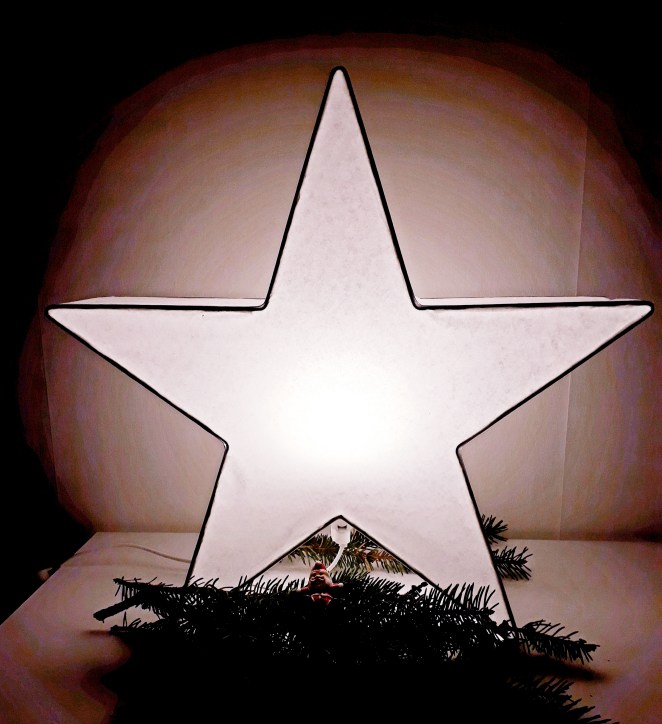
Today, marks the 1st of Advent, that we celebrate in Sweden as a countdown for Christmas. Traditionally, we light the first candle of four, and continue each Sunday, as a preparation for its arrival. It’s a time, when everyone pulls out their stars, or candleholders, and put them in their windows. Advent simply, means to acknowledge the wait. So, how can we use this as a metaphor for our own personal development too, according to wanting to live by season? Is there something you are waiting for in particular? What can you do meanwhile, instead of becoming frustrated?

Our waiting time, can be used as a time for preparation. Here are some things you can consider:

  • Get your physical needs met, by sleeping enough, eating better, resting up, and exercise
  • Organize your home and office
  • Sort through your e-mails
  • Update your online profiles, with your latest information
  • Go through your wardrobe
  • Cultivate a feeling of readiness; open yourself for new things or relationships
  • Save up some resources
  • Look up any information that might be needed
  • Do some research with other people, who have already done what you’ve set out to
  • Prepare a presentation, such as by writing a speech or making slides
  • Come up with ideas to reward yourself after, as well as what to do after

And most of all, enjoy your time!

And… breathe.

Whenever I find that, I feel disconnected from my true emotions, or simply being too much in my head and worrying, I remember to breathe. To stop, feel and then think and act. As I undergo examinations or treatments, I try to breathe forcefully to withstand and endure them. This too, I’ve found, connects me with my heart and lets me check in with what I truly feel. Am I afraid? Am I sad? Am I angry? Am I coy? Whatever it is, it can be my true source of energy in my interactions, and to reflect on after. (Of course, it’s not my only source of energy, but I mean that our emotions can fuel us, as we talk or perform an action. Knowing this, we can use it to our advantage, by consciously tuning into it.) I’ve had to step aside, perhaps disassociate, at times to be able to survive in conditions and relationships, where I haven’t felt safe. Safety of course, is a pre-requisite to authentic communication, including displaying what we truly feel. But, it also is a matter of feeling safe within ourselves, learning to trust ourselves.

Expressing our true emotions, in the present moment as they arise, is how to feel alive and blossom.

Analyzing media

We want to stay on top of what is going on in the world, but at the same time, we hear about disinformation and growing distrust, while more journalists seem to become threatened or even killed, while doing their job. Are we facing reality or just indulging in drama? How should we look at media and the news in particular?

Dare to analyze what you’re reading (watching or listening to). Here are some questions you can ask:

Who is behind the article? Who is the writer and what is he or she associated with?

Who is he or she in turn working for? Which values, such as political affiliation or religious views, is this outlet associated with and wants to support and promote?

What is the purpose of this article, or broadcast, or post?

Who is their desired audience?

What is it that I’m supposed to do, think and feel after seeing this post? Are my personal view, knowledge and experiences in alignment with this? What do I agree with and what not?

Do I need to know this? Do I need to learn more, or should I read (watch, listen to) something different?

What we take in, is what we digest, also in terms of impressions. When I grew up, I was told that watching certain movies could give me nightmares, just as some videogames can produce more violence by the viewer. So, what is it that I’d like to feel? Remember to read (watch, listen to) that too!

Extending compassion

To care about ourselves, others and earth, is a choice. It’s a deliberate awareness that we take into action, by genuinely listen and respect our own needs, others’ needs, and the environment, not for the sake of politeness or political correctness, but because we want to learn in order to connect and relate better. But how do we find this sense of care, to become a natural way of relating?

Through empathy! When we open our hearts and are present with another person, whether literally in the same room as us, or online, or even watching the news, we can often relate with our own experiences; that we have gone through similar hardship and most of all have felt the same emotions. We all share the same emotions, regardless of our ethnicity, gender and so forth. Anger is anger, grief is grief, fear is fear, regardless of who feels it. In fact, our emotions may be expressed differently according to culture, but are nonetheless the same. And in this sameness, we can find a sense of connection and oneness, that enables us to also extend compassion. Thus, compassion stems from our ability to empathize. Learning to extend compassion is also the way to go, to not become drained or pulled down by our empathy, but instead use it as an understanding that enable us to express genuine concern and care. And remember, we can also share the same feelings of joy and love!

If we all cared about one another on this planet, we would have a more loving world and most of all: Peace.

Making progress at yoga

Late Thursday evening, after I had practiced yoga and done some physiotherapeutic motions, I noticed that I felt back into my flow. It was a wonderful feeling! I have dealt with some pain off and on for more than a year, due to unforeseen weight-gain and stress, and while I still can’t do the asanas the same way I used to be able to, a couple of years ago, stepping onto the mat still helps me. I never stopped practicing, but for certain motions due to injury.

Like with all physical exercises, I think most of us, do it to experience the feeling of relief and relaxation afterwards. My mind becomes clearer and more focused by doing yoga, perhaps thanks to the breathwork. And my body becomes stretched out which alleviates any tension. And, since I do it regularly, it becomes easy to compare with myself, how my strength and flexibility is. How did it feel last time? How did it feel this time? Why is that? Is it something I can improve or change, for example at which hour I practice, or does it have to do with my shape of the day and whether or not I slept good enough? If I’m hungry, it becomes harder to concentrate, but if I just ate, everything feels heavier. All these things are like little lessons for us to find our own best flow. Mine is at late evenings. When is the best time for you?

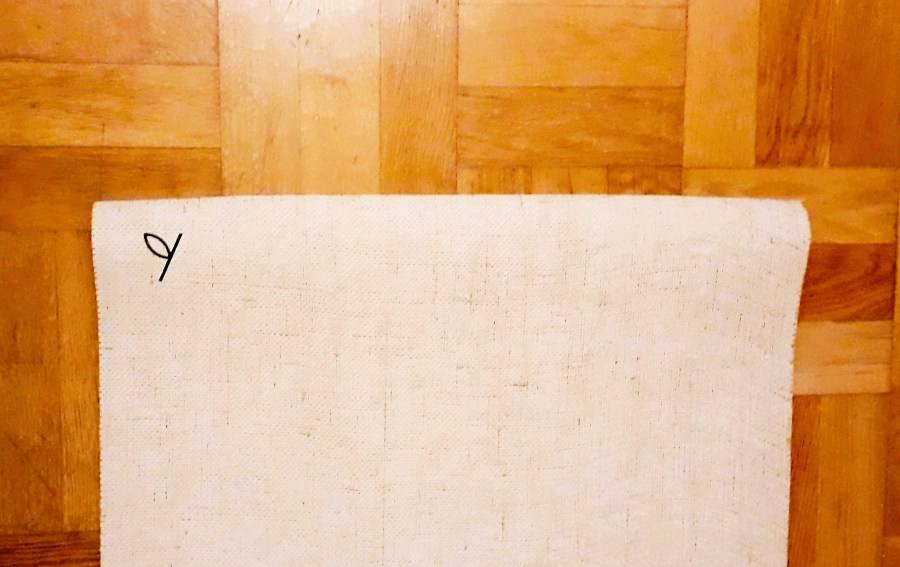
This yogamat is made of organic material from rubber and jute, by Yogiraj.

What is important for a dancer?

The most important thing for a dancer, is to learn to do the motions right. While this may look good, it’s not about looking good, or even being able to do the highest jump, but to do it the right way.

Some things that need to be right are:

  • Right line
  • Right balance
  • Right weight put on feet
  • Right angle for turn-out
  • Right engagement of specific muscles
  • Right posture
  • Right focus
  • Right where to look
  • Right stretch and extension
  • Right tempo and rhythm
  • Right expression

And most of all, warm-up enough to be able to make the dance motions the right way, without hurt. Eventually, with enough practice, we train our muscles to do it the right way, so that it comes more natural directly, with less correction. However, this may change according to style of dance. And the reward? A relaxed sense of grounding and joy!

A letter to Mother Earth

Forgive us Mother Earth, we don’t know what we’re doing. We litter and pollute. We destroy and clutter. We ravish and exploit. Meanwhile, both our own fellow human beings and animals suffer because of the destruction.

We need your beauty, your lifegiving breath, your winds of change, your streams of water, that even by their sound alone, brings us joy and tranquillity. Your energy of renewal, of withdrawal and of expansion. Your source of nourishment. We need it all, we need you. Please, forgive us.

Practising interfaith

To dance Hawaiian Hula, Isadora Duncan, WestAfrican dance and 5rhythms, as well as practicing Qigong, Meditation and Yoga, or sitting in conversation circles about various topics, including coaching for green innovations and better life-balance with more sustainability, doesn’t require you to belong to any specific religion. However, having faith and being open to spirituality, helps to understand the depth of the knowledge embedded in these practices. A common thread amongst these belief systems, is exercising compassion both towards oneself, others and our environment, as well as respecting the greater good.

At Telluselle Living Center, you’re welcome regardless of religious affiliation.