Importing Aloha?

One of the greatest resources Hawaii has, is the Aloha-spirit that in many ways resemble Christian kindness, but coming from a more aware and conscious effort to simply share and be generous at heart. Can this be imported and implemented in Sweden, I wondered almost 20 years ago when I came home from my first visit. I’ve wished and prayed for that, as well as tried to spread myself, when possible. And…. it has! Stockholm has changed! Stockholm, Sweden, used to be a very cold, busy and snobby city, yet many years behind with fashion trends (in comparison to Copenhagen for example). And most of all, a city where everybody rushes to hop onto the subway, and preferably also on the right side of the train, to arrive closest to one’s exit. This is no longer so. And I’m so relieved!

Other things that I’m grateful for, and that I’ve been on the receiving end of here this last decade, is many neighbours who have greeted me friendly, where I’ve stayed, trust in me when I’ve had to pay late, been offered several awesome apartments to rent, received compliments by strangers on the street, offered assistance to open a door or carry something, as well as shared small talk in common areas, whether doing laundry, standing in an elevator, or attending church. So, while Swedish people still can be hard to get to know and make friends with, if you haven’t known each other since childhood or have kids that are, there is another openness and kindness now, that I hope is a seed of Aloha.

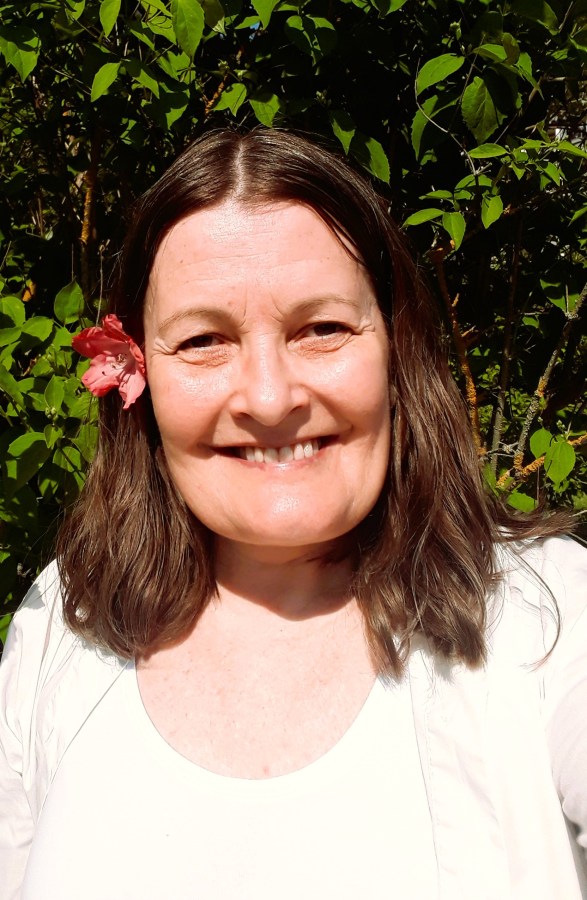
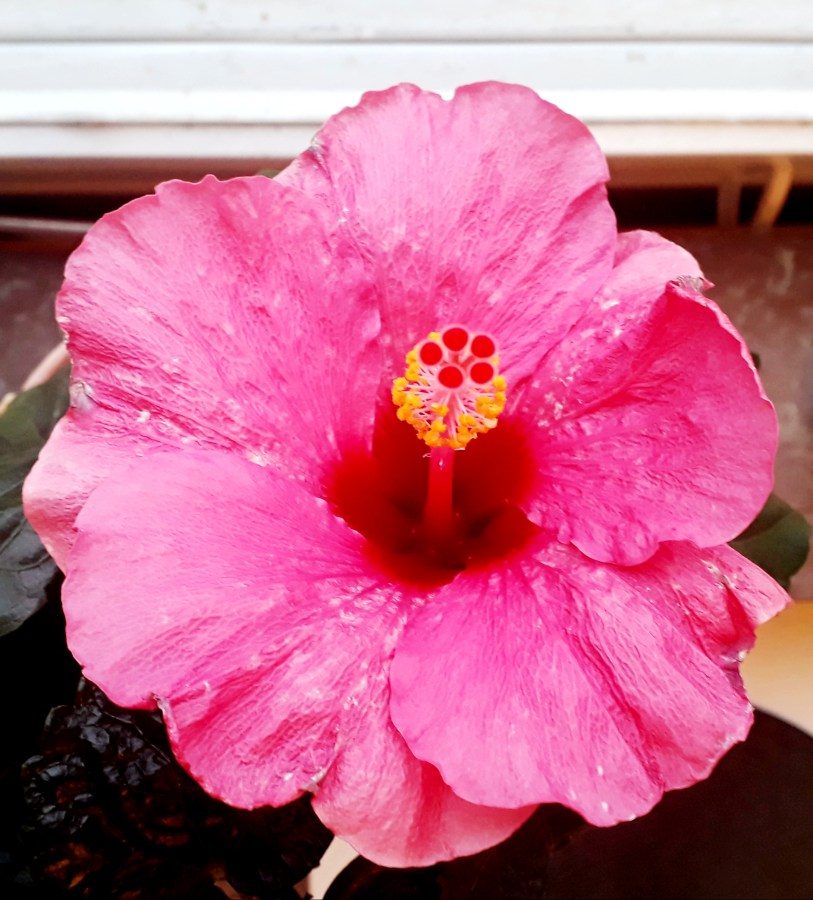
Photo of a Hibiscus flower, the state flower of Hawaii, growing in my kitchen.

The change model

When it comes to creating change, there are many similarities with how to reach a goal. Often a goal implies a desired change at some level, or many even. This is a model I’ve created that you can use, based on my coaching:

1. Define why a change is needed

The only way to solve a problem is to understand, clarify and define what the problem is. First then, will you realize the need for change. Example: You want to lose weight but can’t muster up the energy to get going on your new health regimen. Understanding why you need to lose weight is paramount, such as you have gotten diabetes. Then the real problem is not your weight, that would be the cause, but what you want to focus on is your need to deal with diabetes.

    2. State the desired change

    Spell out your desired change. Example: I’d like to eat better so I can control my diabetes.

    3. Communicate the goal of the change

    Communicate it to everybody around you to help you be held accountable. Example: Share your new diet at work and bring a sugar-free treat to everybody.

    4. Decide which steps to take

    Make a plan with set deadlines. Example: Research a meal plan, read up on recipes, go and buy groceries, make an appointment with the doctor, for follow-up tests, and start exercising twice a week.

    5. Dealing with resistance

    You will inevitably both procrastinate, doubt, and refuse some days. This is normal. By being aware of your own resistance, you can prepare by taking small steps those days, to call a friend for support and by being kind to yourself. Look at yourself like a student in training. It’s ok to make a mistake and do it again. Also know that the very resistance energy, is what you need to muster up in order to carry through with the change! Example: When I feel low and tired, I will allow myself to rest and go for a walk instead of a run.

    6. Milestones and measuring progress

    Make sure you set milestones along the way that you can measure. These can be weight loss, better results next time you draw blood, learning to eat better, and be in a better mood. Example: Three months from now, I’m going to weigh myself and check my insulin level.

    7. Receiving the reward

    Whether it’s to treat yourself to a spa-day, buy a new pair of jeans or simply feel good about your progress, make room for receiving the reward. What is the feeling you’d like to feel, when having implemented your desired change? Example: I like the sense of increased control and discipline, an improved diet shows. This calls for a celebration with friends!

    8. Evaluating and moving forward

    This final step is one of the most important ones. To sit down and reflect on the whole process, enables you a deeper understanding on how you can deal with any other changes in your life. Example: I realized that I got much more tired than I expected, so I will make sure to schedule less activities and give myself more time to relapse and recuperate, next time.

    Whether you’d like to change something that will improve your health, your career, a move or your relationships, a series of coaching sessions can help you along the way. A coach is there to check in with you regularly, to follow up on how you’re doing, and what can be done if you face any obstacles. Contact me or any certified coach in your own area to get you started!
    The essential question

    When it comes to improving your decision making and keeping your focus, a good way to eliminate doubt and lessen stress and overwhelm, is by asking this simple question: What is important?

    This can be used in all areas of your life. For example, if you’re going to college, or simply are trying to read up on a subject with a heavy book. Using the question “What is important?”, helps you to zone in on the facts and get an overview.

    At work, this might help you prioritize your tasks, as well as what to communicate and to whom, and when, to meet your deadlines.

    In your relationships, this can enable you to cut out the drama and be more present and real. When it comes to tending to your own needs, and the needs of others, this essential question is everything. We want much, but what do we really need? To honor yours and others’ needs, your answer to this question, will also be your answer to your compatibility and commitment.

    And for your health: What is important to do, to ensure a good health?

    Last, but not least. Also when it comes to creating a sustainable future and lessen our carbon footprint on this planet: What is important and why?

    To discuss what is important to you, you’re welcome to try a free coaching session by Zoom or Skype. Hust e-mail me for details at hannah@telluselleliving.com

    Integrating cultures

    How much should we adapt to, and how much should we remain loyal and the same, to where we come from? This last decade, the world seems to have opened up greatly for more people moving to work or study elsewhere. We also have a growing influx of refugees in the world, that might even increase, because of the changes that comes with a more diverse migration. In one way, we might be importing and trying new types of products, styles and foods. In another way, hostility and a strive to remain conservative might also grow. Both can in turn, create more movement. One of the most common examples, is the boom of pizzerias that became the result of many people’s travels to Italy and/or Italians moving 50 years ago. And we all know, nobody opposes this. But, it took time and there was an adaptability that fit within the Western world.

    One of the things that I brought with me from Hawaii, was a sense of more lived out femininity, such as wearing more dresses and putting a flower behind my ear. As soon as the summer arrives in Sweden, I like to do this here too, now and then. It reconnects me with my positive experiences having lived in Hawaii that works to incorporate here. The problem, however, arises when it’s our ways of behavior that changes, that others might notice and not agree with, less understand without being able to relate to themselves. What is it then that drives our wish to change? To me, it’s always a matter of using what makes me feel better. This includes both physically and literally, as well as mentally, emotionally and spiritually, such as finding a greater ability to empathize, a more mature relation to faith, better confidence, and assume a broader perspective on society. Add thereto, improved language skills, a heightened sensitivity to the subtler variations of cultural communication, and the mere knowing of how things are handled elsewhere. It enables me to detach from the drama in Sweden, while I’m growing into who I am, more as I also reconnect with more understanding of my own family’s past, coming from various countries in Europe.

    So, how much should we adapt to and integrate? What should we bring with us into our new city and what should we take with us back? Perhaps, this is the ultimate discussion of sustainability and how we should shape the future. What do you think? What is your experiences and what have you learned after your time abroad, or after living with an immigrant?

    Practising Qigong

    Here is a video with my practice today, of the Qigong routine called Eight pieces of silk brocade. The name is said to inspire how the motions should be smooth as.

    While it can be nice to have some instrumental music in the background, each motion should be executed in rhythm with your breath. This particular routine usually takes about 20 minutes.

    Creating in harmony with the moon

    The moon has always brought a sense of mystery and power with it, in various traditions. It’s considered Yin in Chinese Medicine, and in Hawaii, there is a goddess called Hina, that derives from the power of the moon, as well as Selene in the Greek myths. I, myself, was born on a Sunday under a full moon, so it has naturally intrigued me. Add therethrough Astrology and folklore.

    To use the moon as a measure for your life, is to create more harmony and balance with nature, by using its natural phases of waxing and waning to enable more flow for you. If you’re a woman without contraception, you can compare your own cycle with the moon’s. And, for both men and women, the moon phases can serve as inspiration and an extra boost to working with projects.

    For example, right now we have a New moon. This time, is considered a good time for new beginnings, whether relationships or projects, or simply to set your seeds in the ground. The growing into half moon, is when you put in your work, and then controlling and correcting it, when it’s growing into full, when it should be completed.

    Start by comparing your projects to the moon’s phases, and see if there is any difference in how it feels working with them. Use it to your advantage!

    Connected through the collective heart

    Why is it, that the right people show up, when we need them the most? Is it God, orchestrating from above? It can be. It can also be, that we’re simply connected through feeling compassion and therethrough feel the call of others. When we act on this, we realize unity and oneness. And it’s also through this, we can connect with animals. All living beings, have a heart.

    Debbie Ford put it like this:

    “Connected to the collective heart, you can be certain in every cell of your being that you are never alone, and you will experience the grace, guidance, and ease that comes when you are one with all there is.”

    I understand it as, we’re on one hand eligible for the same inspiration and similar impressions through our Higher consciousness, which we access through our spiritual channel; our crown chakras. This may feel like intuition, or an inkling to create something particular, write and share a message, or the like. A way to cultivate knowledge and turn it into wisdom.

    The collective heart, is our humanness knowing how vulnerable we are in this world, and how much we need each other to feel safe. This connection and unity, makes for both an ability to embrace our differences, and to see the world through this lens. To see, why and how, people act and behave the way they do, through our ability to feel compassion. Imagine, if the world’s leaders and authorities, would govern from this perspective. To feel compassion for oneself, for others and for earth. To care about.

    Be a caring person

    To have a society led by compassion, must be the ultimate, inclusive, and free kind of society, we could have. But, finding and showing compassion, comes from relating to similar experiences, which of course not everybody can. To find compassion, start by becoming more caring.

    Caring about yourself, includes to set boundaries both towards yourself and others. It means to see to that all your needs are being met, in the way you prefer. And it means to provide yourself with some comfort and self-care, when you go through rough or stressful times. To not be so hard on yourself, but instead find self-compassion as a step towards self-love. To do this, you must care about who you really are, what you stand for, what you like and dislike, and how you want to be treated.

    Caring about others, is one of the most gratifying feelings we can have. When we give, not to get something in return, but for the sake of just helping, when we can, with what we can, whether it be your time, your money, your knowledge, your ideas, sharing your experience and values, or showing your support, we receive a sense of being important for someone else. We become needed. To become a more caring person, check in with others regularly: How are they feeling? What are they going through? What do you appreciate about them? What has happened since you last talked? What do they dream about and desire? What do they need? Do they feel respected by you? Be open to help others, whether your loved ones, friends, co-workers or neighbours. This creates a welcoming and caring atmosphere, a more caring society. Dare to take the initiative.

    Caring about earth, is caring and tending to our own homes and houses, our offices and shared spaces, our cities and parks, our plants, vegetation and agriculture. What we consume and how. Can you feel when your plants need watering? By relating to nature, we can feel a connection to our source of life and cherish it as such. To be one with.

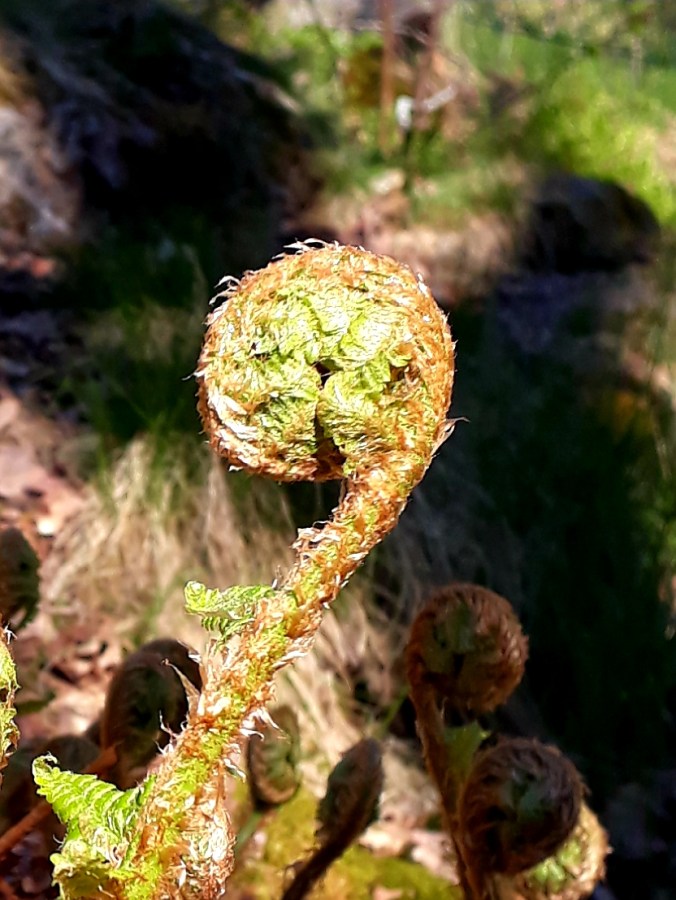
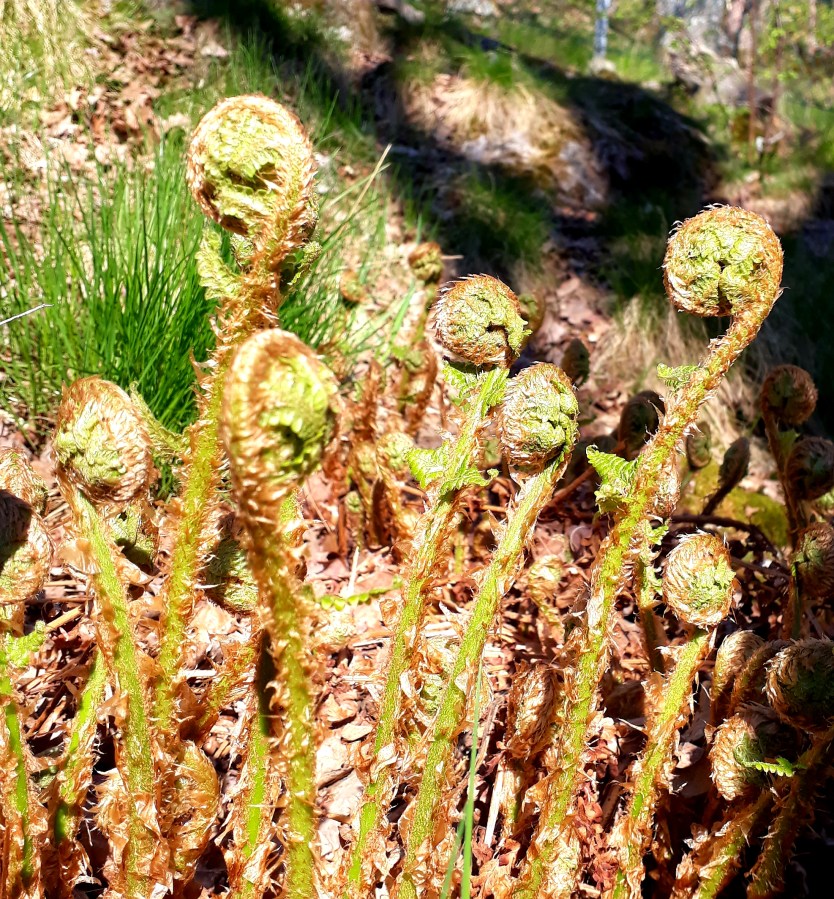
    Photos show ferns budding.

    Tips for job seeking

    Whether you’re unemployed, or simply looking for another job, here are some things you can do:

    • Make your job-searching and applications into a routine, perhaps scheduled to resemble a job
    • Update your résumé
    • Write a coverletter
    • Create online profiles, such as on LinkedIn, Indeed and Monster
    • Contact job agencies and headhunters like Manpower and Academic Search
    • Comment on articles with topics related to your profession, interest and experiences
    • Develop your skills with nightclasses
    • Write down how you’d like to work, such as independently, with a team, in an office, or directly with customers on the field
    • Intern, volunteer, or ask to go and visit a company doing what you’d like to
    • Find and meet with a mentor
    • Update your wardrobe
    • Get fit with exercise and sleep
    • Print up some business cards
    • Network and mingle, especially at jobfairs
    • Make a list of references, such as with your former teachers, bosses and colleagues
    • Research the news and business magazines for the latest trends and developments
    • Send out applications to industries you find appealing
    • Make a list of your services, of what you can offer
    • Look into starting a business of your own
    • Research what is sustainable and eco-friendly, and whether the business you’re applying to, is
    • Team up with others to work with, and suggest a trial based project as a pitch
    • Look into what the regular salaries are in your city and profession, to know what to ask for

    To get more clear about what you’d like, and how, don’t hesitate to call a career coach.

    Happy Lei Day!

    Have you ever adorned yourself with a flower? Wearing them in our hair, behind our ear, or as a garland around our neck, puts a flair to our day, in a way that is different than regular dressing up. It connects us directly with nature, and thus lets us feel naturally beautiful. And this, with a scent. In Hawaii, each island has their own specialty, as well as for certain type of celebrations, dance performances and meanings.

    To make a lei, collect about 50-100 flowers, depending on size and length of your desired garland. Sprinkle some water on them and put them in a plastic container in the fridge for a couple of hours. This is also how you can keep your lei fresh for another couple of days, after it’s made.

    Snip off the stems and instead insert a needle with a thread, where it’s been. Fill up the string generously for them not to glide.

    For a more elaborate floral arrangement, you can also braid them together with leaves, such as shown here.

    Finding aliveness

    I think most of us, long to feel passionate. Often when we talk about passion, we think of steamy sex, or a devotion with lots of energy into an art, craft or cause. Having a passion, can provide us with a sense of purpose and help motivate us to go about our day. However, in this longing for passion, the essence of it all, can simply be a desire to feel more alive. Thus, how do we feel more alive?

    One way, is through an activation of our senses. By consciously using our senses with a touch of sensuality, we can begin to grasp reality from a more alive perspective. By touching the green moss on a rock in the forest, we can feel that it’s soft and moist. This becomes a contrast to our own warm hands and takes us right into the moment with more presence. By realising that the moss too is alive, we can feel one with nature, and feel more alive.

    What can you scent, hear, touch, see or taste today?

    Use creativity to develop your skills

    Variations is a well-known way to be creative. To illustrate this, put yourself in the shoes of a baker. As a student, you would read recipes and follow them exactly, and learn to perfect your pouring, your baking, your stirring, to the best of your ability. For you to become a creative professional, you would do the same recipe but with variations, such as using different flours, changing the proportions, adding another flavor, and therethrough make it your own signature piece. Finally, to become a teacher, you would master both the practical skills on how to bake, you would have tried several versions with a creative variety, and then show this to others, backed up by your own teacher.

    In the internet era, it seems common to bypass the first two steps and jump right into a teaching role, making reels and posting on social media, assuming a role of an expert. It’s scary to watch. What if lots of people, who follow, actually follow Peter Piper right into the river and drowns? So, next time you watch someone speaking to you online, ask from where this person gets his or her information. Is it self-lived? Does he or she provide his/her own examples as answers to the questions and suggestions he or she is making? Could you imagine what a wonderful, growing, evolutionary, supportive and compassionate society we would have, if people shared their lessons of what they actually did, instead of trying to be teachers?

    With this said: What can you improve and learn more of? Which skills do you need to develop? You might want to try and find someone also keen on, and do it together. That way, you can learn from each other, as well as try it on each other. And as always, would you want to discuss what you would like to develop, why, for what and how, I’m here as your lifecoach.

    Sitting in silence

    While listening to a soft voice, describing a beautiful garden for us to visualise, can be very comforting and nice, a little like listening to a bedtime story, it’s not true meditation. You can’t be fully present with yourself, while listening to someone else. Then your presence, your attention, is on the other person’s voice. I think, so called guided meditations are a form of hypnosis, that in fact takes us away from their purpose, to become centred through our breath.

    At first, experiencing silence can be scary. It’s like opening the door to a vast, dark space, not knowing if we’re going to fall into the depth of nothingness. At least, that’s how it was for me. Meditating to soft instrumental music (to not give our attention and our mind to understanding lyrics) or natural sounds like ocean waves, can be a good start and support in the beginning. Through this, we can find a sense of rhythm that we can follow with our breath. Eventually though, the only thing we should have in mind is our breath. Focusing on the inhale, the exhale, letting our thoughts come and go, our emotions rise and fall, and returning to our breath. Listening to someone else, takes us away from this focus, rather than putting our focus within. To meditate, thus, is daring to listen to the silence.

    Permission to shine

    Today, it dawned upon me, that in English the word performing and performance, are used both when it comes to performing on stage, and in the workplace. In Swedish, we use different words to describe respectively. How does one then perform well? Can we use performing on stage, as a benchmark for becoming better employees?

    There are two things that make a performance great. One, is the preparation, training, practicing, rehearsal and the energy put into it. The other thing, is being able to step into our own greatness, being bold and allowing ourselves to shine. To have that confidence, both in oneself, and in the audience, that what we’re about to show, is something welcome and useful that will be met with enough expectations for us to push through, but also as relaxing entertainment.

    When I was in Swedish Junior High, I took drama classes after school and took part in several plays, dance-recitals and musicals. A couple of times, I got to sing solo, within character. This is much more easy for me, than to sing as myself. Nonetheless, I can remember the first time I heard my own voice in the microphone. It was as if it became so much clearer and more distinct, besides louder, it almost didn’t sound like me. It was a bit intimidating. But not because it was so bad, but because I wasn’t sure if I could step up to meet that greatness. (I guess you can refer this as an upper limit problem.)

    Later in life, I’ve sometimes continued to take a step back, or tried to not outshine anyone, especially prevalent in the Swedish culture, which has just made my performance lesser. To whose benefit? Nobody¨s, of course. Part of this, has to do with having PTSD, where we indeed can “disappear” a little as a protection, or out of fear. On stage, I need to do the opposite – pull myself forward. This can of course, also be translated into the workplace for professions or tasks like teaching, speaking, showing and leading, which is what I also enjoy doing. Dancing again in my middle-age years, have become both lots of fun, but also a way to overcome this for work.

    Performance off stage, and not in the spotlight, also means to do our best, to really try, and to meet others for a collaborative effort. This is to realise our true potential and the goal for lifecoaching.

    What is green health?

    A bite of an organic and locally produced apple. Choosing an energy provider that only use natural resources like wind and waterpower. And enjoying nature with respect, in relation to, and as inspiration.

    Green health, is a strive to always prioritize our health before everything else. A strive to bear in mind both our own health on all levels: physical, spiritual, mental and heart, as well as the health of others, and the health of our planet.

    One way to develop practicing this, is on the job. Are your job, contributing to the environmental issues and problems, or the solution? A simple thing like using your own brought tea-mug, instead of paper cups, is a good start. On a larger scale, how you serve your customers, can also be made eco-friendly whenever possible. The ban of plastic bags became a huge step towards this. Just like using fabric masks during Covid, whenever possible. Remembering the progress we’ve already made, makes for a more positive belief in what is possible to improve.

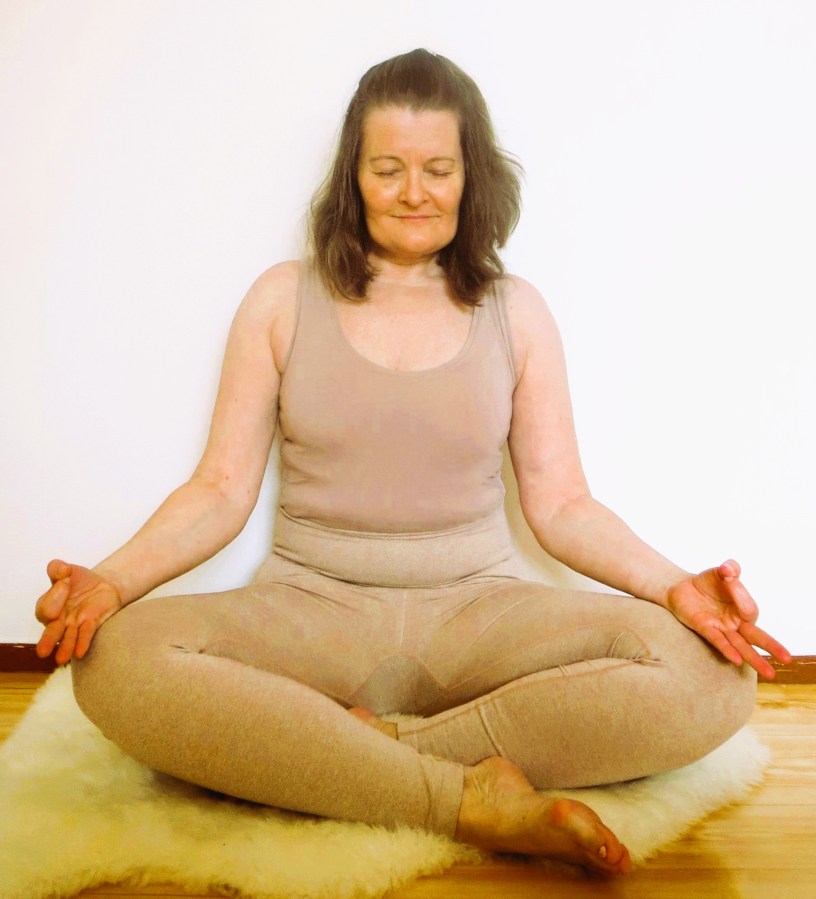
    Another way to honor nature, is through our exercises. When we dance, practice qigong, meditation and yoga, we do this in harmony with nature, letting our creativity emerge from this relation. Taking responsibility as well as being genuinely grateful, helps to foster this too.

    Here are three questions you can use for all your decisions:

    1. Is this choice good for my health?
    2. Is this choice good for the health of others?
    3. Is this choice good for the health of earth?

    This green health lifestyle, with organic and sustainable choices when possible, is to live Telluselle Living.

    Encouraging others to live their dream

    There were two things, when I grew up, that helped shape my change of career to become a lifecoach: My Dad, often repeated a sadness of not being allowed and encouraged to become a photographer when he grew up, with his father saying blatantly no, but his mother buying him a camera anyway. My friend Annica, said she dreamt of becoming a pilot, when we were teenagers, but didn’t know how, since she was too short according to Swedish requirements. She pondered whether she should go to the United States instead, and become one through the US Airforce. I thought that was an awesome idea, and it has always felt great that she did.

    After feeling some dissatisfaction myself, after working as a copywriter within the advertising industry in Sweden in the 90’s, I wished I had someone who could help me create clarity on how to change career, but still keep and use my acquired knowledge and experience. That’s when I decided to become that person myself: a lifecoach.

    I started by creating a business plan within a course for cultural entrepreneurs and soon continued by getting myself thoroughly educated, to get a better understanding of society, organizations and leaders, inspired by the Lifemakeover series on the Oprah show. My exam paper for my Master’s degree in Workscience, became the foundation for another course at the university; a practical and theoretical class in Professional conversation technique with coaching and mentoring. I’ve also had a great mentor in advertising, who was like a coach to me, that I have learned my approach from.

    I believe that if we encourage each other to pursue our dreams and passions, we become happier and thus better at contributing our best to society. This way, we all win.

    If you’d like to try becoming coached, you can find accredited coaches through International Coaching Federation or contact me for your first complimentary session through Zoom, or in person.

    The power of nature

    One of the common things in folklore, whether Hawaiian, Nordic or Greek, is the belief in demi-gods that have power, and must be obeyed and made offerings to. In order to reconcile this with my fairly new Christian path, I’ve taken an interest in analysing what the common ground is, and how this can be translated into modern time.

    Behind each demi-god, stands a natural power: A natural element. It can be gods or godesses of the ocean, the wind, the thunder or the fire, for example. While these indeed hold much power that humans can’t tame, at least not completely, it’s easy to see how they must have invoked great fear in humans. I think, this is why these powers became dressed into gods. For me, personally, setting God above all and having Him as the highest Master, takes away all such fears, and even the New Age-seeking. However, dancing the story of these legends doesn’t mean that we worship the natural elements per say. Just like practising Qigong and Feng Shui based on Chinese Medicine, are tools to better tend to ourselves in harmony with nature, so that we can have a better health and be more loving. It doesn’t mean that we worship the natural elements.

    Now that we’ve had a rare solar eclipse, the internet has been flooded with both prophecies and medium like interpretations, said to be channelled with important messages from the Divine. As with so many other things, what we believe is what we’ll see and experience. I don’t believe it to be any signs of doomsday or that I would become affected by it in my pursuit of building this business, sell my books, coach and dance at all, more than that spring is always a time for renewal and rebirth, a time for positive action. And today, I feel grounded and happy that the sun is shining with an increased spring warmth in Sweden. What I can do, however, is to understand the solar eclipse as a metaphor of not obstructing the sun, meaning to not obstruct other people’s light, which is what I feel others in Sweden have done against me for many years. I believe, that rather helping others to shine, is a good way to share the light, as well as doing so ourselves.

    Coaching through change

    One of the most common expressions, when it comes to lifecoaching, is the prompt to get out of your comfort zone. But what do we really mean by that, and why do we have one?

    We tend to feel safer with everything familiar. It can be a simple thing like knowing your way around your neighbourhood, making it possible for you to relax, when you’re out walking. Moving elsewhere, creates stress in the beginning, until you become familiar again with your new surroundings. It’s the same for breaking free from our comfort zone. We need to dare to move into a new area, also in our lives. This can for example mean to change your job, or break up with your spouse. Alas, this is also true for our relationships.

    We often find ourselves in a role within our relationships, that makes us behave a certain way. It can be something positive like taking the initiative and lead. Or it can be something negative, like always complaining about the same thing. However, to keep a sense of safety, both you and those you surround yourself with, like to keep it the same, even if you want to try another way. Staying the same, makes us feel more comfortable. At least, that is what we think. Unfortunately, this is also true for people with addictions or a history of abuse. How often have you not wondered why a child to an alcoholic, ends up marrying someone who also is? This is why. The familiarity, lures us to believe we’re safe.

    To understand this, is a necessity to understand how to change. When we change our behaviour, we’re either provoking others to change theirs too, or stirring up conflicts in an effort to make resistance to our desired change. Therefore, it’s very beneficial to surround yourself with people who are like you want to be, who might already have achieved a similar goal to yours, or simply have found their own sense of identity, resembling what you’re growing into.

    Ready to expand beyond your comfort zone? A series of sessions with a lifecoach, can help you explore, and design, a plan for you to do that.

    Do not disturb

    Do you ever feel interrupted, when you receive a text, e-mail, or a notification? As a writer, there is nothing more frustrating than losing your train of thought, due to someone else’s interruption about something else. In fact, it can be a great stressor, to always have to take consideration of others and reply to their needs, while neglecting your own. To curb this, I’ve found two things that helps, when planning your days:

    Turn off all notifications: No comments, likes, replies, suggestions or new followers, are more important than your own time and life. Whether you’re studying, working or sleeping, practicing, socialising or creating something of your own, you must prioritize this. Our lives are not online, they’re physical manifestations that we sometimes share snippets about online. Notice how you feel, when you live uninterrupted. The topic you’re discussing will be there tomorrow too. Instead, designate time slots to be online.

    Keep your planned order: Regardless of the time of day, another thing you can do to eliminate stress and better manage your energy, is to decide in which order you’re going to do things and then do that. I like to have breakfast before reading my e-mails, so I can feel grounded and awake, when I’m on the receiving end of others’ communication, as well as my own. When we let our clock-time dictate our lives, we can feel more stressed. Letting it guide us, is of course important, but not more than getting things done. Another thing to be aware of, is to book your own appointments, rather than always accepting, when others think you should come.

    By making active choices, you can better take charge of your time. It’s your most precious asset!

    Finding forgiveness

    Forgiveness works in three ways and all three must be considered, to complete the circle and be able to truly let go and move on. Here are the three ways:

    Self-forgiveness: Forgiving yourself, can sometimes be harder than another person. It’s also more necessary, since you still have to live with yourself and be able to continue forward. So, try to locate within, where your offense is stemming from and why. Then, practice self-compassion. If you did your best, you can’t expect yourself to do more, until you learn more, and have the space to change.

    Forgiving others: We all need to receive an apology from time to time, and it might be the hardest thing to ask for one. However, holding a grudge will certainly affect your relationship regardless of its nature, wherefore this is necessary. Simply, share how you feel. A good way to find forgiveness in terms of what others have done to you, is by putting yourself in their shoes for a minute. What have they, or are they, going through? What are their needs? What did you do to provoke the situation yourself? Also here, practice compassion.

    Offering an apology yourself: Owning your own behaviour and communication, feels much more empowering than not. Try it! Look into what your motive and shape of the day was. Have you not slept enough or eaten, when you had an argument? Did you believe something negative and expecting that, or assuming something unfounded? Find compassion for both yourself and the other.

    The way to forgive, can be done by relating one’s own behaviour with another’s. Let’s say that someone shows envy of you and you feel offended, since you worked really hard to get what you wanted. Instead of merely defending yourself, you can try another approach. Can you find another time, with the same person, or someone else completely, where you, yourself, have felt envious? Then, you can relate to that feeling. To heal this, offer an apology to that person, whether literally or through a prayer. This way, you can heal both backwards and forwards, including within your lineage as you set out to also include your ancestors and children and offer forgiveness also on behalf of them. This is the way of Ho’oponopono – the Hawaiian forgiveness process and prayer. When you take responsibility for your own behaviour, that you have showed in the past, you heal the future.