Improving how we feel

If you’ve ever felt tired and depressed and think joy is out of reach, you’re not completely wrong. When I learned about the Emotional scale, as described by Esther and Abraham Hicks through their book “Ask and it is given” in 2005, so much fell into place for me. Through the self-help movement, and not to mention all the beautiful images and serene quotes flooding online, it’s easy to feel pressured to only feel elevated and high emotions. This is however not possible. And, without feeling anger and frustration, we don’t build up the necessary energy to use for change. We all want to feel good, free and happy, but why aren’t we?

The key to experiencing true joy and happiness, lies in taking it step by step. According to the Emotional scale, all emotions can only be improved incrementally. Our job, therefore, isn’t to force a smile and assume that we are a failure, if we don’t feel bliss. It’s rather our job, to find the next better emotion, than the one we currently feel. Here is the scale:

  1. Joy, Freedom, Love, Appreciation, Strength
  2. Passion
  3. Enthusiasm / Happiness
  4. Positive expectations / Faith
  5. Optimism
  6. Hope
  7. Contentment
  8. Boredom
  9. Pessimism
  10. Frustration / Irritation / Lack of patience
  11. Overwhelming
  12. Disappointment
  13. Doubt
  14. Worry
  15. Blame others
  16. Mistrust
  17. Anger
  18. Vengeful
  19. Hatred / Rage
  20. Jealousy
  21. Insecurity / Guilt / Unworthiness
  22. Fear / Grief / Depression / Hopelessness

So, by practicing gratitude, we can feel a sense of contentment. When we’ve found this, it becomes easier to also find happiness.

Where are you on this scale? Once you’ve identified which step you’re on, look one or two higher, and see what can you do to feel that instead.

Avoiding the Oneness-trap

Many years ago, when I went to see a Swedish minister at church, named Kent, to have someone to talk to before becoming baptized, I learned something valuable. I was expressing anxiety over the Oneness movement, that many yoga-practitioners had submerged themselves into, and how this to me, felt like an unspoken demand to conform to their ways, both in simple things like clothing and also in how to act and communicate. There were for example, a sense of total shaming of those who would display any emotion that were believed to be negative, such as anger or doubt, rather than getting to the root of the cause of these emotions, and taking responsibility for how people in the group, could have contributed to them arising. Likewise, I saw the danger in letting go of our Egos in a sense that “we should let go of our personalities and true needs”, which isn’t the same as softening and be less selfish.

Kent, my minister, asked me to shake hands with him as an example. Then, he said:

“It’s through the friction of our hands, we can have a true meeting.”

By that, he meant that if we would be too elusive and have no boundaries, everything would become so fluid, nothing would become substantial. This helped me understand the importance to stand my ground and develop my own sense of self further. To raise the topic of not striving to become the same, but rather have more diversity. It is also a major factor in how I would like Telluselle Living Center to offer different classes that incorporate a variety of schools and traditions, that still have integrity and keep the boundaries clear. Yoga is yoga. Qigong is qigong. Hula is Hula. And so forth. We dress appropriately for practices and performances, but don’t run around in our tunics, when we go shopping.

Instead, look to what unites us, such as: a strive to feel free, be connected to nature, and express our soul with art, while developing more compassion and community. All in ways, that have sustainability in mind, based on wellness.

Have you had any experience of coming into conflict with a group’s values? What is the difference between oneness and unity to you?

What I look for in a coaching client

Regardless of what your desired change is, or which kind of goals you’d like to achieve, there are certain aspects, that I think is important for the coach-client relationship to work and become fruitful.

Here are 6 aspects that I look for:

  1. Authenticity – dare to be yourself, strengths and weaknesses alike
  2. Willingness to try – dare to believe in this pursuit and really do the assessments and action-steps
  3. Honesty – dare to communicate how you feel and what you like and not
  4. Openness – dare to let me present you with another perspective or discuss various options
  5. Desire to grow – dare to look into your relationship patterns
  6. Wanting to learn – dare to be real about your own needs and how to get them met

However, a bit of doubt, or lack of confidence, isn’t any obstacle, since these are natural things to work through with a lifecoach. It’s also paramount that you have an education, even if you’re not sure about working with it, or how to. You can also have a strong passion and not mind interning to learn a craft first-hand, if you seek career development. In return, you get my wholehearted support, attentive and non-judgmental listening, and commitment to help you succeed!

Would you like to try? A focused coaching session lasts 45 min, costs $100 and is usually conducted every two weeks, for you to have time to process and do exercises in between. The first session, to get to know how this work and each othe, is for free! Send me an email to book your first appointment on Zoom, completely without any obligation. I look forward to hear from you soon!

Can you keep a secret?

Some things are learned the hard way. Who to tell about what and when, is one of those things, I’ve had to learn to refrain myself from. I have always been an open and honest woman, who likes sharing and believes in mutual support of living our dreams. However, I have also encountered disbelief, negativity, suspicion and a lot of envy. And even some real lies about me.

To make things happen, does more so, when we voice our strive to improve, and start doing something, out loud. However, we need to find a true confidante. A person, who can be confidential and non-judgmental. It’s not without instilling courage, the word encouraging became. The best support, I’ve found, is from people who already have achieved many similar goals before me and thus don’t need to feel intimidated or threatened. A professional coach, can also be such a person, that both challenges you for a reality-check, and supports you all the way through.

Keeping things close to my chest, enables me to cultivate love and proper care; writing it down in my journal until.

Increasing our awareness

The more present we become, the more aware we become. And, with an increased awareness, we can make more aware decisions. This is crucial to neither waste our own time, or others, and to feel purposeful. Stop reacting out of habit and take control over your own actions! Start by taking a deep breath. Then ask yourself:

What am I thinking right now?

What am I feeling right now?

What am I doing right now?

Why are you thinking, feeling, and doing it this way?

Is this what I want and need?

What will be the consequences of my decisions and actions for me and for others?

A positive sensation, will reaffirm and boost your confidence, giving you a little more energy and resolve to continue.

A negative sensation, will make you question and ponder what can be changed. Are you tending to your needs? Do you need to set a new boundary, both towards yourself and others? Can you stop and redirect yourself?

Now that you’ve become more aware, you also become more present. It works both ways!

What can you improve?

Whether you want to become more creative, or find a solid purpose for your life, consider using the theme of improvement. Most inventions, as well as self-help workers, such as authors and life-coaches, seek to help others to improve their lives. You can take something existing, and try to improve that, or you can invent something completely new.

What are things you can improve?

  • Materials – such as making something more eco-friendly and sustainable
  • Methods – to become more efficient and encouraging
  • Functions – how something literally is working, making it faster or more thorough

Improvements, can thus both be on the job and to help others, but can also be about your own personal wellbeing. How are you doing your chores? Which kind of cooking do you do?

When it comes to your practices, whether dance, yoga, qigong or any other, this too is about improving your strength, stamina and flexibility, as well as artistic expression and musicality. It can be about your overall performance, or tending to small details. Things that also can be divided into attainable goals that you evaluate regularly.

A way to look at improvement, is by looking to what you can learn more. So, what can you improve?

Respecting each other’s emotions

If you look around, how many actions do you see, in your relationships, communities, and in the world, are based on an emotion? Think of emotions like anger, vengeance, ridicule and disrespect – are they not what make people react with violence? While most people agree that this is wrong, we still must respect and understand how these emotions surfaced, how to lessen them, and how to release them. Just because we’re not supposed to become violent due to our anger, doesn’t give someone else the right to make us angry. Taking responsibility for both what you feel and what you are contributing to in others, is the way towards peace. And it starts by simple respect and acknowledgment.

On the other side, is becoming smitten, in love, aroused, or genuinely entertained – these too are fleeting emotions, that shouldn’t govern our actions either, although they may look harmless. Also here, we must practice respect and awareness, with honest dialogues.

How do we then deal with our emotions and what do they mean? According to Karla McLaren, anger for example, is often a way to deal with fear, in an attempt to defend ourselves. I have noticed, that most of my emotions are perceived in my body, like a heaviness or lightness, like a laughter or a sadness, a frustration or a sense of flow. All of them thus, must be released through our bodies, which is why movement is so essential. Dance it out! is my preferred way. Or simply to breathe through them, even outside in nature. I like describing emotions with the metaphor of a wave – some big and scary, some small and hardly noticeable, and some with a strong rip-current. Letting them pass through us, takes us back into a centred state of peace. The state, from which we should make decisions and carry out our actions.

Which emotions did you evoke in another person? What did this lead to? Which emotions do you feel are the result of others interacting (or refusing to) with you?

Writing a book about creativity

A couple of months ago, I woke up after a good night’s sleep, feeling inspired to write a book about creativity, that I wrote a blogpost about here. I have since then written a scope and an outline. Next, comes a proposal to send out to various publishers. But, why would I be a good fit for this task?

Three areas come into mind. First of all, I’ve worked in a creative profession since the 90’s, as a copywriter in advertising. This has enabled me to know how the creative process works for me and in collaboration with others. I’ve also worked once at TetraPak, where one of the world’s greatest inventions were made, that of a triangle shaped juice package and how.

Second, I’ve studied creativity, both at Berghs School of Communication in Stockholm, Sweden, when I became a copywriter, and Innovation and Creativity at Hawaii Pacific University in Honolulu, United States.

And third, my objective is to coach others to become more creative or simply pursue their passions and professions, which is part of how I’ve coached unemployed and young adults before.

I’ll keep you posted about the progress!

Letting things land in our hearts

As someone who has undergone many traumas during my life, I’ve come to understand my own process fairly well. Tonight, almost exactly 24 hours since President Trump was shot at, I suddenly felt a sadness in my heart, when I saw yet another clip online. The point is, it takes a couple of clips, a couple of readings, a couple of storytelling shares, to fully grasp (if ever) the extent of something. A national (and international in part, since we’re all interconnected) trauma, is an excellent example to use in order to understand and alleviate our collective reactions.

First, we must take in the information. Disbelief might occur, or a rational instinct to simply ensure safety. Then, comes the shock, which can last anything from a couple of hours to a couple of days. Third, the news lands in our hearts, which can provoke grief, anger or depression. In this example, Donald Trump, isn’t just a man, husband and a father like so many others, but also a symbol for the United States, and for Freedom of speech in action. That too became hit at. As well as bystanders.

Personally, since Donald Trump is from Eugene, Oregon; I can’t help but be extra sympathetic and curious. This is where my mother Rose-Marie was an exchange student in the mid-60’s, loved, and returned to visit, and she was born the same year as President Trump. Have they met? Is she cheering on him from Heaven? Maybe.

A couple of months from now, we’ll all have moved on, some with a more defined direction and aim forward, making this another reason to always fight violence. This then, is to remember, we all need time to process.

Can you recognize your own reaction, in comparison to other things you’ve encountered in life? Is there a pattern, timeframe, and process you can trust? Becoming aware of this, help you heal.

Daring to become moved, is the greatest gift of all. Only by letting horrors land in our heart, can we develop and show compassion.

Get inspired!

There are two reasons to create: One, is to create content for your followers (readers, clients, customers) and for that you need to investigate which needs they have and how you can meet them with your product, service and knowledge. The other, is to actualize our self, to release anxiety, or simply to enjoy our own artistic aspirations. But, how do you get inspired?

Everything in life can be an inspiration! To get you started, I’ve categorized it like this:

What you see (all you observe, such as in nature, cityscape or watch on TV, online etc)

What you feel (all your emotions bring a charge, an energy, that you can use to create with)

What you think (how you interpret your observations, the conclusions you make, opinions and impressions)

What you read (anything from fiction and horror, to memoires and science, can evoke inspiration)

What you hear (music, sounds, languages, radio and podcasts)

What you taste (food, drinks or even things that aren’t)

What you touch (the surface of rocks and bark, soft fabric, petting an animal or another person)

What you scent (flowers, perfume, food or even sweat)

What you wear (clothes, styles and fashion, colors, silhouettes, heels, jewellery etc)

What you imagine (dreams, fantasies, wishes, fears, uninhibited expressions)

What you remember (memories)

What others talk about (conversations with you, or by others that you hear about various topics)

Try looking at a mundane object. Describe what you associate with it. How does a water boiler make you feel? Ready to get going? Thirsty for a cup of tea? Ready to relax? Wanting to redesign it? Socialize? Write it down, or record, to either work with later, analyse and elaborate, or compare with another day.

Basically, everything we experience, that we either would like to share, understand better, or improve and beautify, can be the foundation for our creative expression. What inspires you?

Finding life balance

One of the cornerstones in lifecoaching, is helping our clients to find life balance, ie a balance in how they use their time and energy. How are you using yours?

To find balance, comparing and using opposites are one way to ensure that the needs are met on both sides of the spectrum during the week. You can for example compare how you are spending your tme and energy when it comes to:

  • Solitude vs companionship
  • Activity vs rest
  • Work vs leisure
  • Awakened time vs sleep
  • Indoors vs outdoors
  • Input vs output

One example, can be how much information you’re taking in, and how much you’re giving out. To create a balance, you must either process what you’re reading, watching and listening to, by sharing your reactions with someone, through night dreams, or write about them. Likewise, to write, you must have some kind of input and inspiration, such as what others are saying, what you’re experiencing and feeling, or observing, or a safe space to explore your imagination. This is the essence of nurturing and refilling your cup. You must empty it sometimes, in order for it to become refilled.

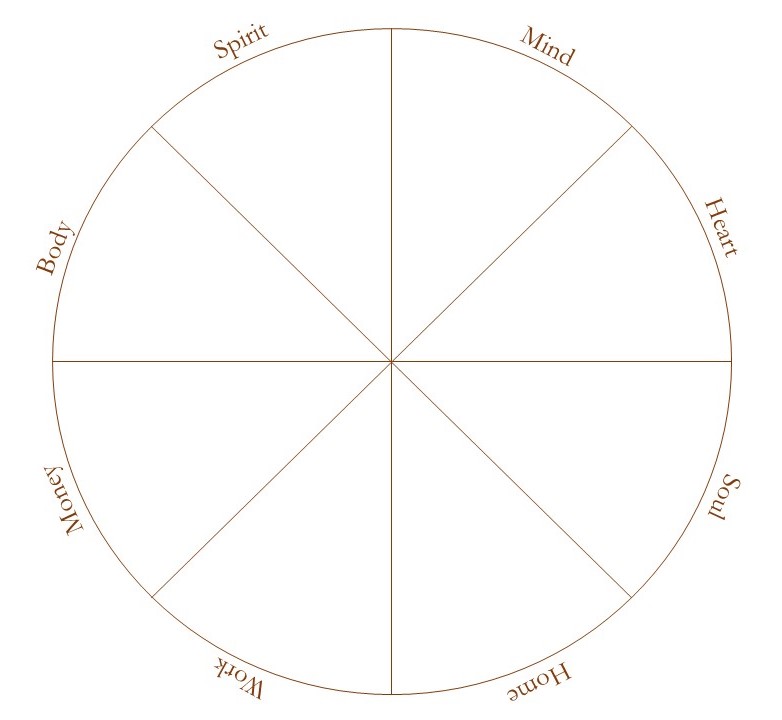
To make it more visible, you can use use a scale and take note of how you’ve used your time the last month or two. Make an honest evaluation of what feels good and what you would like more or less of. You can also fill in this life wheel and make an estimate of how much time and energy you’re spending in each area. What can you let go of? What can you begin doing? What can you change?

To discuss this further, don’t hesitate to contact me for a lifecoaching session, either in person or through Zoom. The first one is complimentary, and the following as agreed upon. A good recommendation, is to try for three months, with a session every other week.

What is organic?

Have you ever marveled at how green a broccoli can be and how red some apples and tomatoes are? Then they’re probably somewhat fake, ie sprayed or developed and grown in such a way to look. Not all bananas have the exact same size and bend. In fact, nature show us plenty of variations and always reflects the climate, it’s been grown in. They become an extension of the current state of the land.

For any produce or meat to be called organic, there are three definite obligations that must be met:

  1. The soil must be organic and no use of pesticides or chemical fertilizers.
  2. The seeds should be heirloom and not genetically manipulated.
  3. The harvest and distribution, should also be without chemicals involved in the handling.

While getting an approved label might be costly for small businesses, it still shows the integrity of the agriculture as manufacturing. You can read more about the requirements for an American organic label here, and about the Swedish label here.

Setting an intention

I’ve noticed that whenever I set an intention to do something, like go and fetch something, go and buy something, write something, etc, and follow up on this directly with action, it enables me to receive some of this energy back, or I get a little extra boost, with a more defined aim. Not following up with action, makes me instead lose that energy. It’s like sending out a little feeler, that if not followed up, someone else might grab. Plans work the same way, but with a little more long-term perspective and therefore with more need of cautious care, to remain in that lane. The reward I feel, when I set an intention and carry it out in action, is a sense of accomplishment.

Many in Western yoga, has misunderstood that setting intentions for what to do, or even long-term goals, should be done before, or under, practice. The other day, I saw this good video on Instagram, that instead explains how it’s meant to be done. We set an intention to be present and aware, so we can do our best, just like we need to be present and aware, when we do asanas. To keep our focus.

Click on the link, to learn more about yoga and setting intentions. You can also read this book by Wayne Dyer, that explains the power of intention, in a good way.

Choosing a less stressful thought

As I looked forward to July beginning, like a little new start, that it can be every new month in our calendar, I soon felt discouraged by unforeseen disturbances, making me come off tilt and not get the rest and sleep I’ve needed, and thus not being able to get things done, the way I had planned. This in turn, created more feelings of stress of course.

However, yesterday it occurred to me, that the new moon is coming later this weekend, and from that perspective, I should simply get things done by then instead. So, I extended my deadline. Look at that, a whole week more, and me being perfect on time! Often, we set deadlines, or have them set for us, that in turn makes us stressed, instead of tuning into the natural flow of things, with much less stress. Such as, letting the phases of the moon, be our guide (as previously shared here).

Which thoughts do you have about your own need to perform? What can you think instead, that is kinder and more caring to yourself, while still honouring your commitments? What is the best course of action, not according to the calendar, but according to the natural flow and present needs? Try that!

So, back to putting my nose to the grind, but this time with a smile, since I actually have a couple of more days left, to get things done.

The group – pressure or peers?

Our behaviour in groups, follow the same pattern, regardless of why the group was formed. For example, there is usually an informal leader, besides the one that has been given the authority to. This is often the most popular person, the person with the longest track record, someone others look up to, or are afraid of. Finding out who this person is, is a little like finding the leader in a horse flock and let him lead the others into the stables from the pasture. So, to get the group to move in your desired direction, you must therefor also ensure that the informal leader is with you.

Within our groups, it’s common that we put aside some of our own preferences or even deal-breakers, to ensure that we still are accepted and allowed to belong. When the group develops its own preferences and values, we talk about it becoming a culture (or subculture) with norms. Norms include anything from what we wear, what we listen to, like and follow, to what we eat and buy, and how we speak. Norms also often dictate how we ought to behave. And some people wants to be in the positions they’re in, even if that means becoming treated in a lesser way. To be aware of all this, helps us remain true to ourselves.

The size of the group also matters. Already in a group of three, there is a structure likened to the one of a family, which directly changes when the group consists of four people. With five to seven, the tone becomes more humble and we listen more, with less powerplays, but when the group has more than 10 members, there is a chance that the group becomes divided. All these dynamics, are part of organizational psychology and something I, as a sacred circle conversation coach, bear in mind for our planned sessions at Telluselle Living Center.

Last but not least, sometimes we’re forced into groups, such as in our workplaces or in our classrooms, and sometimes we form them online based on interest. At best, we get to choose who we want to see part of our team and then we’ll have a stronger foundation to create synergy.

We grow the best, when we have enough space to feel free, but still feel supported by the same.

Practising outside?

Isadora Duncan, practiced much of her dancing growing up, outside in nature. While this was much because she didn’t have money, she also yearned for a more free and liberated expression without the corset-like ballet. Instead, she danced barefoot and wild, to create her own choreographies and motions that often are inspired by both nature and spirituality.

It takes some more effort. The ground isn’t always even, the wind blows as it likes, and the sun might disappear behind the clouds. There might be people and dogs running around, or we might encounter disturbing little insects. Nonetheless, it takes us back to the roots and to an appreciation of summer. A priceless experience.

When did you dance barefoot in the grass last time? Dare to!

Make your own ritual

Rituals can bring structure to our day, and is a great way of both creating balance, and make room for some personal time, or some family time. Rituals and habits are often alike, but while habits are something we just do to get them done, a ritual has a deeper meaning to it, and is founded in a conscious decision. Habits are things we are used to doing, that we might not even think about, while rituals are little ceremonies, that we create with presence.

Watching the sunset, has been one of my personal favourite rituals for many years. It started when I first lived in Honolulu, HI 2004-05, and also 2010-12, with the ocean close by, making it an easy accessible indulgence in beauty for free. Of course, I also liked watching them in Lisbon, Portugal, when I lived there in 2019-20, and now in Stockholm, Sweden since 2023, I have gotten the exquisite view right from my window, or by just walking across the street on top of a hill. But, while they are pretty to look at, they also hold a deeper meaning to me. First of all, most differ day to day, depending on the weather, clouds, and season – simply how the Earth is tilting. That reminds me of that change is constant. Watching the sunset, also gives me a welcome respite from the mundane, and enables me to realign with nature and the Divine. It’s a way to detach from any drama, and remind myself of how I’m just a tiny part of the whole, yet a full worthy member of the eco-system.

What can you do every day, or a couple of times per week, or once a week? What are you already doing that you enjoy? Add your own meaning to it, and you will too, have your own ritual.

An example of taking the initiative

Taking the initiative, is a good way to take charge of a situation, and lead it forward. Personally, I’ve always done that, whether privately, or on the job. Maybe it’s been due to impatience sometimes, but also to see things through, and because often nobody else is.

A recent example that turned out great, was when I was going shopping last week for a new dress, that I wanted to wear on Midsummer’s Eve, here in Sweden. While grabbing my size and getting in line to try it on, I noticed another woman also trying on the same. We gave each other a compliment for a good choice, with a laugh. Another woman, was standing before us, waiting for her turn to enter one of the dressing room stalls, whereupon she behind me, asked if there were anyone in them. The woman first in line, didn’t know what to do, or hesitated to, so I took the initiative to draw away the curtain to look in. It was empty, so I asked the woman first in line to enter that one. Then, I proceeded to check the others too, which all were empty! What would have happened if I hadn’t? How long would we have stood there for no reason? The dress fit well, so I bought it.

Do you like taking the initiative? How do you respond when someone else is? Are there times, where you could too? Try once, this week.

Let the opposite guide you

One way to both become more creative, and to get more clear about your goals, aspirations and the choices you want to make, to create the life you want, is by assessing what you don’t want. Often it’s hard to know exactly what we want, because we don’t think it’s possible, or we feel intimidated by our family and peers not supportive of our desires, or simply not sure if we’re just following the crowd. Then, asking yourself what you don’t want, can guide you.

Let’s say that you know you don’t want to marry a Muslim, since you don’t want to wear a veil, that you don’t want to work as a nurse, because you faint at the sight of blood, and you don’t want to live on a remote farm, due to not having a driver’s license and car. Then there are two ways to let this assessment guide you. Either, you really would like to move to a remote farm, and then you know that you need to get a driver’s license first. Or, you can now more easily define what you do want, such as you’d like to live in a city, get married to a Christian, and work in an intellectual profession. Then, you’ll also realize that you would need to start attend church, and to get an academic degree.

By ruling out what we don’t like or want, it’s easier to see what is left, that we do like and want.

To have me as your sparring partner to bounce off ideas with, give me a call, or send me an email, so we can book an appointment for your first complimentary coaching session.

(No discrimination intended.)

An invention for the Ladies’ room

The other day, I overheard three young women talk on the subway in Stockholm, Sweden. They were talking about how to wear their hair and getting ready to go out. Then one of them exclaimed a brilliant idea, I thought worth sharing.

Many young women in Sweden, like to go together into a public restroom and use the same toilet, taking turns, while continuing to chatt with each other (Usually, there are no stalls, but closed doors). However, not everyone are comfortable peeing, while others are present, or even by themselves in public restrooms. One of the common things to do then, is to open the faucet and let some water rinse. This though, one of the women pointed out, wasn’t particularly good for the environment, given the unnecessary waste of good water. She said, she wanted to make an invention, that would simply produce the peeing sound, when needed, without having to use actual water. I couldn’t help but cheer them on, before the exited the train.

This is a typical example of how a conversation in a group coaching session, could develop an idea for a green invention, at Telluselle Living Center. Installing a device? Make an app on the phone to play? How would you solve it? All good inventions, solve a problem.