Applying a green perspective

My interest and dedication to preserve nature, started with engaging myself in WWF in the 90’s, followed by becoming a member of the Green Environmental party in Sweden in 2008 for a couple of years. And in Hawaii 2010, I was a member of, and blogged for, the local organization Kanu Hawaii for a while.

Non-profits. seem more engaged in non-violent action, such as writing petitions, while politics often seem to become self-serving and very much about taking side, just as activism and demonstrations can escalate into mobs, rather than exercising true passion for a cause. I don’t like that. What does wanting to keep nature pristine and clean, have to do with revenge attacks and terrorism? While that too includes pollution and destruction on the environment, it seldom seems advocated in these conflicts, less included in environmental discussions. Why not? Is it naive to think of bombs as means to destroy nature, when in fact stopping them, could be THE way to create peace?

When we apply a green perspective on life, we simply have the environment at the forefront in all our decision making. Just ask: How will this (manufacturing, advertising, distribution, territories, agriculture, education, recreation, communication, living, travel etc) impact the environment? Since all humans are equal naturally, in front of nature’s great powers, such as the oncoming of a tsunami, a hurricane or an earthquake, why can’t we collectively unite, always with this in mind, and let our respect and reverence of nature steer us? To me, this is the epitome of Telluselle Living.

Brainstorm to increase your creativity

Whether you’re seeking more inspiration to create art or content, or want to solve a problem that even could become an invention, brainstorming can help you. You can either do it yourself, or together with others in a group.

Start by defining the problem or topic that you’d like to explore. Now, associate freely without judgment or putting value on what you come up with. Write down a list, or make a mind map, to get an overview of your associated words. Then, look at each word and see what could be made into a solution based on that. Finally, choose what to continue with, and make an action plan. Who are you going to call about what? When will you need to send in an application for funds or a permit? What do you need to learn, and who can you do it with? Here is a small example:

Let’s say you’re pondering about what to wear at a function. A brainstormed list could look like this:

  • Vintage
  • Tailored
  • Self-made
  • Altered
  • Newly bought
  • Cultural outfit
  • Borrowed
  • Rented

These then become options, that in turn holds an opportunity, that you can pursue. For example, if you opt to wear vintage, your mission now becomes to look in second hand stores, on E-bay, and ask around your friends, acquaintances and parents, to see if they have something you can wear.

The key to finding a solution, is to be practical and action-oriented.

The healing sound of mantras

Prayers have been part of many religions and cultural practices since the beginning of time. Singing together as part of worship and community, can also be referred to as Kirtan, when made interfaith and intercultural. Chanting is one of the forms.

In Hawaii, they’re called ‘oli and pule, which are a way of chanting a story and praise their gods and godesses. The chanting sounds, are made by placing the vowels in the back of the mouth to invoke a vibration, that in turn is said to have healing properties by stimulating various parts of the mouth, which I was introduced to by Kumu Jared Kukaho’omalu Souza in 2005, and have continued practicing on occasion, such as E Ho Mai, a request to be granted wisdom from above (as chanted here).

In India, there are several mantras that are part of Yoga and Hinduism. Many are made to ask for blessings from the Hindu gods and goddesses. Here is the Gayatri mantra, that I learned in 2008 through the Indian teacher Shajesh Paparali, who found me in the online forum “The Daily Om”. The Gayatri is an invocation of the Divine Light for the highest good.

In Japan, their Buddhist traditions include a way of meditating and chanting Nam Myoho Renge Kyo, which is a joint wishing well, which I practiced in the south of Sweden with an international group in 2009 (as chanted here).

In Tibet, the Mahakala is chanted to invoke protection, which I have done in Stockholm some years ago, as part of the Buddhist centre here.

The question then is, what do Christians do? Are there old Christian chants too? I think the Catholic priests’ way of praising and praying in Latin at Mass, could be seen as. And the way we pray Our Father there.

Would you like to try chanting a mantra?

Mental health issue, or lack of physical wellbeing?

Did you know that depression is one of the symptoms of gluten intolerance? When I learned that in 2008 and changed my diet, everything changed. I had never felt depressed, such as overwhelmingly sad, or lacking motivation, but simply tired and out of sorts, besides stomach symptoms. And now that I think back, as well as check in with myself regularly, it’s all been about one thing: Getting my needs met.

Nobody can be on top all the time, but we can find a pretty awesome middle ground that is rested and peaceful, from where it’s easy to elevate our mood, or to return to, after someone or something has made us upset.

Our body speaks louder than our mind. Everything can be related to how we feel in our body. Getting a headache, might make us feel irritable. Imagine how weird to seek psychiatric medicines for that, which might even produce more headache as a side-effect, instead of taking a glass water, a regular painkiller, and rest for a while. So, whenever you feel the need for a mental health day, use the Hierarchy of Needs by Maslow with scrutiny for yourself:

Are you eating, and drinking water, properly?

Are you sleeping enough in a safe place you can call home?

Do you feel supported and a sense of belonging to a group of people?

Are you able to work ( or study) to enrich yourself intellectually as well as make a living?

Can you express yourself freely and feel pulled towards being your best self?

Often, it seems like many in society use their energy to fight off “low” feelings, instead of seeking fulfilment. Don’t wallow in sadness, but seek gladness, after you have given yourself time to let the emotion roll through you, and showed yourself compassion. For us to have balance, it’s natural to have experienced both sides of the spectrum. In fact, it makes for a fuller life-experience. The deeper you’ve been, the longer the runway you have, to take off from. And the more pro-active you are, the more empowered and in control you’ll feel. Add thereto faith, and you have something to guide you.

A coaching exercise to define a goal

Sometimes reaching a goal can make us feel more unsatisfied than we start out, because what are we then now going to do and why? I felt like this, when I first became a copywriter. The year of study and practice was intense and I didn’t focus on what I was going to do after, only to get that diploma. At first, it made me feel happy and accomplished, but soon I realized I had reached a plateau. I had to set a new goal, that would become deciding my purpose. Once I got clear on that, it was smooth sailing for a while.

An example that most of us can relate to, is setting a goal to make a million dollars. What happens is, that we start deciding and counting in our head, what we would do with the money. But therethrough they already feel spent, and we need more. Was it then the million dollars we wanted, or was it what we wanted to buy for them?

What would you do with a million dollars? Let’s say, you would write a list stating things like: Buy a new car, invest in a home, go on a trip, and donate some to a charity.

Now, redefine these things to goals. Let’s say that you want a new car. If you don’t lock yourself to the outcome but instead explore how you could reach this goal, an interesting phenomena occurs: You start seeing a multitude of opportunities and begin to foster a mindset of abundance. You could for example start working at a car-dealer and get a discount, you could buy a lottery ticket, you could build your own, you could import one directly from another country cheaper, or you could inherit one. Or you could simply save a set amount every month, deducted from your salary.

The same technique applies to any goal you would like to reach. Let’s say you want to lose 30 lbs. Making that your goal, will have you stare at the scale and get a fluctuating mood just like your pounds. However, if you think of what you would like to achieve with that goal reached, you open up for more possibilities. Let’s say you want to wear a certain dress, or feel more confident. Then, that is what you should focus on. What can you then do to be able to wear that dress, or become more confident?

By ensuring that our goals are not the same as our means, they becomes easier to reach.

Are you an introvert or extrovert?

According to Meyer-Briggs, the type of personality we have, affect how we interpret and interact in the world, and most of all can help us understand our needs, and our best way to handle stress. An introvert, receives energy and inspiration through alone time and introspection, while an extrovert prefers talking and being around others to process things and become more energized therethrough. There are 16 combinations of personality types according to their scale, that can create a foundation for self-improvement and more wellbeing both individually, at work and in teams. You can watch more here.

My ambition is, to get licensed to offer Meyer-Briggs personality tests, as part of my lifecoaching. Have you gotten one done through recruiting, or a human resource specialist, you’re welcome to bring these results too, as part of your discovery process and goal setting.

We will also discuss an aspect that I’ve found important to also consider, which is how the environment and culture you live in, may enable or disable your best self. If you’ve moved, or undergone some kind of crisis, it might have rocked you out of kilter, or changed your ways. The question then arises, whether you can realign yourself back into how you used to be, or adapt to the group and environment. Perhaps that is what needs to change? It’s all about finding what motivates you, and enabling you to blossom.

Here is more about the MBTI-tests.

Pro or against AI?

There is a lot of hype around the development of AI. Everybody wants to jump on the train, to not miss out. But what are we going to use it for, and what will be the result of that? Which needs does it satisfy? Or are they even unknown, until further development can emerge out of the current?’

I’ve encountered posts about replacing both copywriters and coaches with Chat GPT, which feels devastating, since the developers likely lack the expertise of, so the programming will be set to much lesser quality, which will trick users into believing that is how it’s supposed to be. When it isn’t. An example is asking a language model to create a slogan for a travel agency, and get something in response that is both cliché and too common, instead of getting something tailored to the specific travel agency, stating their specialty, which is what an actual copywriter would do.

Likewise, getting help to choose which degree to pursue, could become too narrow, if the person asking, isn’t receiving a coach’s keen understanding of underlying wishes from the parents, reading his/her bodylanguage, and discussing the emotions around choosing that specific degree. How much money could then become lost, if that person quits college and becomes totally miserable? Or, on the other side of the spectrum, what if it’s exactly what that person is looking for and wants, but lacks funds to. How would Chat GPT solve that? And who is going to pay unemployment, if AI makes more people unemployed?

Everything in a coaching session, is built on the client’s response, which we listen to with presence and compassion, while still challenging and providing additional perspectives to assist a sense of empowerment and clarity, to make better decisions. The whole world, seems to look for answers online, instead of meeting others and create them themselves.

However, AI to me, would be great as a tool for editing, for making creative techniques possible otherwise not, making it into its own genre. It could also become a database with a multitude of questions in various fields, to come in handy for professional coaches, rather than for clients. And perhaps, like calculators, solve complex equations of information, and summarizing that. As with everything, it becomes what we make it out to be. The important thing to consider, is to involve people from all walks of life, and countries, to ensure its quality, with a welcomed and respected feedback.

Everything a human can do, a human should.

What is your opinion?
Creating green alternatives

When I hiked on lava, on Big Island of Hawai’i, 20 years ago, I witnessed both magma going into the ocean, creating enormous amounts of steam, as well as passed by holes in the ground, called steam vents, where their heat blew upwards. That made me wonder, whether this could be harnessed and used as an energy source, just like with solar, wind and water power. Can it?

To live more eco-friendly, I think the smartest way to enforce this more in society, is not by creating more fines and bans, but to simply offer better, cheaper, and more healthy alternatives. And, it’s up to us as a collective whole to create these alternatives.

Some great examples, I’ve seen online through the Instagram account @sambentley is making yarn out of agricultural waste, using algae to substitute plastic, and alternative ways of building small homes.

An other great source of innovative inspiration, is the Earthshot prize website, that you can find here. Or what do you say about live seawalls to help against rising water levels and ways to clean industrial waste water?

We shouldn’t forget the progress we’ve already made too, such as making plastic bags out of corn and using fabric ones instead, recycled paper, and biologically produced hair and skincare products. Little things, that still can have a great impact.

What could you dream up together with others?

Nature as an inspiration for practices

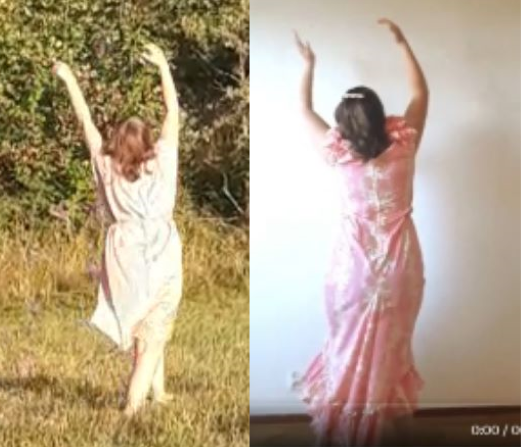
Man has observed nature as long as we’ve existed on this planet. From the beginning, many of the weather phenomena, such as thunder and lighting, or even lava eruptions, have been attributed to gods, goddesses, and semi-gods, told about through myths and legends. Through generations, nature continue to inspire our practices, where we name many of the motions after animals, trees, ocean and wind, whether Qigong, Yoga or Dances like Hawaiian Hula and Isadora Duncan. Here is one motion that I see a resemblance between the two styles, called “Moving the clouds”.

While we all depict nature in art and metaphors, in awe of its powers, some religious practices aim to interact with them too. This is however, not the case for any of the dances.

You can watch the video snippets of the motion here.

Evaluating your job

Now that fall started and most of us have returned to school or work, it’s an opportune time to evaluate our jobs. Not only will it put you in a better position to negotiate, but it will also enable you to become clear about your own job-satisfaction. Here are some things to consider:

Salary – How are you being paid? What are the extras such as insurances or bonuses? Subsidised childcare or membership at a gym?

Description – What are your tasks and hours? Who are you communicating with? Do you have direct contact with customers? Do you need to report to someone regularly? How is this working?

Co-workers and camaraderie – Can you feel a sense of camaraderie among the people you work with? Can you speak freely about your job with others there? Do you help each other?

Future advancement – Do you feel that this job is teaching you something? Is it something you feel proud of, and think of using as a step towards any other career goals? Which other skills do you need to improve?

Personal preferences – Are your job something you look forward to in the morning? Do you feel purposeful and curious? Is there room to add your suggestions? Do you feel that you are contributing to the whole? Is the organization aligned with your own values?

To help you discuss these questions, tailored to your specific situation and dreams, I can coach you through a series of conversation sessions, either in person or online through Zoom. Contact me to book your first appointment – the first one is for free!

Chanting for permission to enter

Traditional Hawaiian Hula schools, called Halaus, often begin their classes with a chant, that we enter the room with. This enables a collecting of oneself and focus, while setting the stage literally for a good practice. Chants varies from Halau to Halau, but are often a dedication to Goddess Laka, the patron of Hula and vegetation. Here is my chanting:

How do you enter different spaces? Your home? Your office? Others’? Nature? Classrooms? Taking a moment, similar to entering a church, set ourselves in the right frame of mind and heart, with humility.

Stress-recovery or self-care?

What is the difference between stress-recovery and self-care? According to my own experience, stress-recovery is necessary to simply regain a sense of bearing, productivity, relating and peace, after having had to endure various hardships, conflicts or traumas. It can be to sleep and rest, but it can also be restful activities, such as going for a walk, putter around the house with chores, practice qigong, or letting emotions out, by ourselves, with a friend or partner, or with a licensed therapist.

Self-care is more about rewarding oneself with something like a spa-treatment, new hairdo or indulge in a long bath and a good meal, to refill our cup in a pro-active way. It’s also to set boundaries and lessen what causes stress.

Self-care is filling our cup, while stress-recovery is about regaining what was lost. The difference lies in why, and how, we tend to our needs, even if we use the same practices. Recovery comes first.

How can you care for yourself today?

Improving how we feel

If you’ve ever felt tired and depressed and think joy is out of reach, you’re not completely wrong. When I learned about the Emotional scale, as described by Esther and Abraham Hicks through their book “Ask and it is given” in 2005, so much fell into place for me. Through the self-help movement, and not to mention all the beautiful images and serene quotes flooding online, it’s easy to feel pressured to only feel elevated and high emotions. This is however not possible. And, without feeling anger and frustration, we don’t build up the necessary energy to use for change. We all want to feel good, free and happy, but why aren’t we?

The key to experiencing true joy and happiness, lies in taking it step by step. According to the Emotional scale, all emotions can only be improved incrementally. Our job, therefore, isn’t to force a smile and assume that we are a failure, if we don’t feel bliss. It’s rather our job, to find the next better emotion, than the one we currently feel. Here is the scale:

  1. Joy, Freedom, Love, Appreciation, Strength
  2. Passion
  3. Enthusiasm / Happiness
  4. Positive expectations / Faith
  5. Optimism
  6. Hope
  7. Contentment
  8. Boredom
  9. Pessimism
  10. Frustration / Irritation / Lack of patience
  11. Overwhelming
  12. Disappointment
  13. Doubt
  14. Worry
  15. Blame others
  16. Mistrust
  17. Anger
  18. Vengeful
  19. Hatred / Rage
  20. Jealousy
  21. Insecurity / Guilt / Unworthiness
  22. Fear / Grief / Depression / Hopelessness

So, by practicing gratitude, we can feel a sense of contentment. When we’ve found this, it becomes easier to also find happiness.

Where are you on this scale? Once you’ve identified which step you’re on, look one or two higher, and see what can you do to feel that instead.

Avoiding the Oneness-trap

Many years ago, when I went to see a Swedish minister at church, named Kent, to have someone to talk to before becoming baptized, I learned something valuable. I was expressing anxiety over the Oneness movement, that many yoga-practitioners had submerged themselves into, and how this to me, felt like an unspoken demand to conform to their ways, both in simple things like clothing and also in how to act and communicate. There were for example, a sense of total shaming of those who would display any emotion that were believed to be negative, such as anger or doubt, rather than getting to the root of the cause of these emotions, and taking responsibility for how people in the group, could have contributed to them arising. Likewise, I saw the danger in letting go of our Egos in a sense that “we should let go of our personalities and true needs”, which isn’t the same as softening and be less selfish.

Kent, my minister, asked me to shake hands with him as an example. Then, he said:

“It’s through the friction of our hands, we can have a true meeting.”

By that, he meant that if we would be too elusive and have no boundaries, everything would become so fluid, nothing would become substantial. This helped me understand the importance to stand my ground and develop my own sense of self further. To raise the topic of not striving to become the same, but rather have more diversity. It is also a major factor in how I would like Telluselle Living Center to offer different classes that incorporate a variety of schools and traditions, that still have integrity and keep the boundaries clear. Yoga is yoga. Qigong is qigong. Hula is Hula. And so forth. We dress appropriately for practices and performances, but don’t run around in our tunics, when we go shopping.

Instead, look to what unites us, such as: a strive to feel free, be connected to nature, and express our soul with art, while developing more compassion and community. All in ways, that have sustainability in mind, based on wellness.

Have you had any experience of coming into conflict with a group’s values? What is the difference between oneness and unity to you?

What I look for in a coaching client

Regardless of what your desired change is, or which kind of goals you’d like to achieve, there are certain aspects, that I think is important for the coach-client relationship to work and become fruitful.

Here are 6 aspects that I look for:

  1. Authenticity – dare to be yourself, strengths and weaknesses alike
  2. Willingness to try – dare to believe in this pursuit and really do the assessments and action-steps
  3. Honesty – dare to communicate how you feel and what you like and not
  4. Openness – dare to let me present you with another perspective or discuss various options
  5. Desire to grow – dare to look into your relationship patterns
  6. Wanting to learn – dare to be real about your own needs and how to get them met

However, a bit of doubt, or lack of confidence, isn’t any obstacle, since these are natural things to work through with a lifecoach. It’s also paramount that you have an education, even if you’re not sure about working with it, or how to. You can also have a strong passion and not mind interning to learn a craft first-hand, if you seek career development. In return, you get my wholehearted support, attentive and non-judgmental listening, and commitment to help you succeed!

Would you like to try? A focused coaching session lasts 45 min, costs $100 and is usually conducted every two weeks, for you to have time to process and do exercises in between. The first session, to get to know how this work and each othe, is for free! Send me an email to book your first appointment on Zoom, completely without any obligation. I look forward to hear from you soon!

Can you keep a secret?

Some things are learned the hard way. Who to tell about what and when, is one of those things, I’ve had to learn to refrain myself from. I have always been an open and honest woman, who likes sharing and believes in mutual support of living our dreams. However, I have also encountered disbelief, negativity, suspicion and a lot of envy. And even some real lies about me.

To make things happen, does more so, when we voice our strive to improve, and start doing something, out loud. However, we need to find a true confidante. A person, who can be confidential and non-judgmental. It’s not without instilling courage, the word encouraging became. The best support, I’ve found, is from people who already have achieved many similar goals before me and thus don’t need to feel intimidated or threatened. A professional coach, can also be such a person, that both challenges you for a reality-check, and supports you all the way through.

Keeping things close to my chest, enables me to cultivate love and proper care; writing it down in my journal until.

Increasing our awareness

The more present we become, the more aware we become. And, with an increased awareness, we can make more aware decisions. This is crucial to neither waste our own time, or others, and to feel purposeful. Stop reacting out of habit and take control over your own actions! Start by taking a deep breath. Then ask yourself:

What am I thinking right now?

What am I feeling right now?

What am I doing right now?

Why are you thinking, feeling, and doing it this way?

Is this what I want and need?

What will be the consequences of my decisions and actions for me and for others?

A positive sensation, will reaffirm and boost your confidence, giving you a little more energy and resolve to continue.

A negative sensation, will make you question and ponder what can be changed. Are you tending to your needs? Do you need to set a new boundary, both towards yourself and others? Can you stop and redirect yourself?

Now that you’ve become more aware, you also become more present. It works both ways!

What can you improve?

Whether you want to become more creative, or find a solid purpose for your life, consider using the theme of improvement. Most inventions, as well as self-help workers, such as authors and life-coaches, seek to help others to improve their lives. You can take something existing, and try to improve that, or you can invent something completely new.

What are things you can improve?

  • Materials – such as making something more eco-friendly and sustainable
  • Methods – to become more efficient and encouraging
  • Functions – how something literally is working, making it faster or more thorough

Improvements, can thus both be on the job and to help others, but can also be about your own personal wellbeing. How are you doing your chores? Which kind of cooking do you do?

When it comes to your practices, whether dance, yoga, qigong or any other, this too is about improving your strength, stamina and flexibility, as well as artistic expression and musicality. It can be about your overall performance, or tending to small details. Things that also can be divided into attainable goals that you evaluate regularly.

A way to look at improvement, is by looking to what you can learn more. So, what can you improve?

Respecting each other’s emotions

If you look around, how many actions do you see, in your relationships, communities, and in the world, are based on an emotion? Think of emotions like anger, vengeance, ridicule and disrespect – are they not what make people react with violence? While most people agree that this is wrong, we still must respect and understand how these emotions surfaced, how to lessen them, and how to release them. Just because we’re not supposed to become violent due to our anger, doesn’t give someone else the right to make us angry. Taking responsibility for both what you feel and what you are contributing to in others, is the way towards peace. And it starts by simple respect and acknowledgment.

On the other side, is becoming smitten, in love, aroused, or genuinely entertained – these too are fleeting emotions, that shouldn’t govern our actions either, although they may look harmless. Also here, we must practice respect and awareness, with honest dialogues.

How do we then deal with our emotions and what do they mean? According to Karla McLaren, anger for example, is often a way to deal with fear, in an attempt to defend ourselves. I have noticed, that most of my emotions are perceived in my body, like a heaviness or lightness, like a laughter or a sadness, a frustration or a sense of flow. All of them thus, must be released through our bodies, which is why movement is so essential. Dance it out! is my preferred way. Or simply to breathe through them, even outside in nature. I like describing emotions with the metaphor of a wave – some big and scary, some small and hardly noticeable, and some with a strong rip-current. Letting them pass through us, takes us back into a centred state of peace. The state, from which we should make decisions and carry out our actions.

Which emotions did you evoke in another person? What did this lead to? Which emotions do you feel are the result of others interacting (or refusing to) with you?

Writing a book about creativity

A couple of months ago, I woke up after a good night’s sleep, feeling inspired to write a book about creativity, that I wrote a blogpost about here. I have since then written a scope and an outline. Next, comes a proposal to send out to various publishers. But, why would I be a good fit for this task?

Three areas come into mind. First of all, I’ve worked in a creative profession since the 90’s, as a copywriter in advertising. This has enabled me to know how the creative process works for me and in collaboration with others. I’ve also worked once at TetraPak, where one of the world’s greatest inventions were made, that of a triangle shaped juice package and how.

Second, I’ve studied creativity, both at Berghs School of Communication in Stockholm, Sweden, when I became a copywriter, and Innovation and Creativity at Hawaii Pacific University in Honolulu, United States.

And third, my objective is to coach others to become more creative or simply pursue their passions and professions, which is part of how I’ve coached unemployed and young adults before.

I’ll keep you posted about the progress!