Learning how to listen

One of my personal development goals in the late 90’s, when I first started reading self-help books and decided to become a career coach, was to become a better listener. By reading the book Co-Active Coaching and by practicing with clients, I learned that not only did I need to be more present, but in fact we become more present, when we learn to let go of our own preconceived notions and listen with intent.

There are three levels of listening according to Whitworth and Kimsey-House.

The first level: We might hear what the other is saying, but mostly we’re thinking about what to say ourselves, or what the other means, thus listening more to our own thoughts than the person talking.

The second level: We listen with more presence and more professionally, to what is being said verbally, but might at times wander.

The third level: We listen with full presence, not deciding what to answer until the other has finished talking. We also listen to the cues not spoken, such as any emotional charge behind the words, what the body language is conveying and whether there are awkward pauses or hesitancies. Then we can address these too, while we summarize what we heard our clients say, to better phrase the next question in order to develop the coaching session further.

When we listen from a neutral stance, the other person feels more heard. Try it!

What’s your story?

After attending an event today with Marco Robinson, behind the movement and books Start over, I saw once again how much storytelling means to all of us. I’ve also attended an international MeetUp group for storytelling during this past spring, to practice my own oral skills. Storytelling, when done from an authentic place and for a respectful and curious audience, is what enables compassion to grow, when we can relate.

I’ve used writing for many years to process my experiences and to reframe some of them into what became lessons and of benefit to me; hence my books. Some stories are both easier to share in writing and deserve a larger audience to enable others examples they can use and apply on similar issues or situations. But there is something very special to say it out loud to others and realise the resemblances of what many of us have gone through, to learn how we’ve coped and been able to grow from our experiences. When many share similar stories, it also forms a stronger community and eventually society.

Sitting in circle, is my preferred way, so that we all get to talk equally much, we all can see each other, and we all can listen more intently. Through this way, we can create a stronger sense of group intimacy and confidentiality. A good way to get to know both ourselves, others and the way of the group.

Which are the stories that you tell yourself about your own accomplishments and inadequacies, and what do you tell others? Are you talking from a sense of ownership and empowerment, or from a sense of victimhood? We may not win all battles, but we can be the winners of our own lives. What we’ve overcome and improved, especially in service to others, is what really matters, not what the story is about.

To begin writing your story, you can start by journaling. To reframe an event or relationship, see the pattern with more examples, and dare to change perspective. Then share!

Forming a habit

Have you ever felt a need in your body to do something more than out of reflex? I think, this is where the secret to forming a good habit lies. We set out to practice once a week for example, and then sometimes we can’t, or don’t want to, and we become upset as well as lose our practice. Then we try again to hopefully be able to stick to our new routine. And while this can become a positive and life-giving routine, we can lose touch with our bodies’ actual needs, whether that is to rest more, to be outdoors more, or to exercise more. If we don’t listen to this, our practice can become something negative rather than positive for us, which is why it’s so important to be flexible. But at a certain point, our practice becomes an inevitable need that our body craves and tells us.

By beginning practicing at home more, because of Covid, I’ve become more in tune with my body’s needs. One day, my back is feeling tight and that means I need to do yoga. If I feel cranky, shrinking inwardly and almost in a slump, it’s definitely time to dance more. If I feel overwhelmed with unwanted emotions and stress, I do qigong. This more fluid way of practicing, adapted to what we go through, can be an alternative, when we live in circumstances that prevent us from practicing on a regular schedule. Then our way of meeting these needs, can become the good habit that forms a good routine.

We live with lots of routines – whether that is in which order we get ready in the mornings such as whether we shower and get dressed, or eat breakfast, first. You’d be surprised how much difference that can make for your physical wellbeing as well as your emotional stress-level. The same thing for how we go through emails or what we do online and when. Setting our own boundaries can start with getting to know our own routines and habits. How do we do now and how is this working for us? What would we like to change, why, and to what? What is a must and what is your own preferred way?

If you’d like to have me as your sounding board for forming habits, I can coach you through zoom in Swedish or in English. Just send an email to hannah@telluselleliving.com to set an appointment. The first session is complimentary!

Setting our standards

A good way to enable boundary setting, is by looking at, and deciding, our own standards. A standard is a value that we live by, a level of what we think is good enough to let into our lives. This can be set in terms of what we acquire, the things we buy or eat, such as choosing organic when possible. And they can also be set in terms of what we allow ourselves and others to do or not to us or with us. These standards and their adjoining boundaries, then becomes our way to uphold integrity. They also say something about our taste and style; what we prefer and who we are.

Generally speaking in society, good standards can be to have access to fresh water, and to be able to heat up our apartments during winter. It can also be that most people have their own jobs and can afford their own living.

What setting standards boils down to, is what we find good or bad. It can be what we think of certain brands, or for example certain type of TV-shows or books. This is usually defined as culture vs pop-culture. When I grew up, it was important in our family to only consume good literature and what is deemed of high cultural value, such as real art. Of course though, this meant for me to excitingly explore some of the more commercialised sides and therethrough develop my own standards, and also to learn the difference between art and entertainment. This in turn becomes a standard for creativity. What is truly our own and authentically unique, is usually very artistic, whereas the more common, general, and mainstream, something is, the less creative it’s usually considered. A standard thus, is a matter of the quality that we strive for.

Which are your standards? Where do you draw the line for what you want to let into your life? And for what you let out? While this can be seen as setting high expectations, it can also omit what’s not good for us, and more distinctly help us to find our real tribe.

The bowl of light meditation

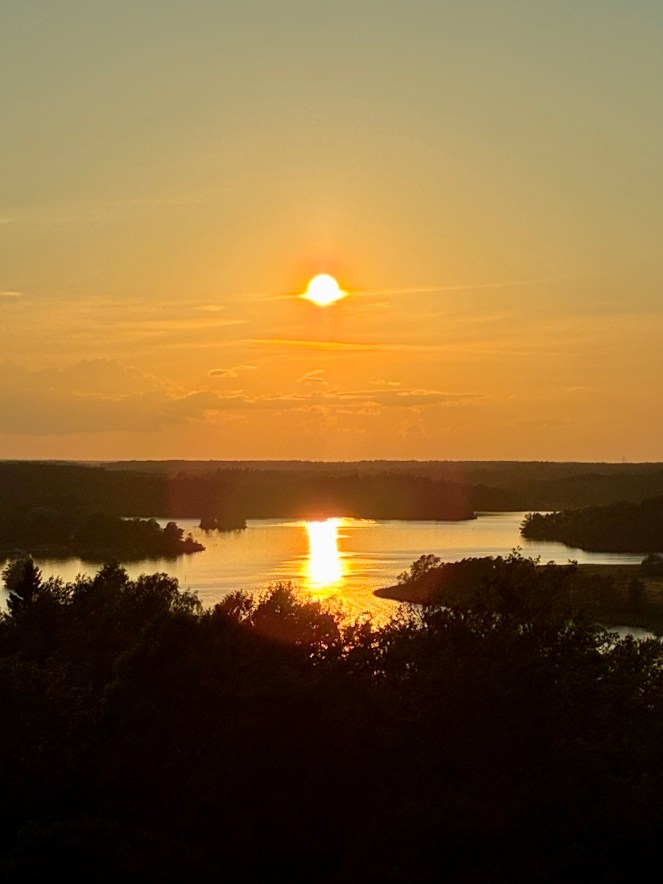
This meditation is inspired by Hawaiian healing practices. Go and watch the real sunset if you can. Let your eyes linger softly at the horizon, slightly below the sun. Or watch a photo for a while. Connect with the sun.

Take a deep breath. 

Visualize the sun entering your solar plexus. Let the light expand inside of you.

Breathe in the light.

Think of any harsh words or actions anyone has done to you lately. See them as little rocks that you can pick out of your own bowl of light. 

Pick up the imaginary rock symbolizing a negative interaction. Think of the person, and incident, and inhale. Say to yourself:

I release you. I let go. I forgive you. I’m free.

Exhale.

Do this as many times as you need. Return to your center and feel your bowl of light fill up.

Inhale.

Feel your peace and power return to you.

Exhale.

Bow in gratitude and humility. Thank you!

To listen to it, click here!

Practicing online or on site?

Have we gotten stuck in our comfort zones when it comes to online practices, or has it become the only way possible? Which are the pro’s and con’s of practicing at home, whether on your own, or online together with others, and on site? Does it even matter which type of practice it is, such as qigong, yoga or various dance styles?

When I scrutinize myself, I’ve come to the conclusion that these are the factors to consider:

Practicing at home/online:

  • Access to other forms and teachers than who might be available in your area (such as Hawaiian Hula for me in Sweden)
  • Access to recorded material makes it easier to break down and repeat specific steps
  • Access to recorded material and replays, makes it possible to practice at any time and day that suits you the best
  • No, or less, interactions with others
  • Not enough space to fully inhabit and express yourself
  • Easier to postpone and practice less
  • Perfect and keep it up meanwhile

Practicing on site:

  • Paid in advance makes you more prone to attend regularly
  • Social interactions and meeting new likeminded peers
  • More focus with less distractions
  • Bigger space to move around in
  • Getting outside to take yourself to class
  • More and easier to receive feedback from the teacher
  • Mirrors to see yourself better

What do you think? Do you rather practice at home and online, or on site? Is it even a question about what’s more important – freedom and autonomy, or belonging?

Understanding the spiral

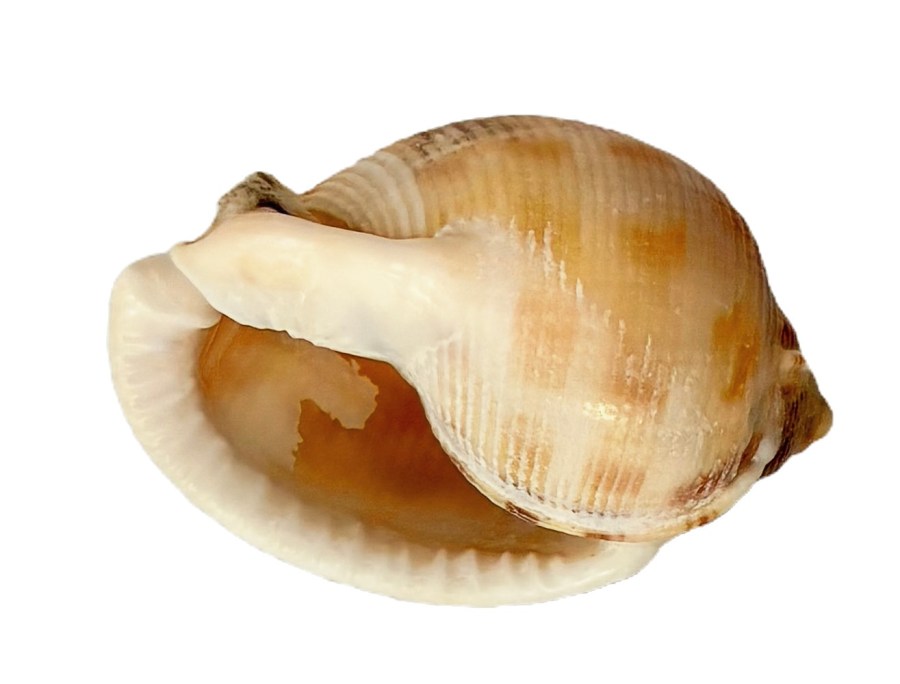
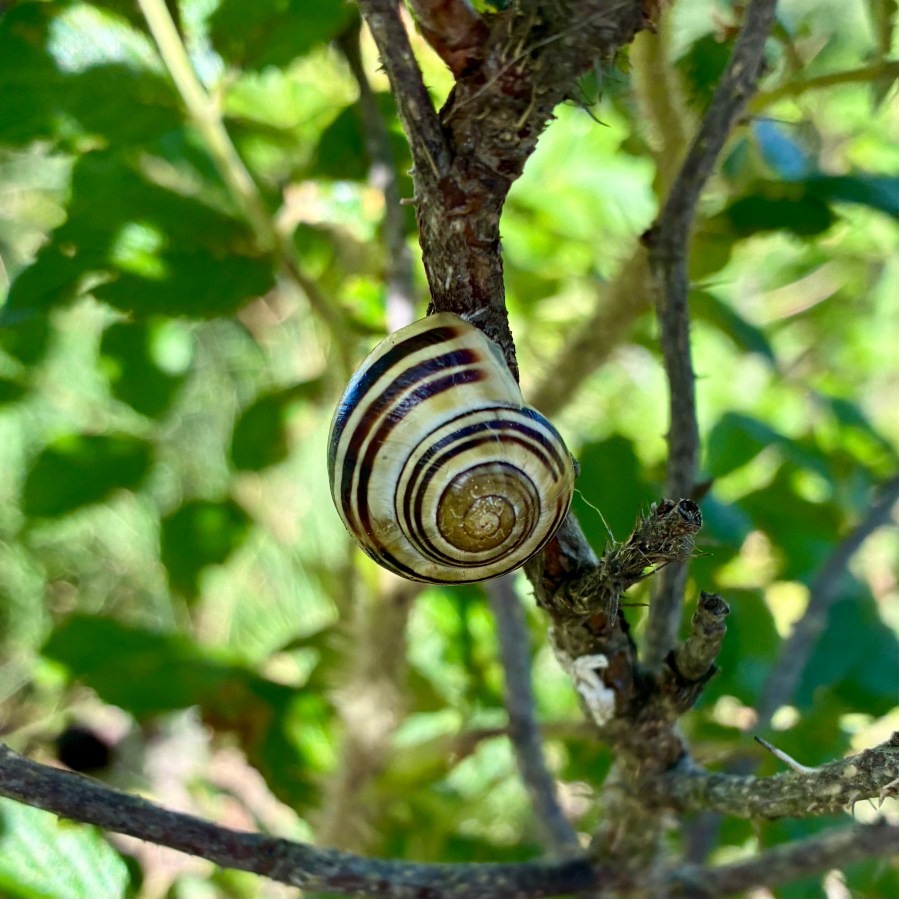
A couple of days ago, I passed by this cute little snail with its beautiful shell in the form of a spiral. It got me thinking of how brilliantly it can be used as a metaphor for life coaching and personal growth.

When we walk slow enough like a snail to be fully present in the moment, we can notice if we feel like we’re going around in circles. That can be things like, the same things happening again, we enter a relationship with someone similar showing up the same way, or we simply respond to a situation the same way we usually do. And get the same result. But, if you notice that resemblance in the moment, you can see it as a call to change. If you then change your choice, your response, or how it’s delivered, you’ve been able to raise a level and start a new circle, a positive spiral, and evolve.

Can you think of a relationship or situation that you would like to change? See if you can pinpoint the moment it tilts a certain direction, and think of the spiral.

The message from crow

A couple of days ago, when I was walking back home, crossing the parking lot, I heard a crow cawing loudly and looked up. I saw it sitting next to a big lightning rod, that I hadn’t noticed before and thought to myself how good that we have one.

The day after, when I stepped out of my apartment building on my way to the beach, I saw a big black feather on the ground and thought to myself, it must have belonged to the crow. I wondered what it meant. Did it want to tell me something?

I took another path then the one I normally walk, and saw this giant tree split in half, by lightning I presume. I don’t know when, and saw that ants were living in the trunk. Good for them!

But what if it was the crow’s home that got split in half? Why would it have to make such a sacrifice and lose its home? Had it?

Yesterday, two days after, I realized that my Swedish stalker had intruded into my home again, scraping out butter violently (for whatever reason beats me, he’s obviously not well), why I reported him to the police again, who both by email and by phone, first refused to even accept my report. Third time, they did. As if this wasn’t enough, someone also messed with one of my photos through phone intrusion and tried to ruin it with a mark on my clothes that wasn’t actually there. That too was reported of course. And then… as if by fate, all the trains from Stockholm to Gothenburg where he lives, became cancelled due to an electric malfunction after lighting had struck… Unfortunately, the Swedish police do nothing about him and haven’t for more than 15 years, neither did the German, nor the Portuguese, where he also ruined my life, which is one of the major reasons why I want to move abroad again, since I got help and a restraining order in the United States, when he stalked me there too.

Until then, I’m grateful for crow’s warnings.

More about different cultures tales and symbolisms of the crow, can be read here.

Places with power

In Hawai’i, some places are considered sacred grounds. In fact, since we can’t know for sure who might be buried underneath us, we must consider most grounds as potentially sacred and thread lightly. Some places, however, hold more power and energy due to having been places of worship and meetings for chiefs, or simply because some places in nature seem to have a certain quality about them, that one can sense physically, subtle, but still tangible. To me, it can be to feel more safe, to feel undisturbed, to feel that one steps into nature’s world away from our own busy human life, more oxygenated and light etc. These kind of places, can of course be found also elsewhere than in Hawai’i, with similar qualities about them for the people living where they are. In Hawai’i, these places can be entered with reverence, care and respect, and are considered holding Mana.

Mana, can also be personal. An inherent power that we have and can get access to, when we’re living righteously and in alignment with our heritage. When we feel grounded and centered, communicating with a purpose that is for the greater good, or at least good for the people we’re talking to, sharing knowledge that we know in our bones to be true. Mana exists in our bones, teeth and hair, according to Hawaiians.

What is then good? Good, is something that others can benefit from, without taking from someone else, where nobody loses on it, and when it brings about prosperity, positive growth and health. When others use their power to obstruct and stop someone else to use his or her own power (energy, education, experiences, creativity, communication, skills, traits etc) for the greater good, one can talk about manipulation and oppression, or simply power-play, which is what I feel that I have been subjected to for many years in Sweden. Luckily, the nature where I currently live, holds mana that is helping to heal and restore me. If we were to compare mana to another culture’s concept and word, it could be similar to what is referred to as Jing in Chinese Medicine, which is explained to be our inherited essence and fertility.

Wellness practices based on this, should then rather not be about fighting against someone else’s power, but to clear, restore and nurture one’s own, so we better can express ourselves, naturally commanding respect. In today’s society, so it’s not always the case, where we have to fight against malicious, or ignorant, influences all the time. But hopefully, we can strive more to.

Photo shows a stone with petroglyphs from Ulupō Heiau in Kailua, Hawai’i from 2011.

Solving US immigration

You might have seen on the news about the increased ICE-raids in the United States, and the protests against them. Since I have some experience myself, I thought I’d share my take on it. ICE stands for Immigration Customs Enforcement and are federal agents in charge of deporting immigrants that they think are unlawfully staying in the country. CBP stands for Customs Border Protection and they are in charge of securing the border, ie who is allowed to enter the country. Both belong to DHS, which stands for Department of Homeland Security. When either finds an immigrant unlawfully staying in the country, either by not having the right visa, or even passport, or overstaying the one you had, or not in the same position anymore, you are seemed deportable and taken into custody, where an Immigration judge will decide. Unfortunately, I have been too, 2011-12 in Honolulu, Hawaii, where I studied to a Master’s degree in Organizational Change with a F1-visa in 2010. In my case, the university didn’t transfer the credits from my Swedish university in a timely manner, so I could register in the right classes and not have to retake the same or similar, which not only would be time-consuming and un-necessary, but also much more costly than my Swedish student loan would cover. But the university didn’t approve my right to apply for temporary work-authorization, which one can on that visa, after staying and studying for more than 9 consecutive months, which I had, which gave me no other option to survive financially than to commit a crime. During my immigration detention, it became clear that the problems are a two-way street:

Visas are issued together with a “sponsor”, ie a spouse, a university, or an employer. If this relationship ends, so does the visa, which can be very unfair. For example, even an abused wife without any criminal convictions and who won against her husband in court, still didn’t get a new visa. Likewise, unfortunately, the common way of most businesses and organizations in the United States is that they don’t want to sponsor visas, but only want to employ those who have one, not knowing or disregarding that you can’t get a work-visa without an employer! And, even if you would be married with a green card and get a job or own your own business, would you become divorced, you’d still lose your visa.

To solve this, visas could be issued directly with the USCIS (which stands for United States Citizenship and Immigration Services), or even state-wise, regardless of sponsor, but with full disclosure and responsibility to seek employment, start a business, and/or get married, within the allotted time. This way, the individual wouldn’t be bound to a certain company or even spouse, but to the United States directly. This would also allow for direct control of taxes being paid, and the immigrant’s overall status and whereabouts.

The second problem, is that some countries don’t allow receiving deportees and are therefore considered recalcitrant, such as Vietnam and Senegal. That means, that even if a Vietnamese guy commits several severe crimes, he can’t be deported back to his country of origin and citizenship, but only released back into the American society. To solve this, would take a global approach, perhaps through the United Nations, which I think would be most fair, making it impossible for any country to say no.

The third problem, is that immigrants often are called illegal and therethrough seemed justified to be detained in prisons, even when the crime they have committed, or not any, isn’t coming with any time to serve (a misdemeanor for example) or even through trafficking. Immigrants should never be incarcerated based on their national identity. It’s not a crime, to not be American. And this is also what the UN goes against, to not arbitrarily detain immigrants. To solve this, they could build or rent type YMCAs, with curfews and front desk guards, as well as access to the USCIS to be allowed to apply for visas meanwhile, especially those seeking refugee status. Most immigrants have invested themselves both financially and emotionally and don’t have anything to return to, which is why it’s important to be allowed to have one’s case tried on the merits.

Last, but not least. Most immigrants are treated according to which country they come from. I know well that I’m seen upon favorably, as a white, scholarly, woman coming from the EU-country Sweden, in comparison to for example Mexicans. That is discriminatory. A Mexican could be more well off than me, even if you don’t assume so. Either way, we both would need to be allowed to make a living legally, to do so. This is why I’m on the fence of going to San Francisco; it still is my dream come true, but I still need more money first, and preferably enough for three months, to give me time enough to find a sponsor, when there. Unless, I too have to claim refugee status because of what I’ve had to endure for more than 10 years in Sweden, with evidence.

My book The Call for Divine Fathering – flying with the feathers of the eagle can be bought on Amazon and Kindle, and contain real-life stories and examples of detained immigrants. Order it here!

Forgiveness through generations

When we take responsibility for our actions and communication, we feel empowered and can either solidify our stance, or change easier. This is especially important when it comes to conflict resolution. Through the Hawaiian Ho’oponopono prayer, we can use it either together with the person we’re in conflict with, or by ourselves, as well as including previous generations and wishes for the future generations, to be healed and find peace. Imagine what this world could look like, if we all practiced this!

We start by communicating what the harm is, that we feel we’ve been subjected to and why. Then we listen to the other, who may even have misunderstood us, or feel hurt him/herself. When both sides have shared their points of view, both can agree to ask one another for true forgiveness and move on. This was especially important in old Hawai’i, where everyone is dependent on everyone since they live on islands far away from any mainland. Ho’oponopono means making things right again; to return to integrity and love.

If it’s not possible to communicate and solve the matter directly with the other person, we can work on ourselves by recognizing any other situation, relationship, or event, where we’ve been the one causing similar harm to what we now experience. Then, we can ask for forgiveness for that time through prayer, and understand the current situation better. We can also ask for forgiveness in prayer regardless, not knowing exactly what the harm was another refers to, or experience, but with sincere intention. The prayer goes like this:

Divine Creator, Father, Mother, Child as One, if I, – insert your name -, or any of my ancestors, relatives or family members, have ever caused or inflicted any harm upon – insert the other’s name -, or any of your ancestors, relatives or family members, I’m deeply sorry. Please forgive me. Please transmute this situation into light. Thank you. I love you. Amen.

Then visualize sea green light wash through you, to clear this event in the past, in the present, and in the future.

One of the known Hawaiian practitioners to use this prayer, was Morrnah Nalamaku Simeona.

Taking charge of our time

Every year in the beginning of summer, I go through my four email accounts and sort through my inboxes with all the unread newsletters and other communication. I have various email accounts for various purposes, but some things might overlap. When I sat with this over the weekend, I realized that each email was like an item on my To Do-list. An item to handle and choose what to do with. Can and do we want to directly? Not always.

In the beginning when I started writing newsletters for my coaching business in 2002, it was common to only send one out, once a week, or even once a month. This way, it became something to look forward to (and mine became the foundation for my books) and even to plan accordingly with any events. Nowadays, a well meaning organization can send once a day, which creates a multitude in need of reading, deciding and responding (such as booking, planning, ordering, sorting, following up, reading more later etc), which in my case most likely simply piles up and results in nothing. The many becomes too many to handle directly, since I often open my email app to either check something specific or send one myself, unrelated to what in my inbox. What’s in my inbox, has to be taken care of afterwards, or at another time, creating frustration, interruption, and distraction, ie more stress. So, I put mine in designated folders to be taken care of later, would I find the time, access to more wifi, and place. What’s important to remember is to take charge of our time and keep our focus, or else we will do nothing but respond to others. Rather, we must create!

Do you have a good system for your emails, and do you subscribe to more than you read?

The reason is the anti-dote

Some people say there’s a reason for everything and refer to God’s plan. Others say we can’t always get answers to our questions while they console “why me” feelings. I say there’s a human reason for everything and we just need to recall how a conflict started and dare to look into what caused it, taking both sides into account. If you can change the cause, you can change the outcome.

For example, while it’s devastating to see casualties of war anywhere, presently increasing in Gaza, it’s seems easier to blame the retaliating party, in this case Israel, than to remember that there is still hostages held in Gaza. If this is the reason, why doesn’t the people there themselves demand Hamas to release them? Then there would be no reason for Israel to continue their attacks, would there?

Another example I learned while I was a detained immigrant in Honolulu 2011-12, is that people tend to commit crimes for any of two solid reasons:

  1. Because they’re bored
  2. Because they’ve been victims themselves (Only hurt people hurt others.)

What is then the antidote but to tend to these needs and solve any underlying issues, such as conflicts, lack of income, and providing a meaningful job, sports and/or a creative outlet. When you start applying this perspective of needs on everything in society, you’ll soon see what I mean, whether it’s hunger and lack of sleep, or not feeling seen, heard and respected, behind someone else’s and your own communication and actions. Advertising builds on this notion obviously, but it doesn’t make people’s needs less real.

What do you need and how can you meet it? Which behavior needs to change?

Trusting in our inner knowing

A friend and spiritual teacher in Honolulu, once told me in 2011 to always trust in my inner knowing: When you know, you know, it’s in your bones, she said. With this Jocelyn referred to how knowledge can be forwarded through generations, through our mana, the energy found in our teeth, bones and hair, besides places. And mana holds power. But is our intuition the same as our inner knowing?

Intuition is information, such as someone’s set forth intention energy, that we can feel a response to. For example, I can feel in my body, in my stomach, when the sun is setting, even if I’m in the kitchen with a window facing the opposite direction. That is my instincts and intuition.

Inner knowing to me, is a synthesized understanding of how things relate, which choices and decisions are good for me, as they feel like an uplifting reassurance. The more I dare to trust in myself, what I feel in my heart and God’s guidance, the calmer and more grounded I feel. This is a learning process we all have access to and can practice. We just need to dare to trust more in ourselves than others.

What are some truths based on your education and experiences? Holding onto and living according to these values, is to live in pono; in love and integrity, to live in alignment.

The true you

Have you ever felt uncomfortable around certain people, but totally at ease with others? This feeling arises when we try to fit in and belong. When we naturally do, it’s an opportune time to recognize which personality traits we let surface, that shows who we are. Eventually, we can fasten them and make them part of our identity, if we feel allowed and encouraged. A good way to discover your true you, is through travel and comparing your behavior in various local and organizational cultures. For example, who am I regardless of whether I’m studying, working, or even locked up? Whether I’m in Sweden, or in the United States?

I’m talkative, creative, and organized. If I’m not, it means I’m either not feeling well or being oppressed (by government officials or authorities) or bullied (by any individual known or unknown to me).

Which three personality traits do you carry with you regardless of your circumstances?

When and where can you not fully embody and express these? Why? And where can you feel safe and relaxed to be the true you? Which kind of environment do you need in order to thrive?

Understanding our three selves

To be able to relate and communicate better, it can be a great help to recognize our three selves through which we understand ourselves, others and the world. We also have three levels of consciousness, that we can access and sometimes enter by choice through meditation.

The three selves are:

Parent-self: Acting, relating and communicating with others from the perspective of a parent. This cam be anything from overbearing or condescending, to caring and understanding. Through the parent-self, we seek our Higher self, or higher consciousness, that can help elevate our perspective and guide our actions from a more detached point of view.

Adult-self: From this level, we’re responsible and solution oriented, fluctuating from being guarded to being open. This can also be referred to as our Middle self, which is our normal day-to-day presence.

Child-self: This is our inner child, the spirit we had when we grew up, pure, exploring, and filled with love, joy, and wonder. Through this level, we’re creative and playful, but can also be seen as the Lower self, or the subconscious, where we have stored traumas and adjoining emotions and beliefs, that can govern us, until we face them.

When people get stuck in relationship patterns, it often means that they’ve got stuck in a role of parent or child, with their significant other, where they relive the same overbearing, or condescending, for example. While someone in a parental role might seemingly fit with someone in a child role, it’s not good if neither is aware to consciously heal these patterns. The best outcome, is when we’ve learned to integrate and shift each self within, and use appropriately in the moment.

References: Urban Shamanism by Serge Kahili King, and Transaction Analysis by Eric Burne.

A hymn to the sun

I’ve been thinking of how to reconcile my Christian faith, with the view on the natural elements that are founded in Chinese Medicine and Shamanism, to be able to incorporate them as a way to create a balance and a theme for the classes and practices to be offered at Telluselle Living Center. Yesterday, I found the answer, as I bought an old book at a church sale from 1941, with translations of Saint Francis of Assisi’s original texts – the very Saint Francis whom the city San Francisco was named after. While I just started reading, I found the first written down poem from 1225 that fits exactly. I cite it here:

The Canticle of the Sun

Most High, all-powerful, good Lord, Yours are the praises, the glory, the honor, and all blessings. To You alone, Most High, do they belong, and no man is worthy to mention Your name.

Praised be You, my Lord, with all your creatures; especially Brother Sun, who is the day, and through whom You give us light. And he is beautiful and radiant with great splendor, and bears a likeness to You, most High One.

Praised be You, my Lord, through Sister Moon and the stars; in heaven You formed them clear and precious and beautiful.

Praised be You, my Lord, through Brother Wind, and through the air, cloudy and serene, and every kind of weather through which You give sustenance to Your creatures.

Praised be You, my Lord, through Sister Water, which is very useful and humble and precious and chaste.

Praised be You, my Lord, through Brother Fire, through whom You light the night; and he is beautiful and playful and robust and strong.

Praised be You, my Lord, through Sister Mother Earth, who sustains us and governs us and who produces varied fruits with colored flowers and herbs.

Praised be You, my Lord, through those who give pardon for Your love, and bear infirmity and tribulation. Blessed are those who endure in peace for by You, Most High, they shall be crowned.

Praised be You, my Lord, through our Sister Bodily Death, from whom no living man can escape. Woe to those who die in mortal sin. Blessed are those whom death will find in Your most holy will, for the second death shall do them no harm.

Praise and bless my Lord, and give Him thanks, and serve Him with great humility.

Amen.

So, through this poem we learn to honor God through the elements of His creation, but not to worship them single handedly.

We’re all part of One.

Celebrating 20 years of Hula, and more…

This year, it’s been exactly 20 years since I first started practicing Hula dancing in Hawaii. It also is 30 years ago since I began with Qigong, first for Master Marcus Bongart and then Lee Holden, and about 25 years ago, I began with Yoga for Anette Larjard and a Swiss Mordern dance teacher named Melanie. So, I thought I’d share what this has taught and healed in me.

Qigong has taught me, how to meditate, and how to move with mindful intentions to balance my inner organs and their attached emotions, according to Chinese Medicine. A way to work with energy, and to find center.

Yoga, was a way to become better friends with my body and learn how to move in pace with my breathing. Nowadays, I practice yoga at home, to stretch, and to develop strength and flexibility, as a foundation for dancing.

In 2004, I hadn’t danced anything more than out on clubs, for almost ten years, when I saw an ad in the paper, where I used to go practice, where they offered West African dance. I did this for about two years, and it enabled me to become much more precisely attuned to rhythms, as well as losing up some of my physical (and perhaps mental!) rigidity, while also releasing stress. It was raw, but grounding.

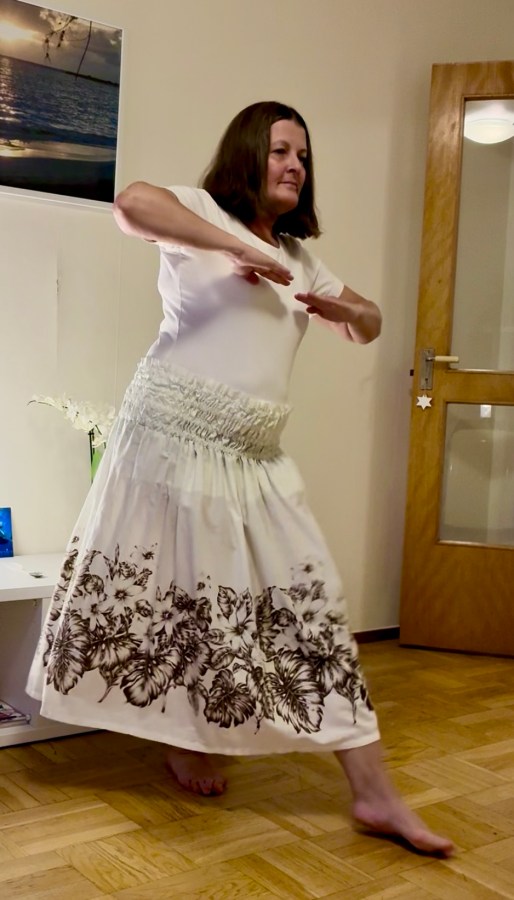
During the fall, I made my first visit to Hawaii (Oahu and a short stop on Big Island), where I saw Hula being performed at the beach at sunset in Waikiki. It totally mesmerized me and I started to feel a longing to grow long hair, wear long dresses, and dare to adorn myself with flowers. I had just had a white lily behind my ear at my mother’s wedding a year earlier, and this became the natural next step. To pause, reflect and grieve after her passing. Thanks to renewed student loan, I went back to study spring semester 2005, and found a small ad with Hula-classes, offered on evenings at University of Hawaii, Center for Hawaiian studies, and went. Here, Kumu Jared Kukaho’omalu Souza, shared how Hula is taught and its Uniki-process, where a historical layer is embedded. It became a meeting with a different culture, but mostly a meeting with my own pretences of wanting to look a certain way, where I learned eventually to become instead. Dancing Hawaiian Hula, enabled me to reclaim the power of my voice through chanting, as well as to move more softly and slowly, letting go of my harsh body language. I also started to walk slower, when I returned to Sweden. At home, I continued to practice by watching a DVD from the Merrie Monarch Festival, did my own choreographic interpretations to Swedish folksongs, and performed a couple of times, as well as led beginner’s workshops.

In 2010, I returned to Hawaii, to finish my Master’s degree, and was able to attend another Halau Hula, with another initiated Kumu; Marian Ka’ipo Park, who has performed at the Merrie Monarch. In this group, we also went on several excursions with ceremonies, and listened to the stories of passed on monarchs, besides learning various choreographies and using implements. And in 2011, I became a member of Unity Church in Honolulu and participated in their group as well, including performing at Christmas and Easter. In Honolulu, I also tried Ecstatic dancing, which I find to be a way to connect back with the tribal motions, we do at clubs, but with more improvisations and variations.

I continued my practice back in Sweden, held some more workshops and a couple of performances, but mostly on my own. Dancing Hula, enables me to step into a Hawaiian feeling for a moment, to float in tune with the ocean’s waves, and to tell stories with my hands. Still learning and still discovering things to improve! I also took classes in Jazz and Modern again, and performed in the dance school’s recitals.

In 2014, I began dancing Isadora Duncan for Kathleen Quinlan in Stockholm, Sweden, which brought me home to myself and my aspirations as a young girl to dance ballet, but with more freedom of movement, more emotions, and more spiritual mysteries, than. In 2019, I continued dancing with workshops and classes on Zoom on occasion, for Lori Belilove and her dance company members. Thanks to dancing Isadora Duncan, I’ve gained more sensuality, as well as gotten a stronger posture and expression, developing my solar plexus into what it was supposed to become, returning to being my true self, and reclaiming my inner child’s joy. But really, becoming more woman.

More about my journey, can be found in my books here.

Does practicing yoga and qigong make you more creative?

It’s time to debunk a myth. Practicing yoga or qigong, doesn’t make you creative. Most kids, grow up without ever practicing either, and still are creative. I wrote short stories, and my brother took apart and put back together computers, when we were young, and we never practiced neither yoga, nor qigong, and neither did our parents. What makes us creative, is usually an urge to express and release anxiety, a way to understand our impression, answer questions and ponderings about life that we distil into art, or a wish to solve a problem with an invention. It’s even said that: “Necessity is the mother of all inventions.”, meaning that when we face an urgency, we become more creative, whether that is to fix something broken, or to make a meal only with what we already have at home. Did Einstein and Picasso practice yoga or qigong? No, but physical exercise can make you feel more relaxed and in a flow, I’ve noticed. Just like taking a nap can.

I practice qigong, to balance my enery-levels, such as to remove feelings and impressions of negativity, to pull myself together if I feel I’ve gotten into a slump, and to find clarity, so that I can be more focused and concentrated, which in turn may help during my creative pursuits, meetings, work, or studies. But, I’ve never come up with any ideas, during, or directly after, practicing neither yoga nor qigong. I might feel the urge to remember something that I need to do and write that down, since this sometimes surface.

Music and dance though, let me connect with what’s in my heart, propelling me into for example, writing poetry. I’ve developed my creativity, through advertising school and related work as a copywriter, as well as through taking dance-classes in various styles, at least off and on, since I was a little girl beginning with classical ballet, making it possible to assemble my own choreographies. In fact, this year marks the 30th anniversary since I started with Qigong and the 20th since I started practicing Hawaiian Hula (and I’ve done Yoga regularly for 22 years and danced Isadora Duncan for 11 years)!

To learn more about creativity, you can order my book here, or contact me for a coaching session, where I will help you be a sounding board with questions that enable you to find your own best answers!

How do we learn?

There is a lot of talk about teaching AI-models, the correct way of using language. But, what is missing, is the mode of interpretation, ie how we understand things, and use this as our foundation for how we communicate. How we interpret something, is based on several factors, such as what we already know, our culture, our stress level, our emotions, and our experiences, besides language. To make sure that we understand ourselves, others, and the world better, it’s good to know your prefered learning style. There are four major learning styles:

  1. Visual – by looking at
  2. Auditory – by listening to and talking about
  3. Verbal – by reading and writing about
  4. Kinaesthetic – by touching and trying through mimicing

To this, we can add how we learn through social settings, on our own, and through analysis.

If we’re auditory learners, listening to an audio book, might be very helpful, where AI can be of assistance now that we can get voice-replies. But, if we’re verbal learners, who learn about a subject through reading and writing about it, and let AI do that for us, we might not learn at all. The other day, I was shown how AI can make a mind map from a pdf-file. One would think that would be something I’d be grateful for, who always makes mind maps. But no, there is a meditative flow that enable me to understand what I’m reading, when I do mind-maps. Just looking at an already made, would only provide me with what it literally is saying as a visual, while making my own, brings with it all the associations and connections to the facts, that are embedded in the actual text. Not to mention, the actual physical act of connecting hand to paper, or hand to keyboard, with my thoughts.

How we learn thus, is also a process. And it’s this process, that enable us to receive insights that solidify our knowledge. Then, when we use this knowledge and apply what we’ve learned, we can test the validity; how true it is, and get an experience based on said knowledge. When we’ve gained knowledge and learned through our practical experiences, we’ve gained wisdom. Something AI, can never replace.